The home cook: turn an interest into a date
Book a specific class, market morning, bakery visit, or shared menu day with transportation handled.
See fit and tradeoffs →Curated editorial collection · 208 ideas
Specific, schedulable experiences with logistics, accessibility, and an easy way to reschedule.
Book a specific class, market morning, bakery visit, or shared menu day with transportation handled.
See fit and tradeoffs →
Plan a neighborhood breakfast, garden-center visit, or local membership that helps the place feel familiar.
See fit and tradeoffs →Plan a slow local day at a place they can reach easily rather than adding another complicated journey.
See fit and tradeoffs →Choose a nursery visit, garden tour, native-plant workshop, or shared spring workday.
See fit and tradeoffs →Plan an author event, used-book afternoon, literary walk, or quiet shared reading date.
See fit and tradeoffs →Book studio time, a focused workshop, a materials-shopping trip, or a museum visit tied to the craft.
See fit and tradeoffs →Plan a scenic route, supported event, park day, or breakfast walk with flexible pace.
See fit and tradeoffs →Plan a concert, record-shop route, listening room, lesson, or shared album evening.
See fit and tradeoffs →Offer a flexible meal, quiet walk, home visit, or future outing that can be rescheduled easily.
See fit and tradeoffs →Invite them to lunch, coffee, a public event, or a team learning experience with no hidden work agenda.
See fit and tradeoffs →Plan a short visit, meal, drive, performance, or family stop with transport and pacing settled.
See fit and tradeoffs →Fund a concert, class, day out, escape room, meal, or friend-inclusive plan with transport agreed.
See fit and tradeoffs →Plan a child-led museum, nature, maker, library, cooking, or transit adventure with one adult.
See fit and tradeoffs →Plan a meal, local outing, practical class, or visit that includes transportation and a comfortable budget.
See fit and tradeoffs →Offer a walk, film, meal, cemetery visit, service, or ordinary errand with an easy way to decline.
See fit and tradeoffs →Plan a specific meal, walk, performance, class, or short trip with minimal physical residue.
See fit and tradeoffs →Take them out, host them elsewhere, or plan a meal where they are explicitly not responsible.
See fit and tradeoffs →Plan a guided outing, park day, cabin, course, or shared route with weather and cancellation flexibility.
See fit and tradeoffs →Plan a maker event, repair workshop, museum, build day, or project session around a real interest.
See fit and tradeoffs →Schedule a parallel meal, film, walk, class, or future visit with a real date range and shared planning.
See fit and tradeoffs →Plan a pet-friendly outing, training session, portrait session, or sitter-supported human day out.
See fit and tradeoffs →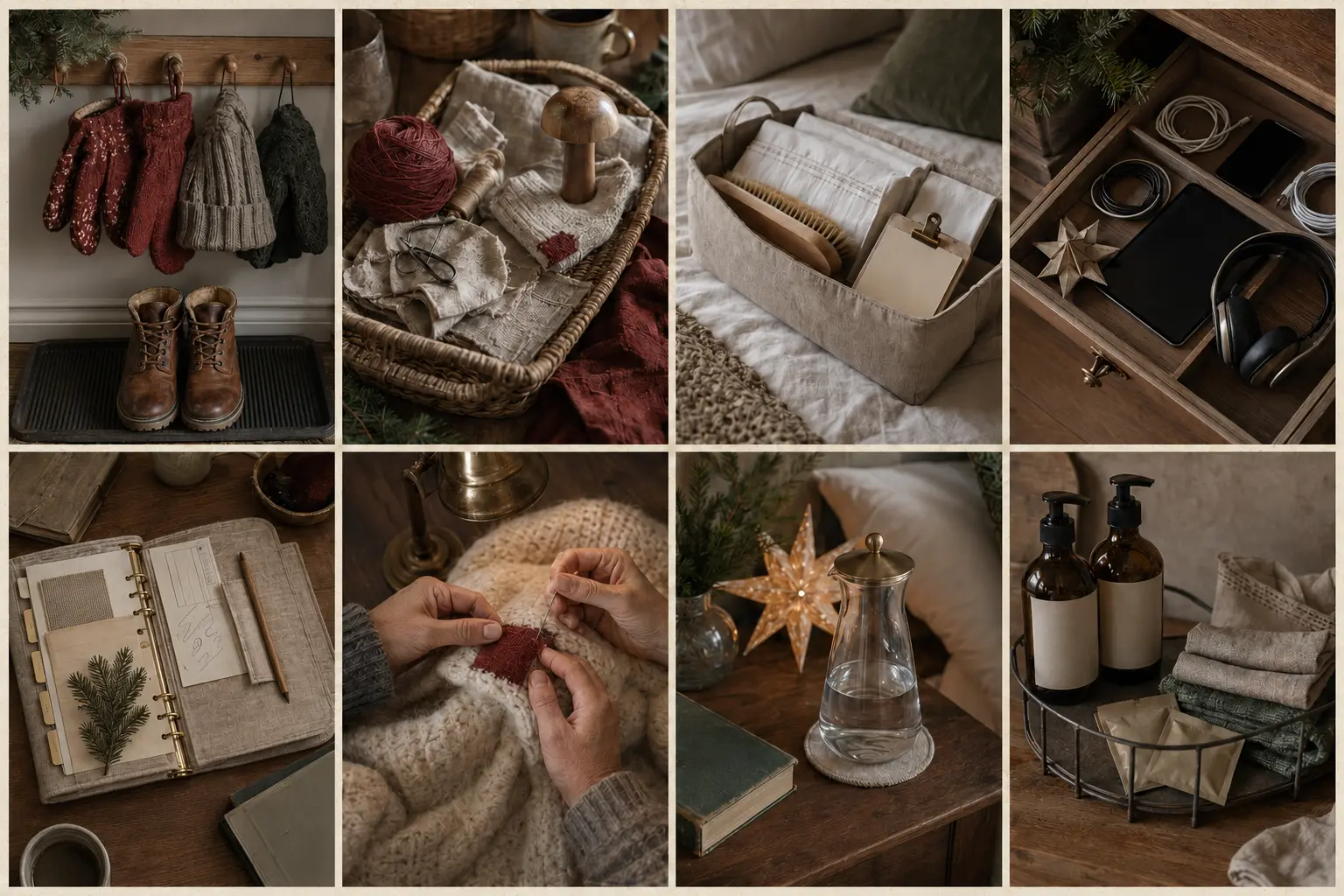
Set aside an afternoon to mend one cherished wool blanket together using matching or deliberately visible wool yarn. Prepare a stable work surface, good light, and a practiced sample so the heirloom itself is not the first attempt.
See fit and tradeoffs →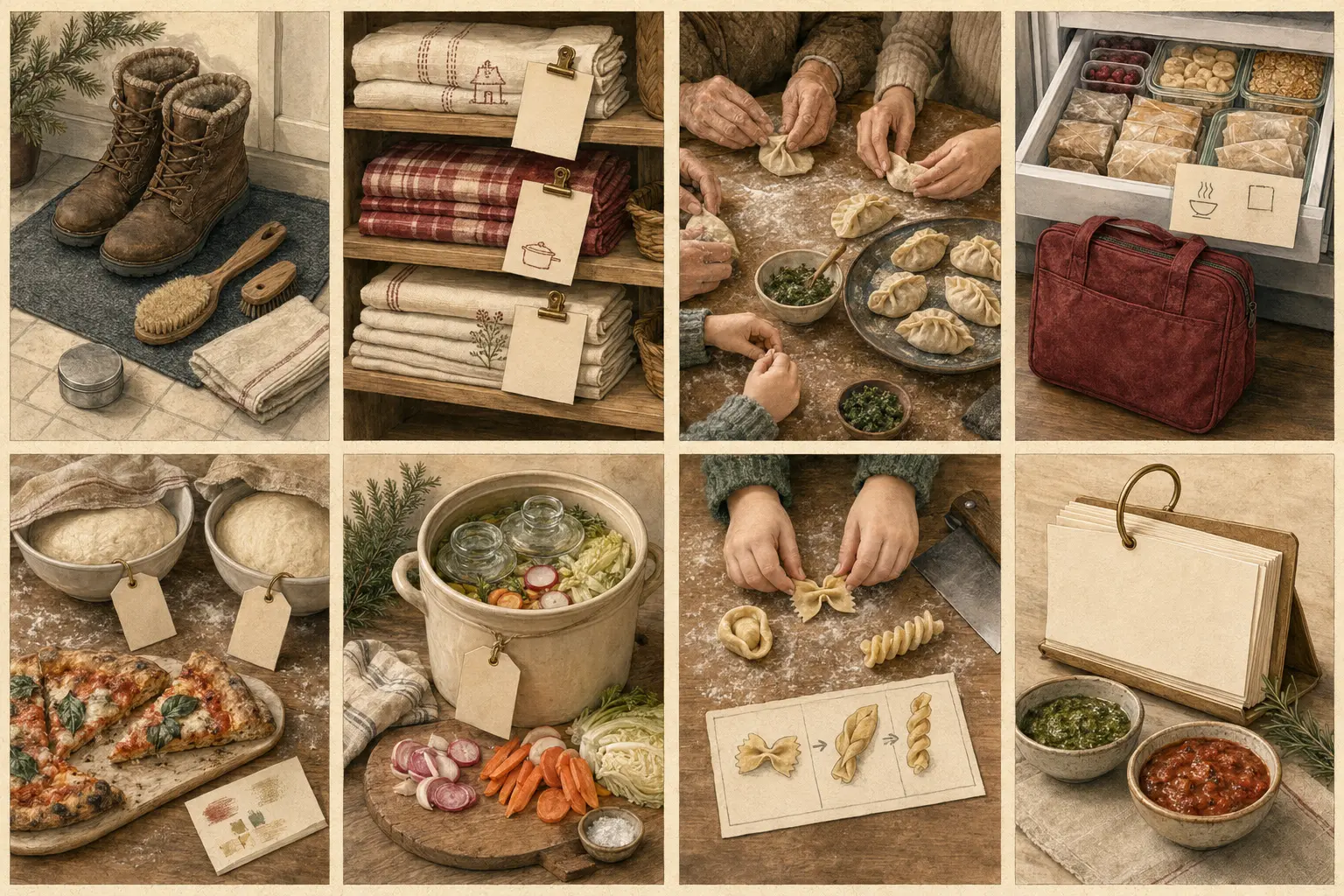
Plan one supper around folding a single dumpling style with two clearly labeled fillings and a tested cooking method. Prepare the work surface and most chopping in advance so the gift remains a shared meal rather than an instruction-heavy class.
See fit and tradeoffs →Bring measured ingredients and lead a side-by-side pizza dough experiment using two fermentation times from one tested recipe. Bake both on the recipient's existing equipment and record the texture and flavor differences together.
See fit and tradeoffs →
Arrange a guided session where the recipient smells and tastes a manageable number of tea components before composing one small personal blend. Ensure the appointment includes ingredient records and brewing notes they can use without buying a large quantity.
See fit and tradeoffs →Choose one incomplete family recipe and host a measured test session to resolve unclear ingredients, temperatures, timing, and yield. Photograph only the useful stages and record the cook's wording before producing a clean draft for everyone to review.
See fit and tradeoffs →
Reserve a specific half-day in which you handle an agreed meal, errand, childcare, pet task, or household responsibility while the recipient reads where they choose. Put the date, start and finish time, covered task, and easy rescheduling method in writing.
See fit and tradeoffs →Arrange lawful access to the same short book in each reader's preferred format, such as print, large print, ebook, or audiobook. Schedule two low-pressure conversations with optional prompts and enough time for either person to pause or change the plan.
See fit and tradeoffs →
Plan a controlled dye experiment using one documented kitchen byproduct, small prewashed fiber samples, and equipment that will not return to food use when the method requires separation. Make labeled swatches rather than a finished garment so results can be observed without promising a color.
See fit and tradeoffs →Set up one afternoon to marble a limited stack of paper using a tested beginner method, washable tools, and a protected work surface. Plan two later uses for the dried sheets, such as book covers and gift tags, so the experiment becomes useful material.
See fit and tradeoffs →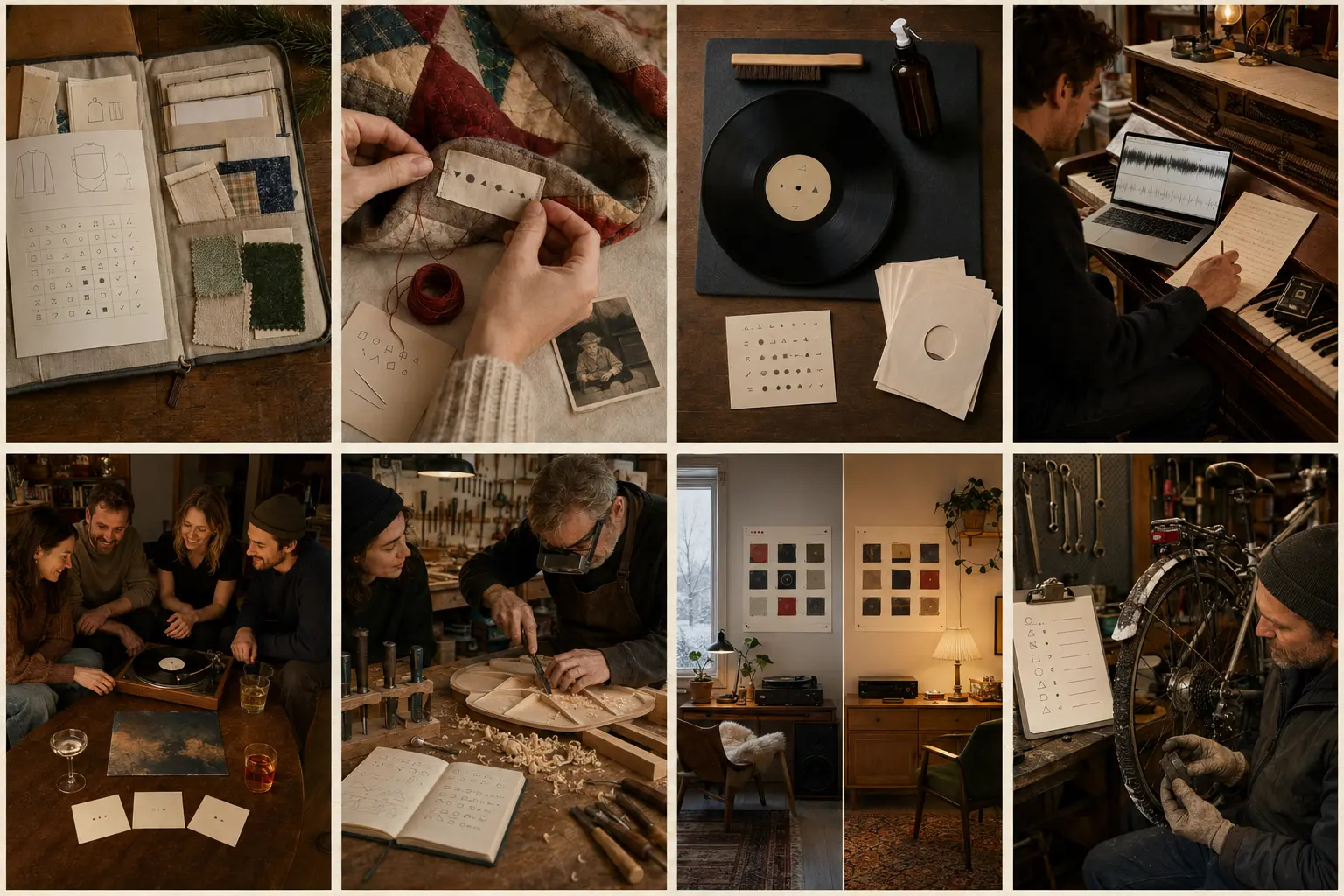
Host a ninety-minute listening evening around one album already owned or lawfully accessible, with a defined start, intermission, and finish. Prepare only three optional prompts about sound, context, and memory so conversation supports rather than interrupts the music.
See fit and tradeoffs →Arrange an educational visit with a working instrument builder or repair craftsperson who explicitly welcomes visitors. Define whether the visit includes observation, questions, a small demonstration, or a hands-on sample, and make clear that no purchase is expected.
See fit and tradeoffs →
Let the child choose one achievable dish, make the illustrated shopping list, and assign the adult only the safety tasks. Buy the ingredients, clear the schedule, and eat the result at a table the child sets in their own way.
See fit and tradeoffs →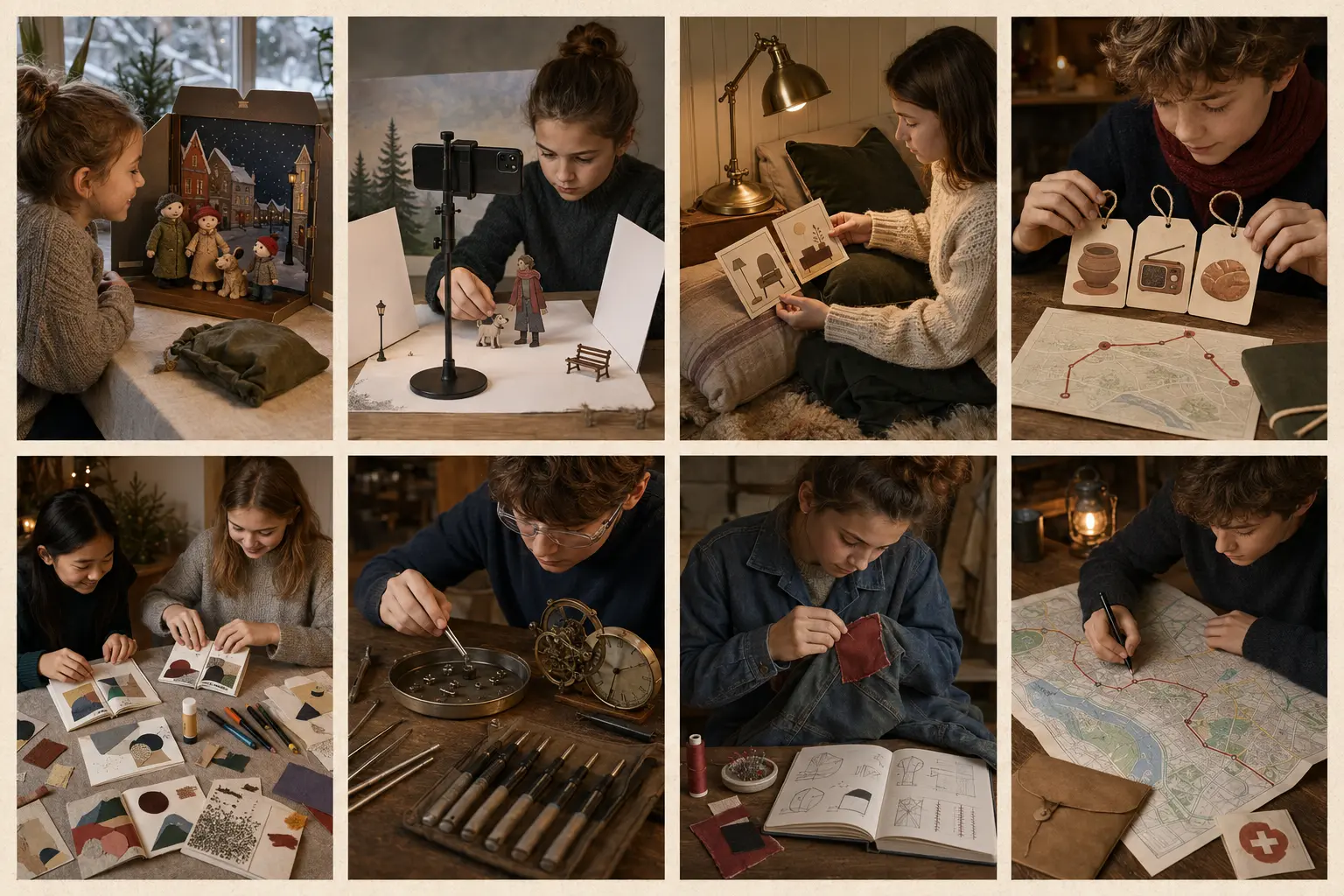
Offer a choice among several local mini-lessons or demonstrations, then let the tween select three short stops that fit one day. Handle registration, transport, food, and a quiet break so experimentation does not become a logistical burden.
See fit and tradeoffs →Invite one friend for a defined afternoon with paper, copying access, snacks, and prompts for lists, comics, reviews, or invented advice. Help them duplicate a small number of copies while making it clear that the zine can remain entirely private.
See fit and tradeoffs →Ask the teenager to choose one worn or plain garment and sketch what they want changed before any materials are bought. Work with an experienced sewer or alteration professional to mend the weak areas first, then add one removable or durable detail the teenager approves.
See fit and tradeoffs →Give the teenager a clearly bounded day budget and let them design a route with one meal, one destination, and one unplanned stop. Agree on transport, check-in method, companion choice, accessibility, and backup meeting place before the day begins.
See fit and tradeoffs →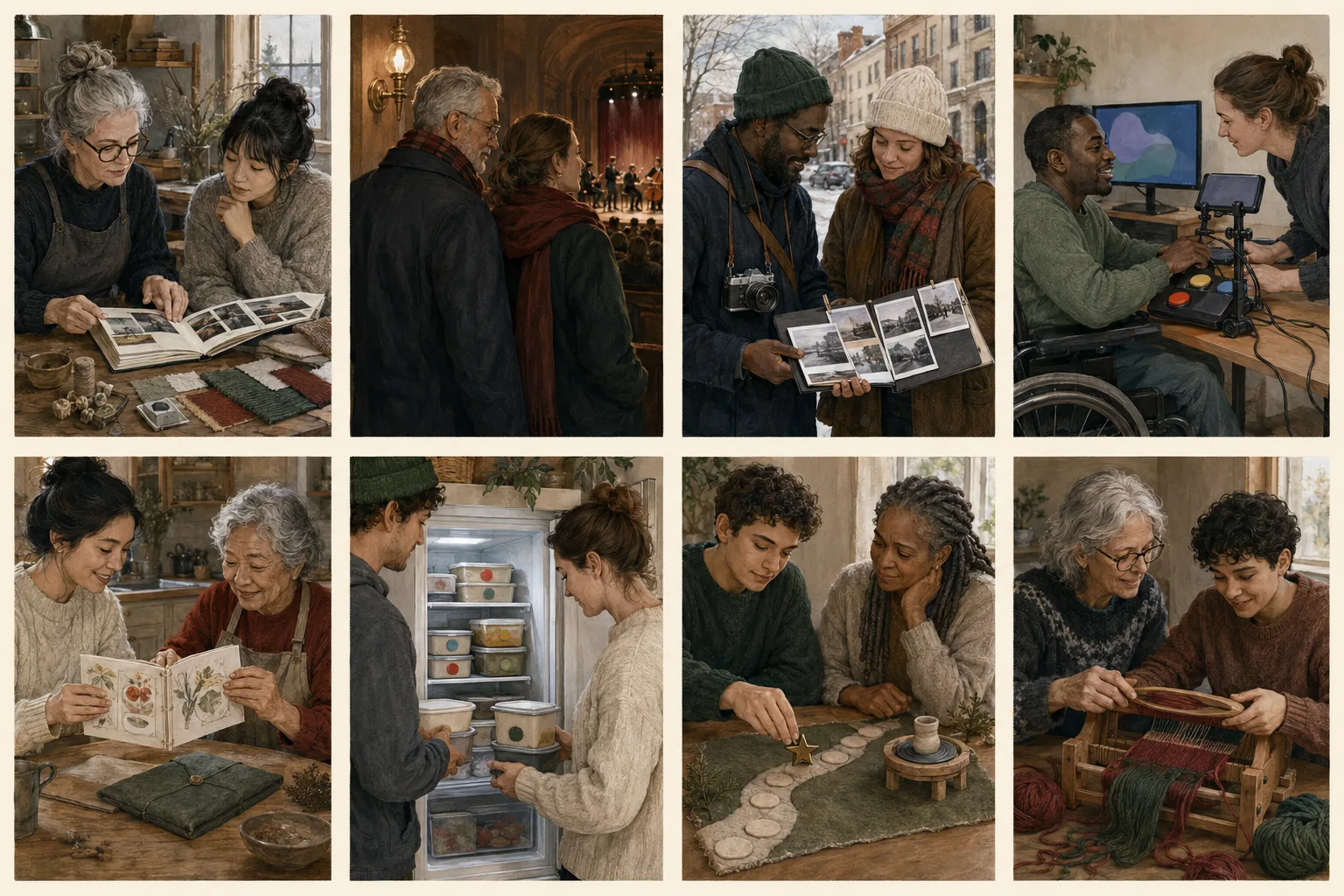
Arrange a paid, time-limited conversation with a practitioner in the teenager's actual medium and send three work samples only with consent. Ask the practitioner to discuss strengths, one next experiment, and the realities of the work rather than judging admissions potential.
See fit and tradeoffs →Invite the teenager to choose an age-appropriate performance and one companion, then purchase only after reviewing the venue together. Include transport, hearing protection, food, seating or standing expectations, and a firm return plan in the gift.
See fit and tradeoffs →Plan a short route with twelve prompts such as reflected light, repeated shapes, a useful object, and a place that changed. Afterward, let the teenager choose six images from any camera or phone and print them as a small sequence with their own captions.
See fit and tradeoffs →Let the adult child choose one bounded skill such as hemming trousers, sharpening a hand tool, preserving a seasonal dish, or setting a formal table. Gather the exact materials, practice together once, and record only the steps the learner asks to keep.
See fit and tradeoffs →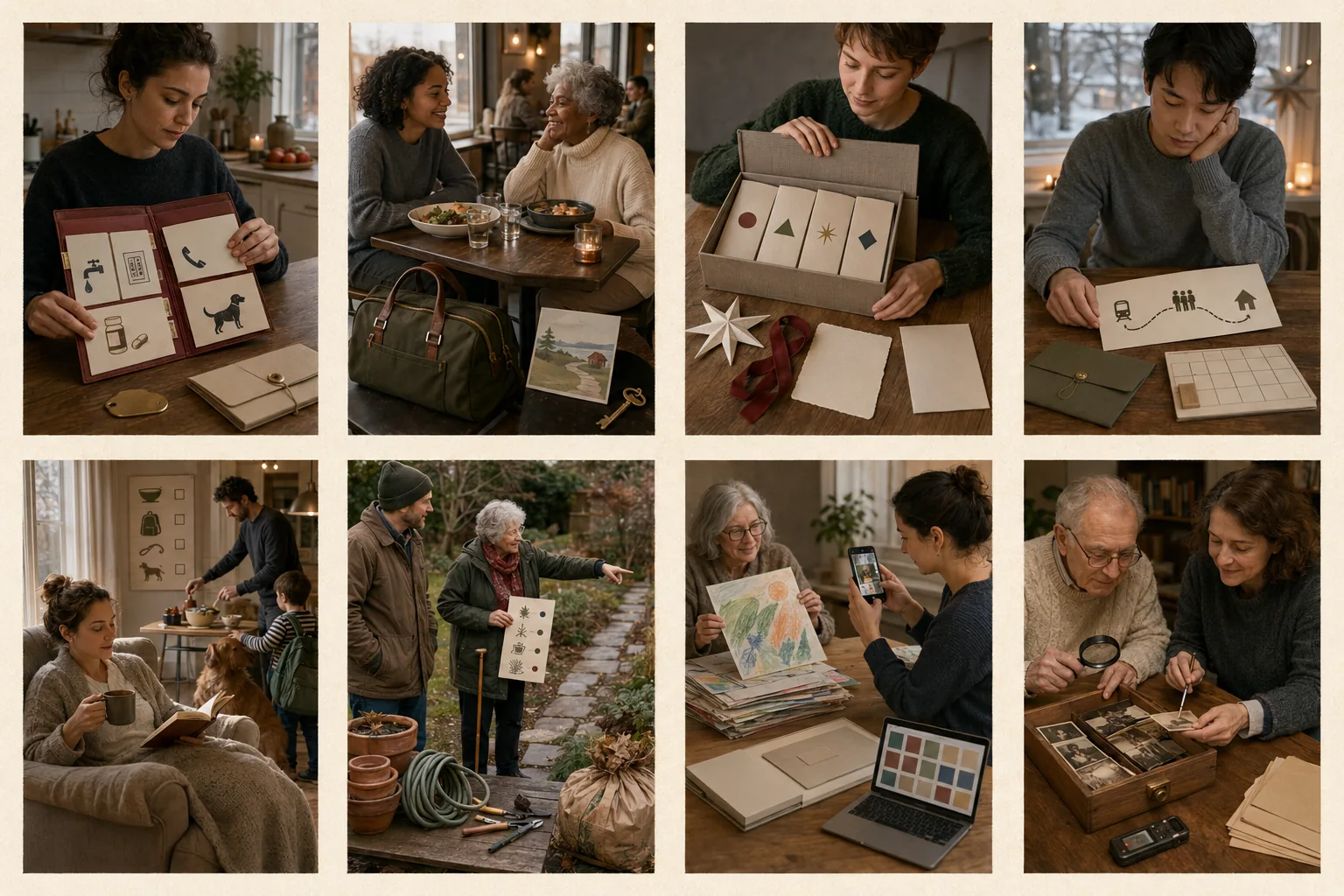
Plan a visit that uses separate lodging or a defined daytime window, and tell the adult child explicitly that they will not provide a bed, meals, transport, or entertainment. Ask for one activity they would enjoy, handle its logistics, and leave unscheduled time around it.
See fit and tradeoffs →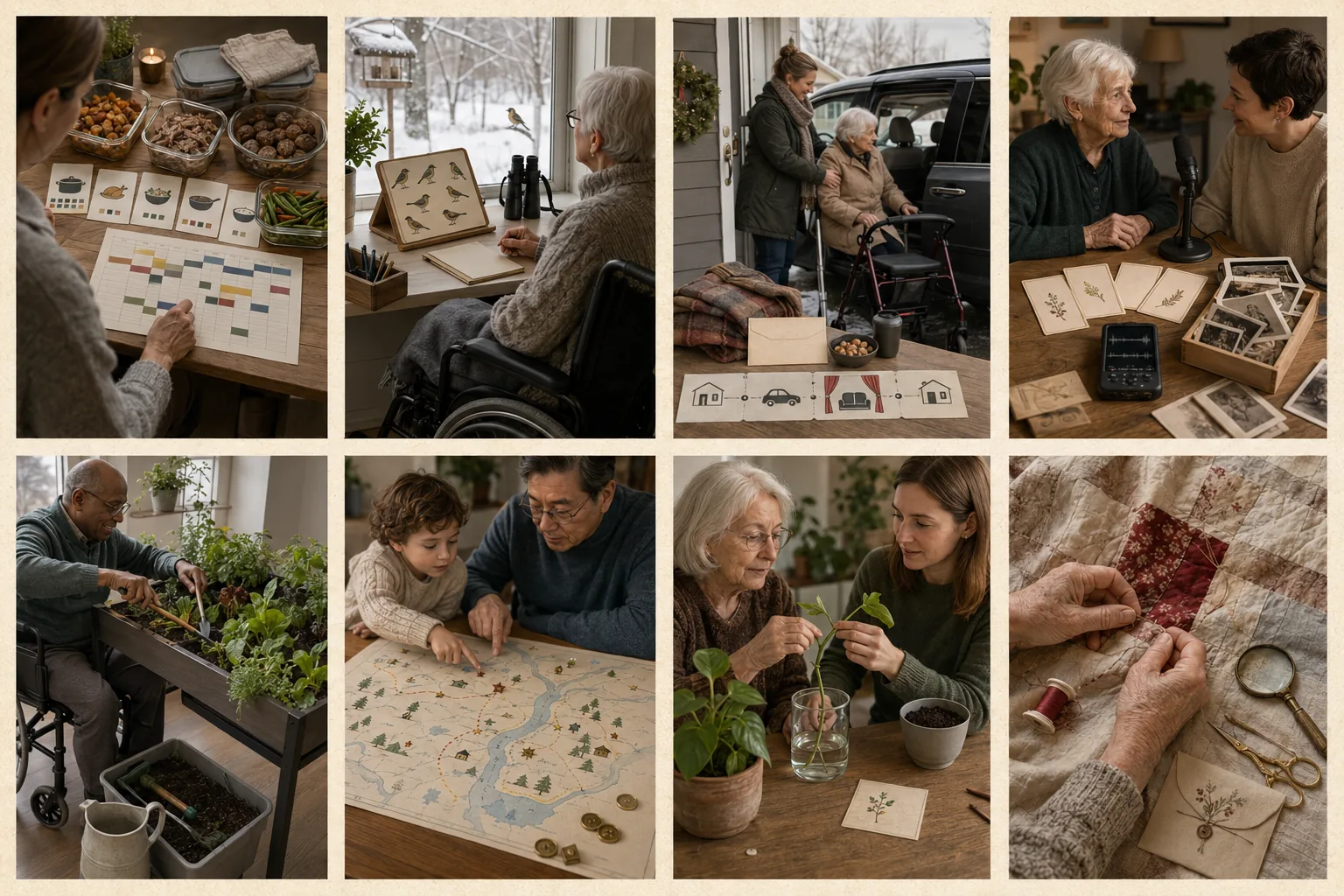
Choose a daytime performance with the grandparent, then arrange door-to-door transport, suitable seating, weather protection, a rest plan, and an early meal if wanted. Carry the tickets and logistics yourself while leaving the grandparent in control of pace and conversation.
See fit and tradeoffs →Ask the grandparent whether one established plant may be propagated and schedule a calm session to take only suitable cuttings with proper technique. Label each new plant with its common or verified botanical name, the parent plant's story, care needs, and intended recipient.
See fit and tradeoffs →
Build the date around the partner's preferred light, sound, crowd level, food, movement, communication, and duration, then offer two activity options. Include a planned early exit and a home version using the same central pleasure so changing course does not feel like failure.
See fit and tradeoffs →Each partner proposes two beginner practices, then together choose one four-session course with transparent dates, materials, access, and cancellation terms. Divide transport, practice, and scheduling work before enrollment so the gift does not make one partner the project manager.
See fit and tradeoffs →Invite each willing household branch to nominate one manageable dish or food memory, then let the family choose two to make side by side on a neutral date. Provide ingredients, separate work areas, and blank cards for a new combined variation that nobody is required to call traditional.
See fit and tradeoffs →
Ask the caregiver what length and kind of time away would restore them, then arrange trusted care coverage, transport, reservations, and a backup plan before offering the date. Keep the outing cancellable and useful even if it becomes a nap elsewhere, a quiet meal, or time alone.
See fit and tradeoffs →
Reserve a small-group bird walk led by a local naturalist and include transport, a warm drink, and binocular borrowing if offered. Put a weather-backup date and the expected distance, terrain, and duration directly in the gift note.
See fit and tradeoffs →Register the recipient for a practical session on patching a shell, repairing a pack seam, replacing a cord, and deciding when equipment is no longer safe to use. Invite them to bring one clean, genuinely repairable item and include transit to the workshop.
See fit and tradeoffs →Plan a same-day rail trip with a flexible departure window, one destination activity, a meal budget, and an earlier return option. Include current timetable links, station access notes, reservation details, and a paper itinerary that leaves unstructured time.
See fit and tradeoffs →Arrange a live lesson with a qualified language teacher focused on names, greetings, transit terms, dietary needs, and polite repair phrases for one planned destination. Ask for a short audio recap recorded with the teacher's consent so the recipient can practice accurately.
See fit and tradeoffs →
Pay for a short series of live chair-based movement sessions led by a qualified instructor who offers choices rather than performance goals. Arrange the first date, confirm the chair and room setup, and include an easy cancellation path if the recipient's energy changes.
See fit and tradeoffs →Cover several admissions to a warm-water or accessible community pool and offer to accompany the recipient at their chosen pace. Research quiet hours, water depth, entry method, locker setup, and a dry-land alternative before making the invitation.
See fit and tradeoffs →Arrange one introductory dance session whose teacher explicitly supports seated, standing, low-impact, and choose-your-own-level participation. Confirm the music style, room access, class size, rest options, and whether the giver may attend as a companion.
See fit and tradeoffs →
Choose a cooperative mystery with a stated age range and play time, then host it with roles that let participants read, organize clues, draw, or simply observe. Prepare a spoiler-free hint system, accessible lighting, simple food, and a stopping point before anyone becomes overtired.
See fit and tradeoffs →Reserve a low-pressure session at a legitimate community gaming lab, library, or accessibility group where the player can borrow and compare several controller styles during one familiar cooperative game. Treat it as a social trial night, not an assessment or purchase appointment.
See fit and tradeoffs →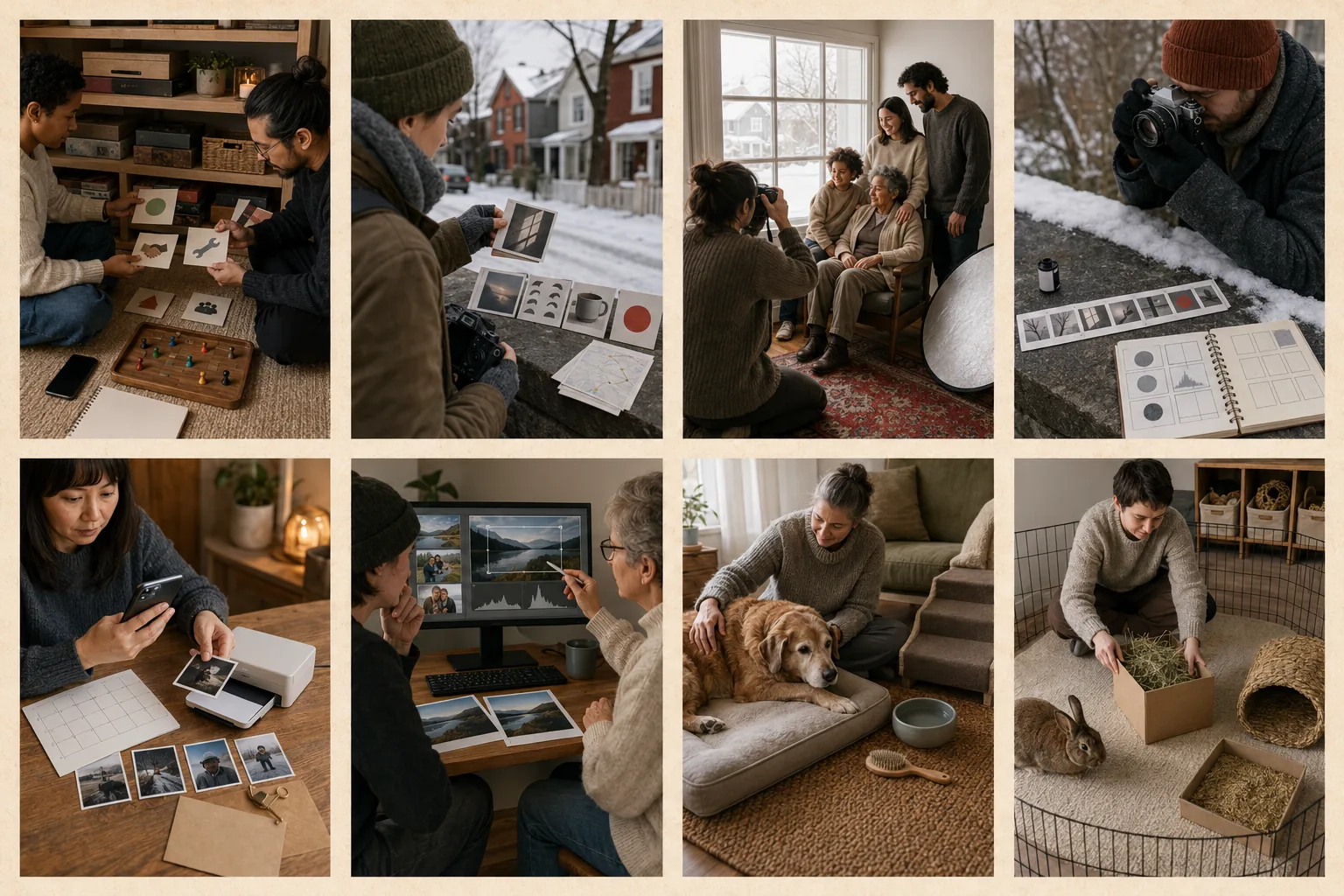
Book a photographer for a short in-home or familiar-location session using natural window light and an agreed list of groupings, including ordinary interactions rather than only posed portraits. Include a clear number of edited files or prints, usage rights, delivery timing, and a low-pressure rescheduling plan.
See fit and tradeoffs →Book a one-to-one lesson using a small folder of the recipient's own photographs and the software or device they already use. Ask the instructor to cover selection, basic tonal and color adjustments, nondestructive workflow, export, and a repeatable backup step rather than dramatic presets.
See fit and tradeoffs →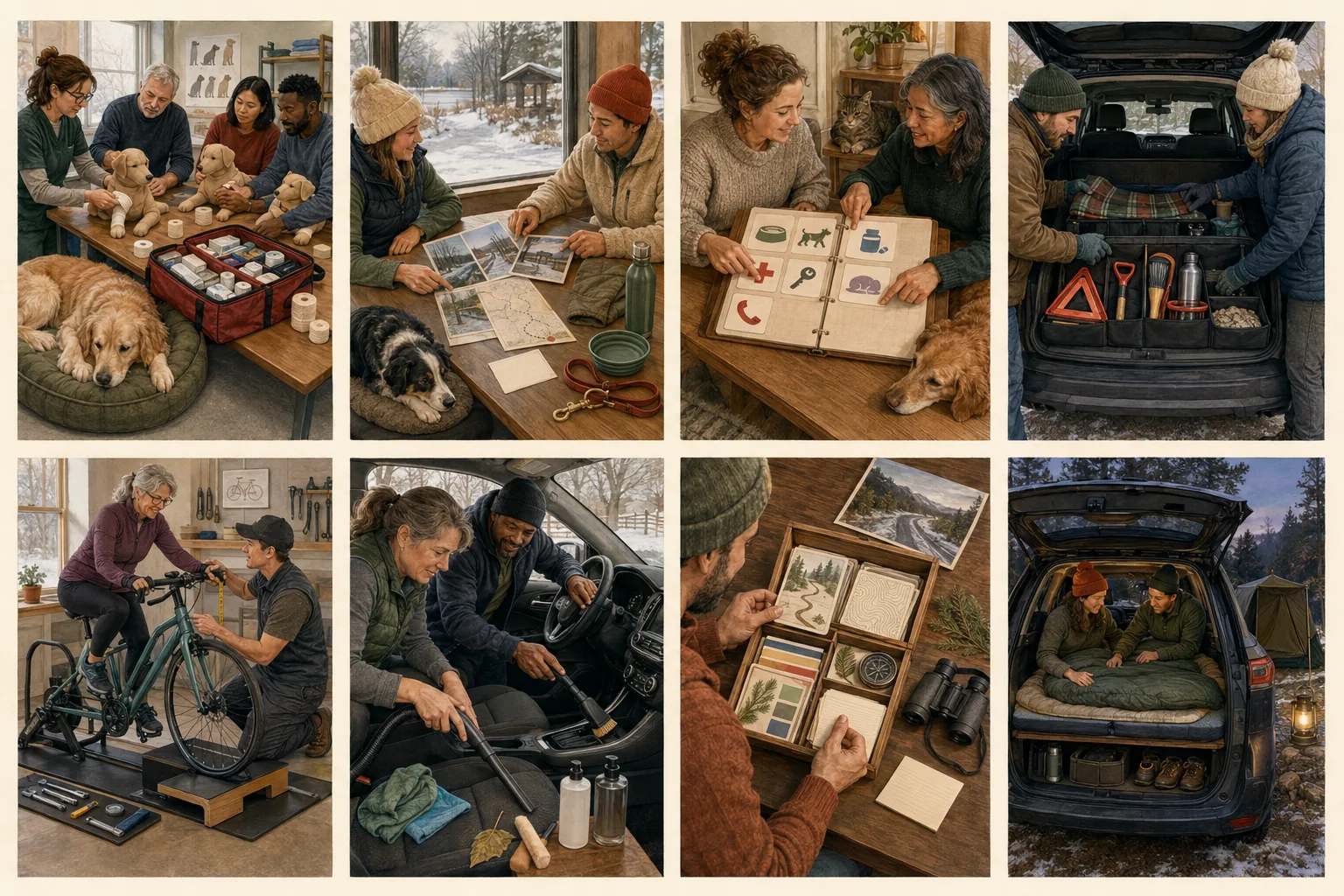
Register the recipient for a reputable pet first-aid course taught within a clearly stated educational scope and suitable for their animal species. Include the class date, duration, format, accessibility details, and a note that emergencies still require veterinary care.
See fit and tradeoffs →Research a half-day outing with current pet rules, route length, surface, shade, water, waste disposal, parking, quiet escape points, and one weather backup. Include a simple schedule with generous rest and a human-only alternative if the animal is better left at home that day.
See fit and tradeoffs →Book a fit-and-comfort assessment with a qualified bicycle professional who will inspect the existing bicycle, observe the rider, and explain reversible adjustments before recommending new parts. Include a short follow-up after several rides and make clear that the recipient chooses which changes to accept.
See fit and tradeoffs →Arrange a hands-on lesson with a reputable detailer covering safe interior cleaning, paint-safe washing, glass, wheels, product labeling, water use, and disposal. Use the recipient's vehicle only with owner permission, or practice on demonstration panels when weather or ownership makes that inappropriate.
See fit and tradeoffs →Reserve one nearby established campsite and plan a low-stakes test using borrowed or already-owned gear, a simple meal, an arrival-before-dark rule, and an easy route home. Measure the actual vehicle and sleeping setup in advance, then agree on ventilation, weather limits, campground rules, and a no-shame cancellation point.
See fit and tradeoffs →
Plan attendance at a public observatory or astronomy-club night with current event details, transport, weather backup, warm layers already owned, and a simple red-light-safe observation card if the organizer permits it. Choose three visible targets from the host's published program and explain that clouds may change the entire evening.
See fit and tradeoffs →Choose four established citizen-science activities from reputable institutions, one per season, and place their official instructions, dates, training, data policy, and accessible participation options in a shared calendar. Offer to join the first observation and add a clear exit if the project no longer fits the recipient's time or values.
See fit and tradeoffs →Plan a legal collecting or look-only geology walk using an official site guide, then help the child draw and label a small tray with place, date, observed texture, and how each allowed specimen was obtained. Limit the tray to a fixed number of spaces and use photographs or rubbings where removal is prohibited.
See fit and tradeoffs →Arrange a consultation with a qualified conservator or collection-care professional focused on one defined material or storage problem the owner has identified. Request written priorities that distinguish immediate risks, low-cost housekeeping, suitable enclosures, specialist treatment, and objects that should simply be left alone.
See fit and tradeoffs →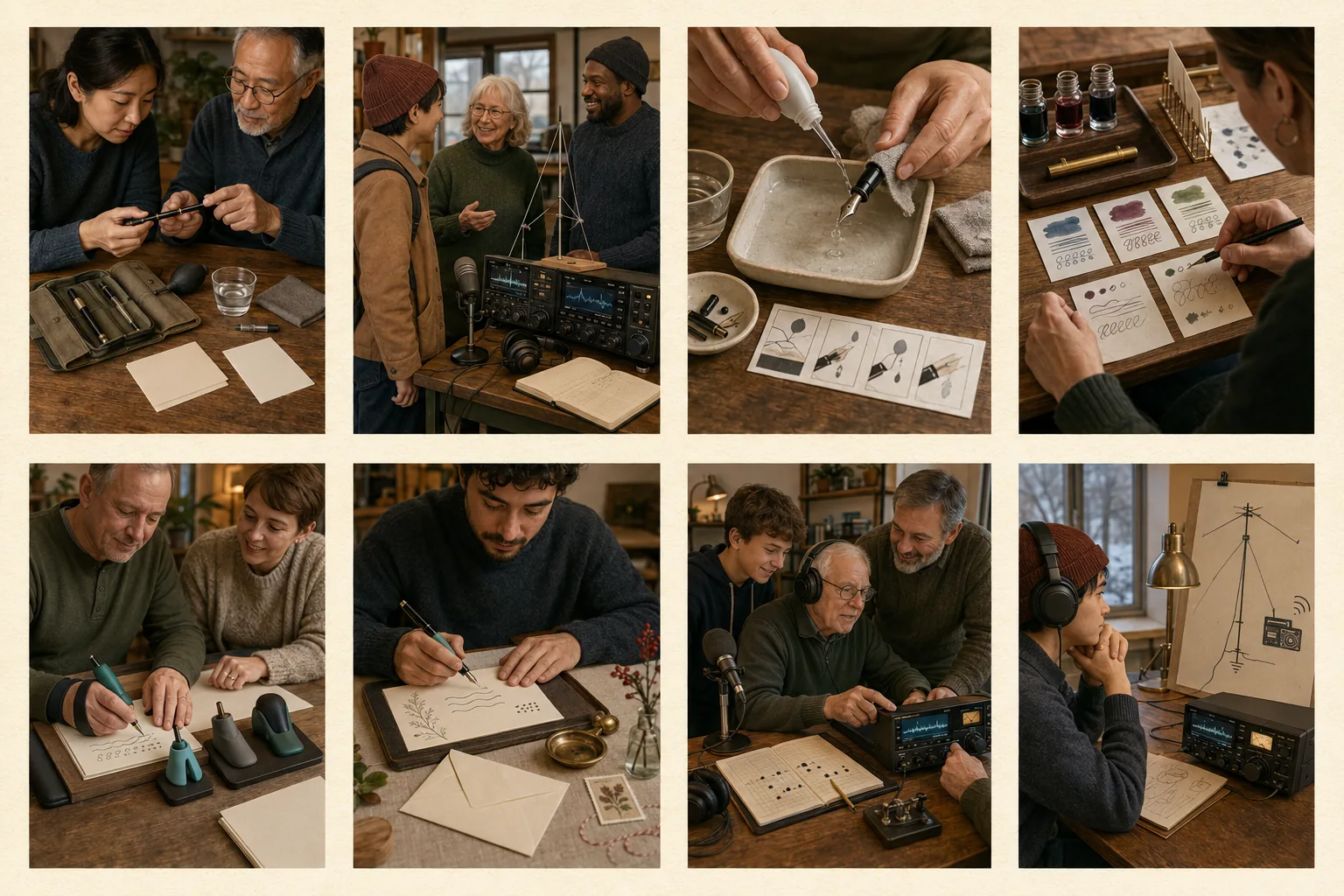
Arrange a calm care session with a knowledgeable pen retailer, club member, or repair professional covering safe flushing, drying, storage, ink compatibility, and signs that require professional repair. Include only a few generic supplies confirmed for the recipient's exact pen and let them choose any ink color themselves.
See fit and tradeoffs →Arrange a visit to a reputable local amateur radio club's public demonstration, open house, or beginner session where licensed operators explain listening, operating rules, equipment, and the path to licensing. Include event details, transport, a plain-language glossary, and no expectation that the recipient purchase or transmit with equipment.
See fit and tradeoffs →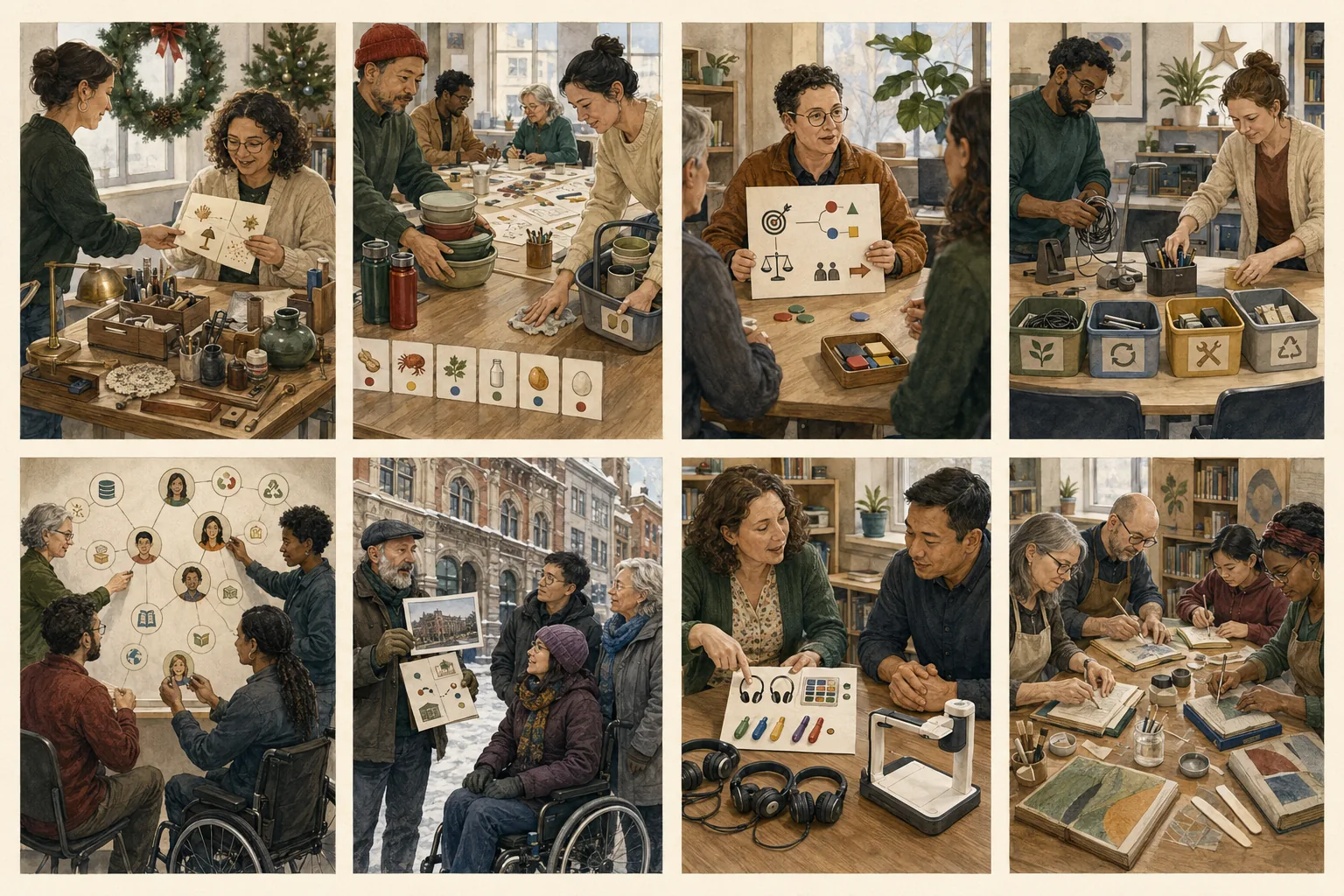
Research a short accessible route around three ordinary sites near work and prepare one verified story for each without turning the walk into a lecture. Invite the colleague for a defined lunch break, include a weather backup, and end with their preferred simple food or drink.
See fit and tradeoffs →
Ask the teacher whether a guest reading would genuinely help, then obtain school approval and let the teacher choose the date, text, length, and learning connection. Prepare the book, accessibility supports, arrival process, and one simple follow-up question without asking the teacher to host or improvise.
See fit and tradeoffs →Ask through an appropriate channel whether the worker may accept a modest lunch and let them choose takeout, company, timing, or a transferable local meal credit. Handle ordering, travel, gratuity, and cancellation without extending the break beyond workplace rules.
See fit and tradeoffs →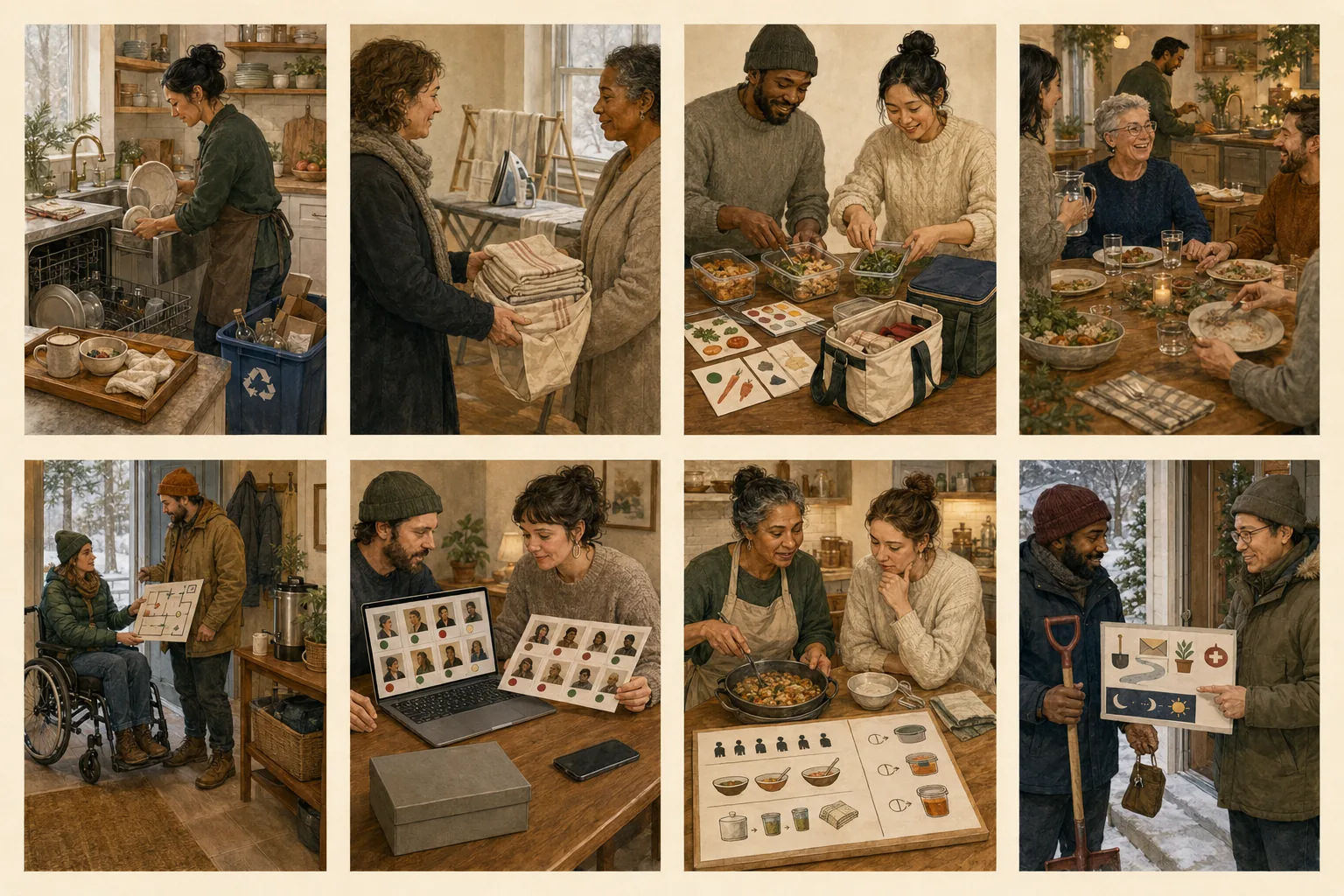
Choose a real January date and arrange a restaurant meal, delivered supper, or gathering in another home where the usual host has no planning, cooking, transport, or cleanup role. Make the invitation explicit about duration, cost, access, and whether they may bring a partner or care responsibility.
See fit and tradeoffs →
Help the neighbor choose one eligible object, register for a local repair event, gather model details and parts, and arrange door-to-door transport. Attend as a note-taker or extra pair of hands, while making clear that assessment may end with responsible recycling rather than repair.
See fit and tradeoffs →Choose one shelf-stable breakfast element available or shippable in both places and agree on a twenty-minute weekend window across time zones. Send the parcel with a simple place card, then eat together by call or exchange one photo and voice note asynchronously.
See fit and tradeoffs →Choose four broad seasonal windows and exchange one voice note from a familiar route in each, describing sound, weather, one change, and one ordinary thought. Keep every note under five minutes, allow missed seasons without apology, and save files only if both friends want an archive.
See fit and tradeoffs →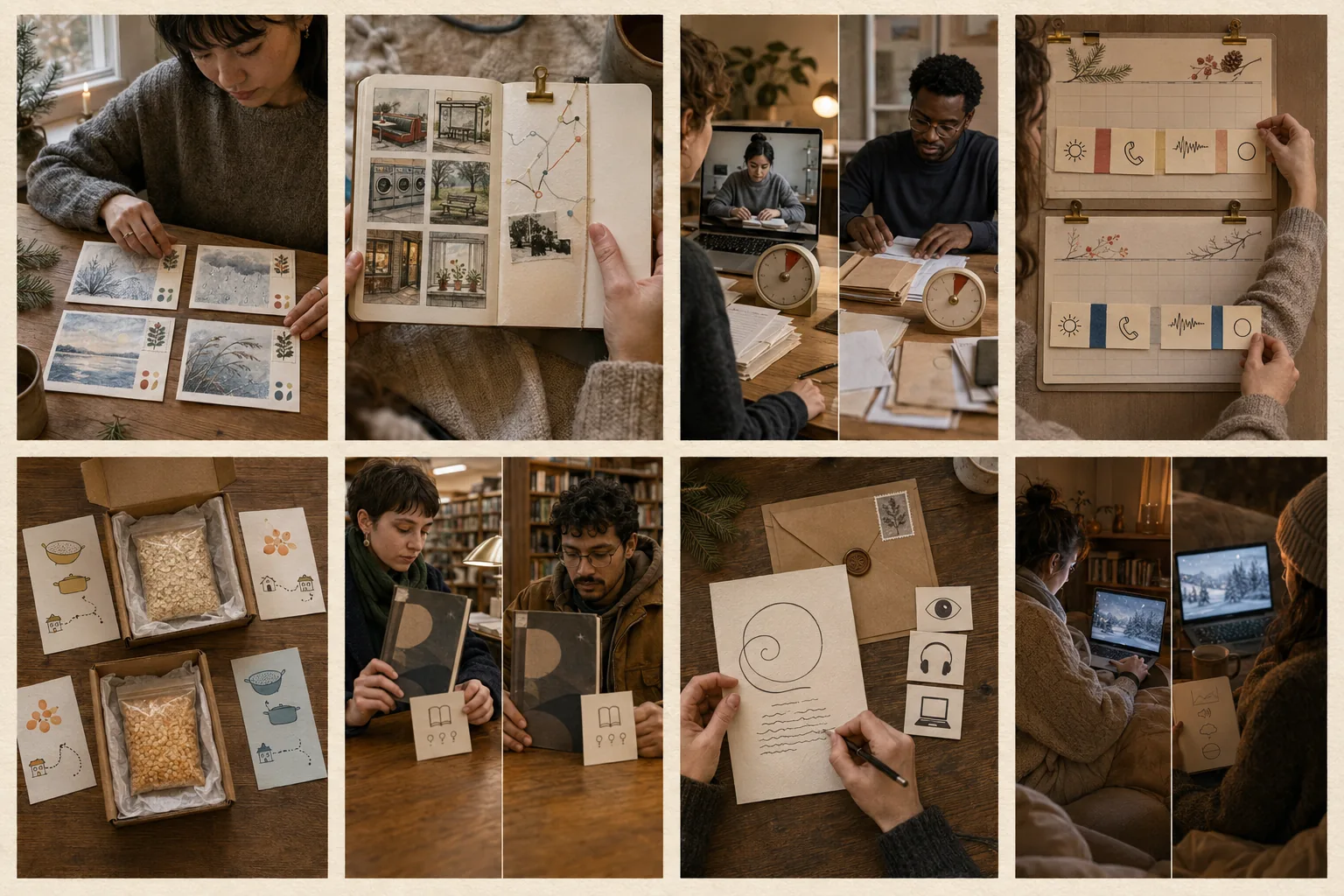
Search both public-library catalogs for one mutually interesting book, film, recording, or magazine issue and place separate holds only after agreement. Choose a flexible discussion window and exchange three questions that work even if one person finishes only part of the material.
See fit and tradeoffs →Choose one legally accessible film both people already can watch and create a private shared notebook with time-stamped prompts for image, line, sound, memory, and disagreement. Each friend watches on their own schedule, adds only what they want, and closes the notebook on a set date.
See fit and tradeoffs →
Offer a short menu of local classes selected from interests the recipient has actually expressed and let them choose one or decline all. Register only after confirming dates, materials, transport, accessibility, cancellation, and whether the giver attends or simply handles logistics.
See fit and tradeoffs →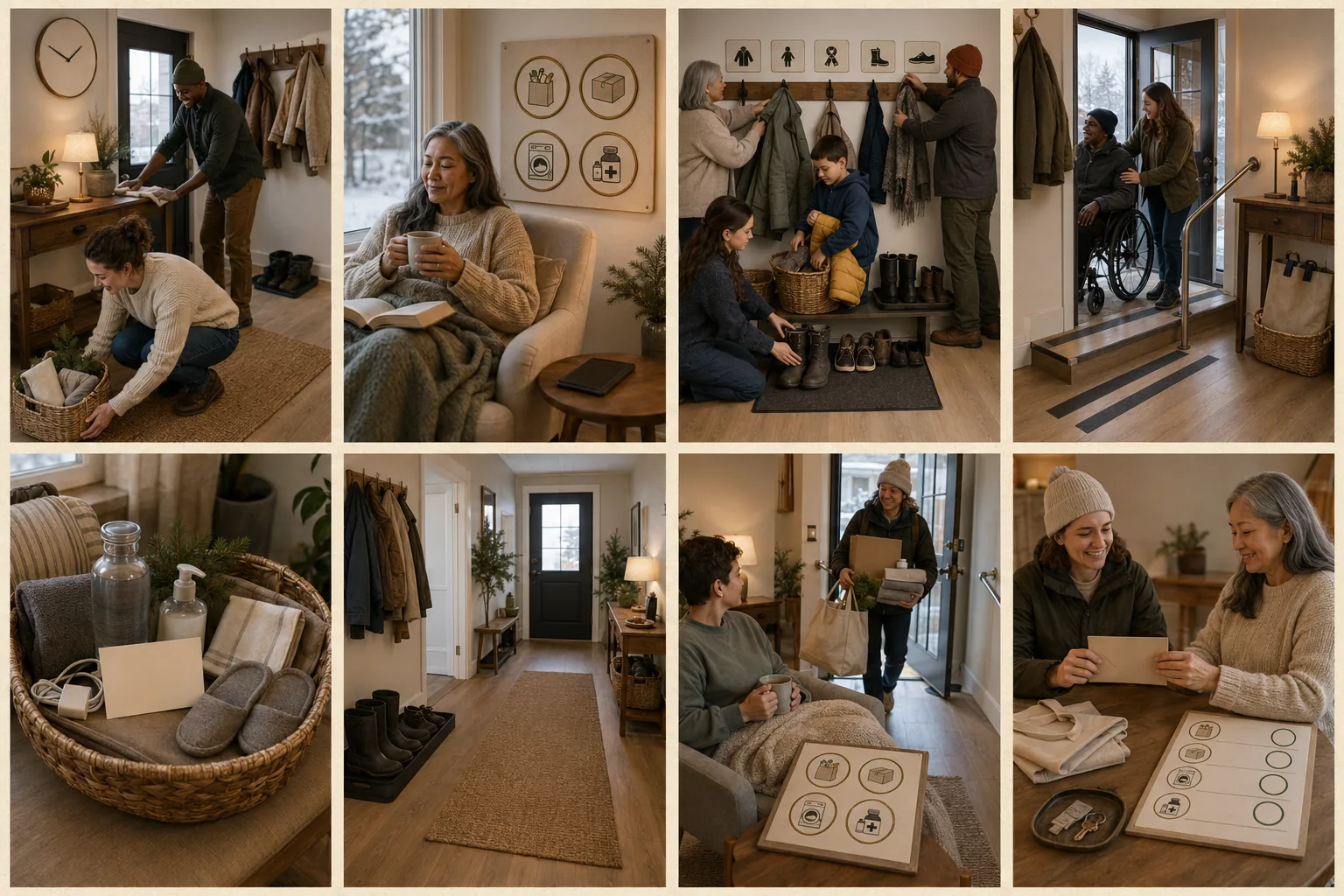
Choose a real date and ask the recipient which recurring tasks must disappear for six hours, then assign groceries, meals, care coverage, pet needs, transport, and urgent communication to willing qualified people. The recipient decides whether to stay home, go out, see someone, or do nothing, with every option treated as complete.
See fit and tradeoffs →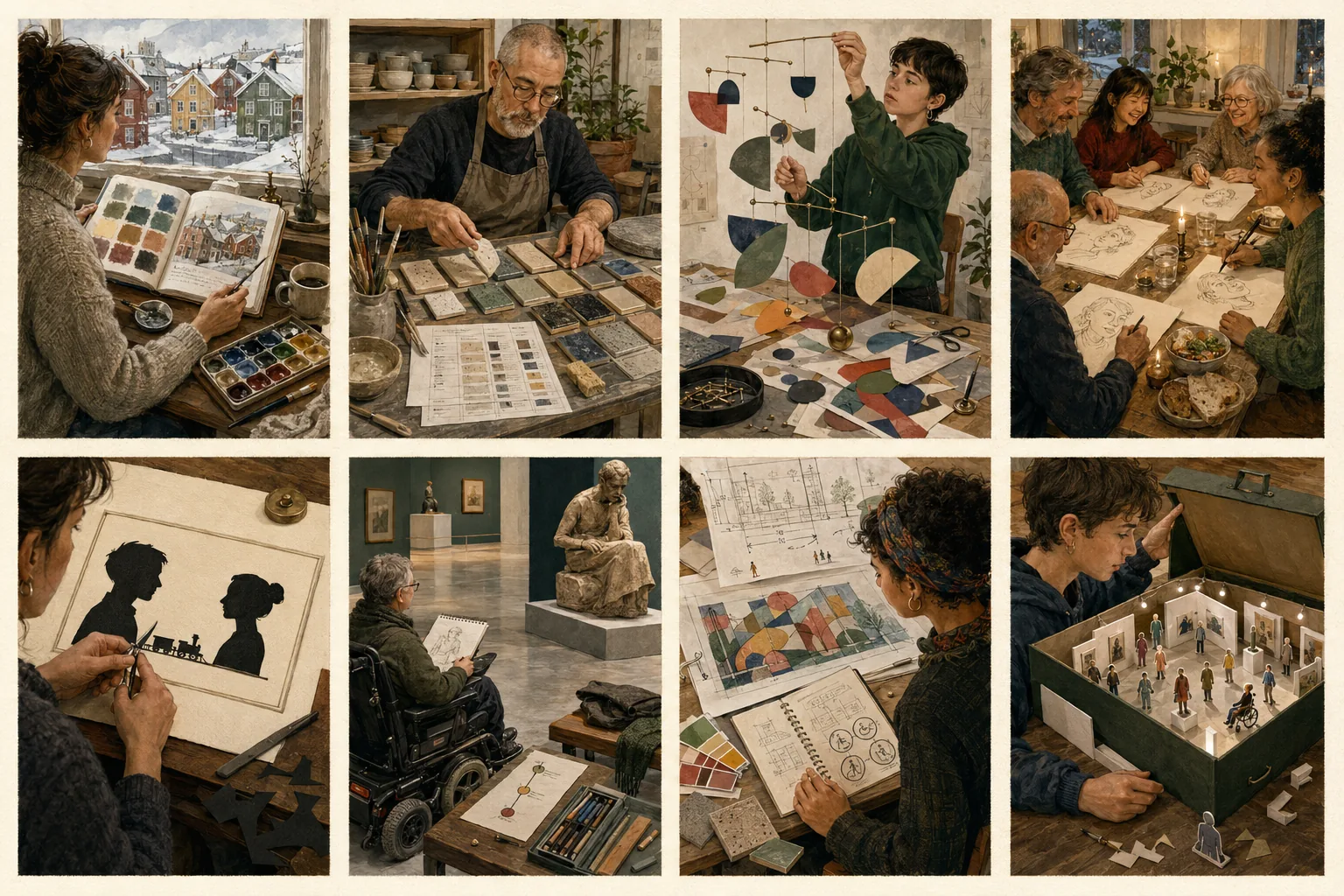
Arrange approved studio access for the recipient to prepare a numbered set of small clay test tiles and compare slips, textures, or glaze combinations already available in that studio. Include firing, a written recipe grid, cleanup, and a later pickup or review date so the experiment produces a reference library rather than an unfinished pile.
See fit and tradeoffs →Plan a simple meal with six-minute drawing rounds in which each person looks at a partner rather than the paper. Use broad dark markers, large sheets, and consent-based pairings, then let every subject choose whether their portraits are displayed, taken home, recycled, or kept private. End with one ordinary group drawing made together.
See fit and tradeoffs →Choose a museum the recipient actually wants to visit and design a short route with three works, nearby seating, allowed dry drawing tools, rest points, and a quiet meal or drink afterward. At each work, offer one optional prompt about shape, negative space, or gesture, and leave enough time for looking without producing a finished drawing.
See fit and tradeoffs →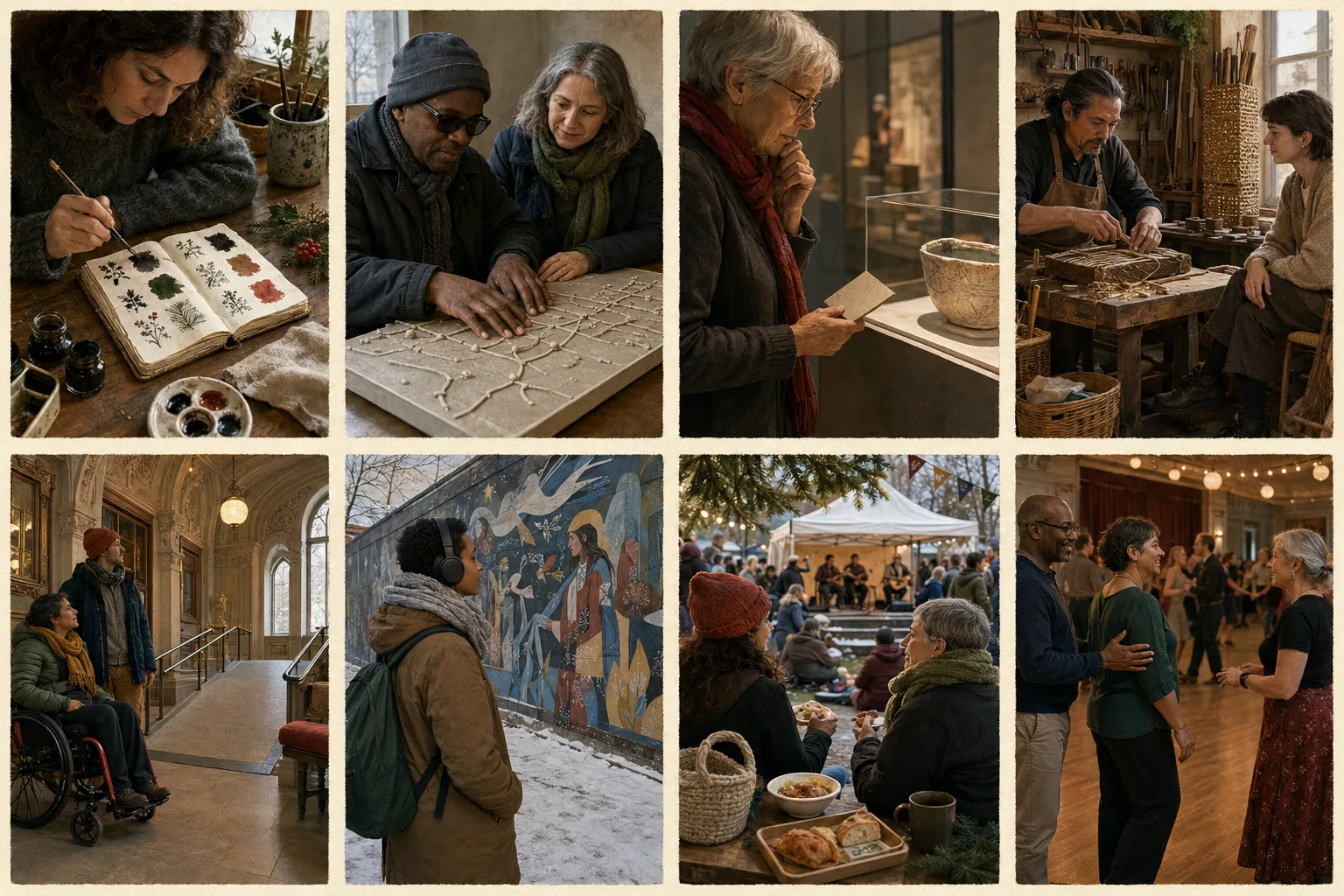
Begin with one question the recipient genuinely asks, such as how ordinary people stored food or how clothing signaled work, then identify four objects in one current collection that offer different evidence. Prepare brief source notes, gallery locations, uncertainties, and a quiet discussion stop, while leaving room for the recipient to reject your interpretation.
See fit and tradeoffs →Arrange a compensated small-group or private session with a practitioner who publicly offers teaching or demonstrations in their own tradition. Ask the maker to define what may be observed, handled, photographed, or attempted, and include time for the history, contemporary practice, labor, and proper care of the work rather than promising a take-home replica.
See fit and tradeoffs →Choose a legitimate public open-house program or bookable building tour and create a route of no more than three sites with verified entry rules, travel time, rest, weather backup, and one meal. Add a small field card for plan, threshold, material, and reuse observations, but do not turn private residences into uninvited sightseeing stops.
See fit and tradeoffs →Let the recipient choose an established public festival, then handle verified tickets if required, transportation, a two-event maximum schedule, food planning, weather, seating, and a clear early-exit option. Read the organizer's own context in advance and treat the day as participation in a community event, not a costume or sampling challenge.
See fit and tradeoffs →Choose an inclusive beginner-friendly social dance event the recipient approves, confirm the lesson format and consent norms, and arrange transport, footwear guidance, water, seating, and an agreed departure time. Attend as a supportive companion without making the recipient dance with you or stay for the full social.
See fit and tradeoffs →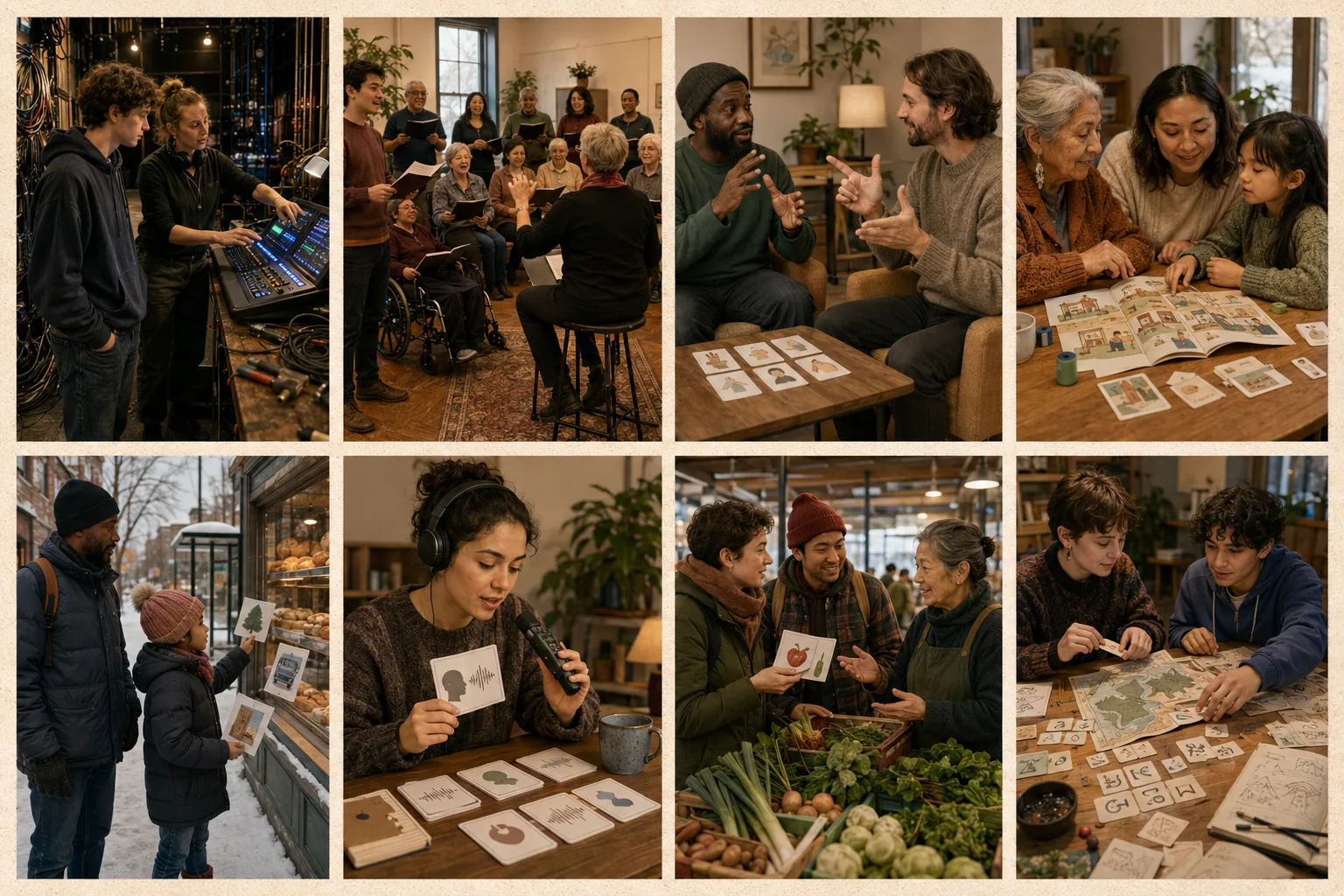
Arrange an official theatre, concert hall, or community-stage tour that focuses on scenery, props, lighting, sound, wardrobe workflow, and the workers behind them. Pair it with a performance only if the recipient wants one, and prepare three practical questions about training, collaboration, and safety rather than asking staff for informal job access.
See fit and tradeoffs →Find a non-audition or explicitly open rehearsal that welcomes prospective members, then confirm repertoire, voice-part flexibility, music format, dues context, and whether observing without singing is acceptable. Attend or arrange transport, and make the gift only the guest visit so the recipient decides privately whether to return.
See fit and tradeoffs →Pay for four beginner or level-appropriate sessions taught by a qualified Deaf instructor or an established community program, selected by the recipient. Center the series on real conversation goals, such as greetings, family routines, or workplace introductions, while including cultural context and a clear path for continued learning if the recipient chooses.
See fit and tradeoffs →Plan a short familiar route with eight safe observation stops, invite the child to draw or photograph one ordinary thing at each, and name it in both languages using terms checked by fluent speakers or reliable child-focused resources. Back home, arrange the child's images into paired word cards with room for multiple correct variants and one sentence they choose.
See fit and tradeoffs →Choose a public market where the target language is genuinely used and welcome, prepare eight respectful phrases for greeting, asking about one ingredient, quantity, price, and thanks, then practice privately before visiting at a non-rush time. The fluent companion should step in only when invited, buy something actually wanted, and debrief away from workers.
See fit and tradeoffs →
Invite willing speakers to a simple meal with two timed conversation halves, one in each language, and agree on correction preferences before starting. Prepare accessible topic cards about ordinary life, give equal time and status to both languages, cover the food, and end before anyone becomes a host, interpreter, or unpaid teacher for the entire evening.
See fit and tradeoffs →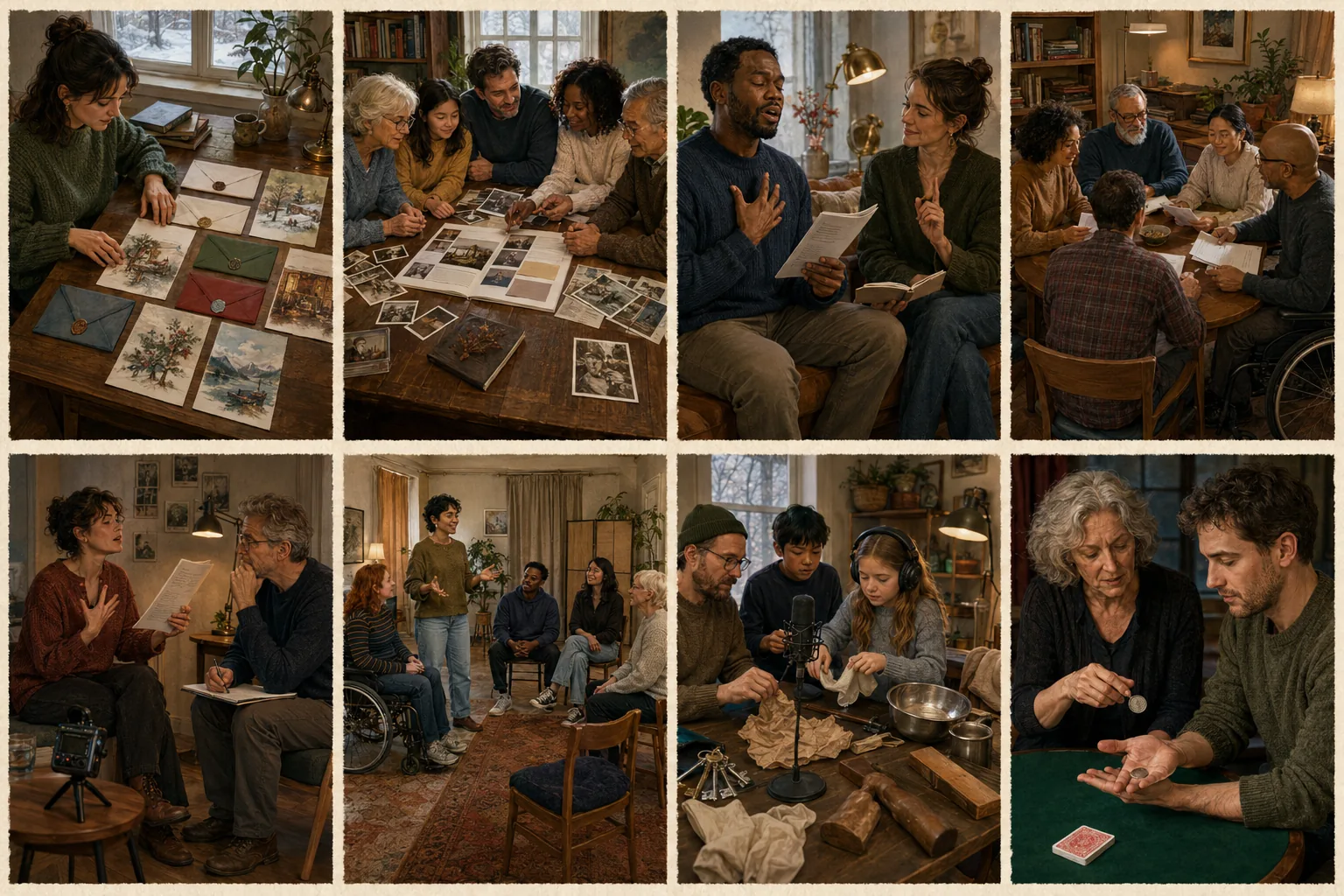
With the writer's permission, invite a small number of willing readers for one draft under an agreed page or time limit, assign roles without assumptions, provide accessible scripts, read stage directions neutrally, and gather only the feedback questions the writer requests. Cover simple food and end with all scripts returned or deleted.
See fit and tradeoffs →Let the teen choose a qualified coach and an age-appropriate monologue they are permitted to use, then fund one session focused on text, intention, breath, pacing, and grounded performance choices. With consent, create a simple private rehearsal recording or annotated script for the teen, not a public audition reel or guaranteed casting package.
See fit and tradeoffs →Choose a reputable true-beginner workshop that explicitly permits passing, observation, and low-pressure participation, then confirm group size, exercise style, access, and content norms with the recipient before booking. Arrange transport and a quiet debrief, and make continuing classes entirely their decision.
See fit and tradeoffs →Choose a one-minute rights-cleared or family-made silent clip and gather safe household materials for footsteps, weather, doors, fabric, and one invented sound. Assign recording, performing, cueing, and listening roles by preference, record multiple takes, and compare how changing materials alters the scene without requiring anyone to appear on camera.
See fit and tradeoffs →Book a reputable instructor to teach one age-appropriate close-up routine using ordinary or clearly specified props, including handling, audience attention, patter choices, respectful volunteer interaction, and how to stop when practice becomes frustrating. The teen keeps the secret and decides privately if or when to perform it.
See fit and tradeoffs →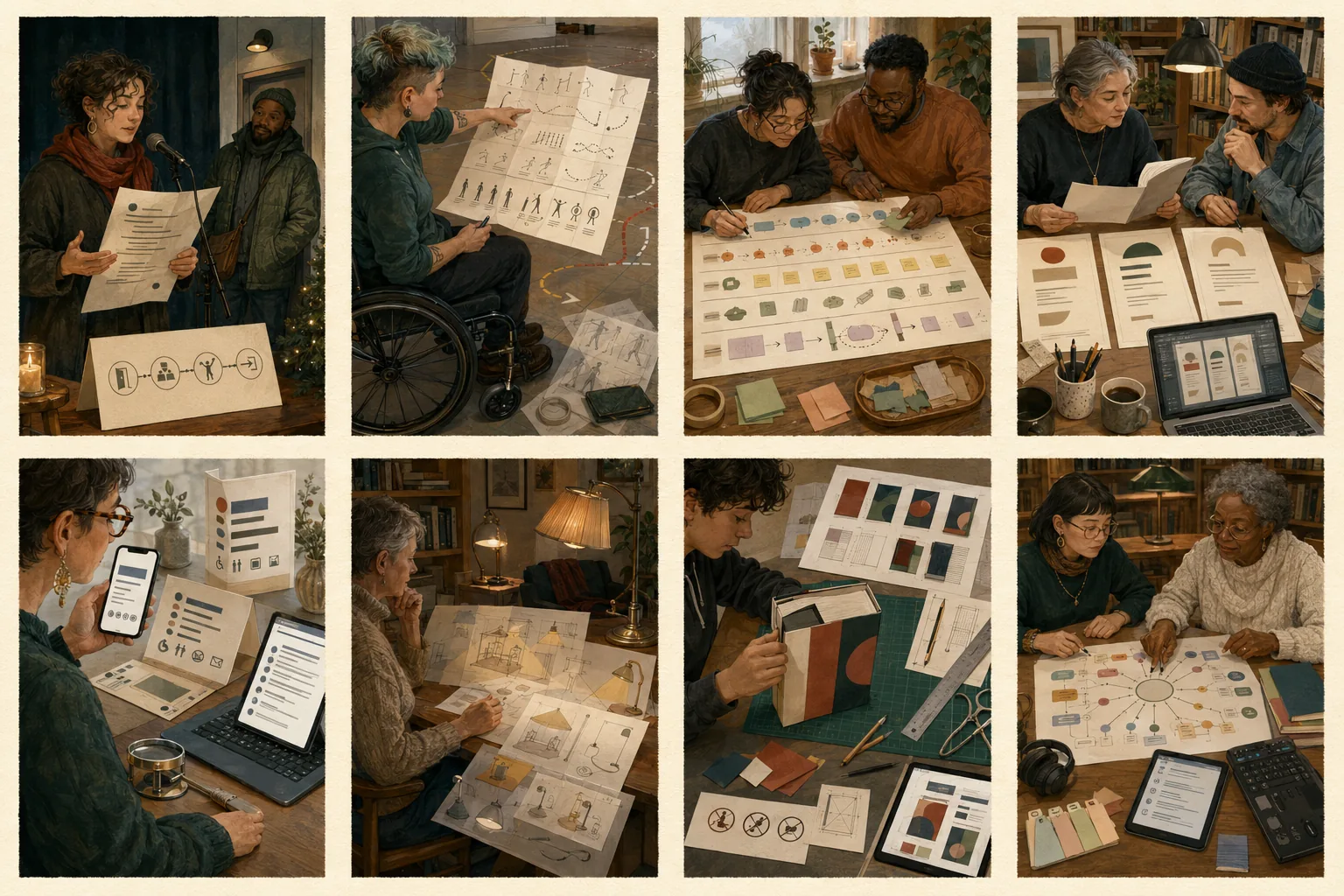
Let the poet select a legitimate open mic, then handle current signup details, transport, an optional timed rehearsal, printed or device-ready text, water, audience seating, and an agreed exit. Attend as the supportive person they request, record only with permission from the poet and venue, and make performing entirely reversible until their name is called.
See fit and tradeoffs →
Let the recipient choose three legitimate public lectures or talks across several months, then handle registration, transport, access requests, and a brief post-event meal or remote call. Before each, provide only a short speaker and topic note; afterward, use two open questions and preserve the option to skip any session without replacing it with homework.
See fit and tradeoffs →Choose three harmless sample claims from advertising, old viral images, or public information, then practice a repeatable sequence: pause, identify the original claim, inspect source and date, seek independent evidence, check image context, and state what remains unknown. Give each person a role and end by writing one household sharing rule rather than declaring a winner.
See fit and tradeoffs →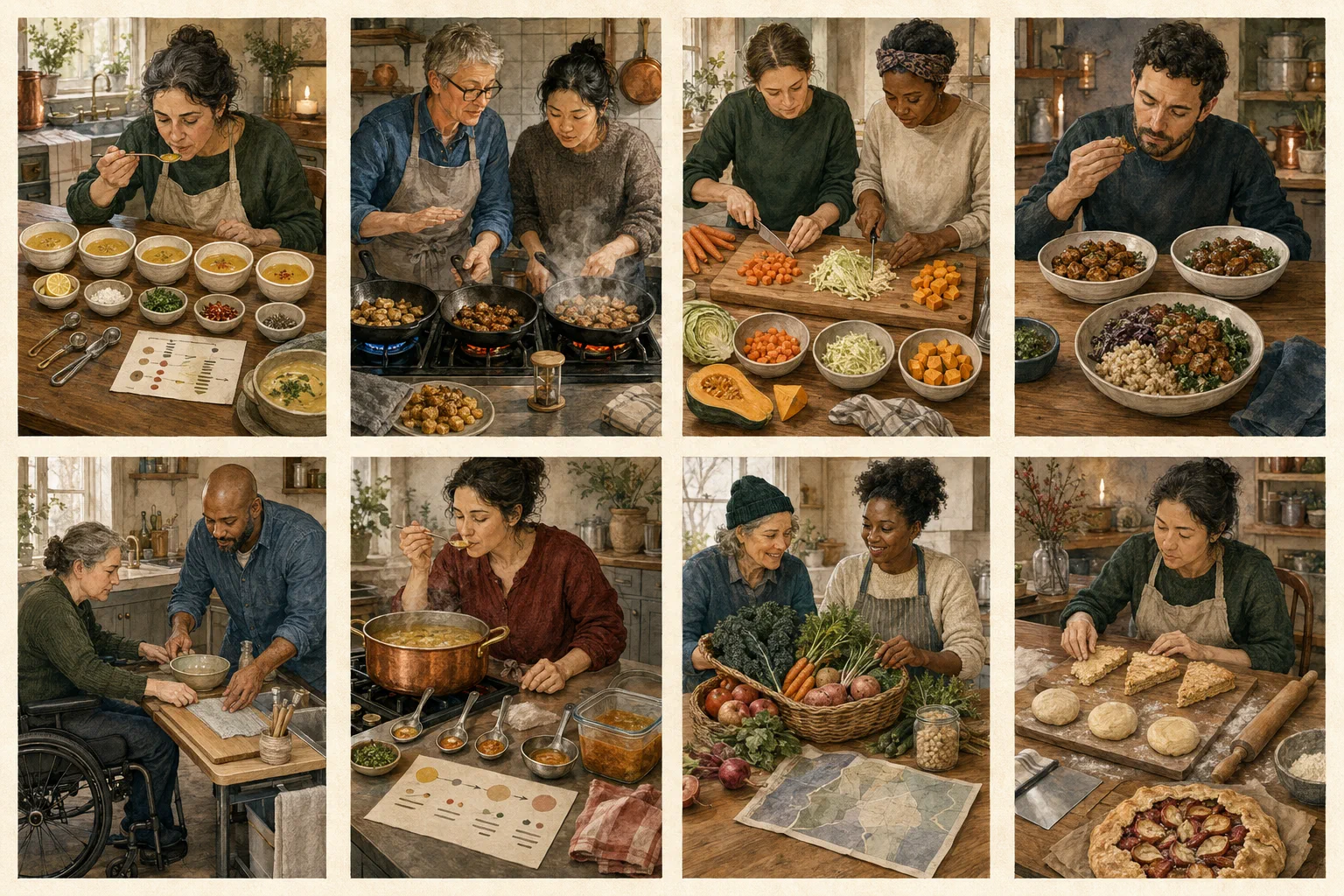
Cook one neutral base dish, divide it into small bowls, and adjust salt, acidity, sweetness, bitterness, and heat one variable at a time. Record the recipient's preferred balance and finish by seasoning the shared supper together.
See fit and tradeoffs →Arrange a one-on-one lesson using the recipient's own stovetop and skillet to compare preheating, pan crowding, moisture, and recovery time. Cook one familiar ingredient in three small batches and leave a visual cue card based on what actually happened.
See fit and tradeoffs →Book a private lesson that uses the recipient's own comfortable knife to practice a stable board, guiding hand, and three cuts on vegetables they regularly cook. Turn every practice piece into a labeled soup, roast, or stir-fry component.
See fit and tradeoffs →Create a guided kitchen session comparing two preparation methods for one familiar plant protein, such as pressing and crumbling or soaking and roasting. Use the same seasoning, record texture differences, and build both results into a complete meal.
See fit and tradeoffs →Arrange a consent-led session with an appropriate occupational-therapy, rehabilitation, or adaptive-kitchen professional to observe one real meal task and suggest a shorter, safer workflow. Fund only the changes the recipient chooses after trying them.
See fit and tradeoffs →Make one forgiving seasonal soup and pause at three stages to taste for body, salt, acidity, aroma, and temperature. Let the recipient choose each adjustment, note what changed, and package the finished soup with its actual final measurements.
See fit and tradeoffs →Visit one local market together with a fixed basket budget, choose a manageable set of seasonal ingredients, and cook a two-part meal without buying specialty gear. Include one planned fallback ingredient so imperfect produce availability does not derail the day.
See fit and tradeoffs →Prepare three small crust batches from one tested formula, changing only water, handling, or rest time. Bake them as simple tasting wedges, compare tenderness and flake, then use the preferred method for one modest pie or galette.
See fit and tradeoffs →
Plan a cool, unhurried morning to make one small batch of laminated dough with a qualified teacher or experienced baker. Mark each fold, rest, and temperature check on a reusable timeline and bake simple shapes that reveal the layers clearly.
See fit and tradeoffs →Bake two small practice layers from a reliable recipe and rehearse leveling, filling, crumb coating, chilling, and simple finishing before an important celebration. Photograph the working setup and record the quantities and timing that fit the recipient's tools.
See fit and tradeoffs →Make one small cookie dough and divide it into controlled samples that change a single variable such as chill time, portion depth, or baking duration. Taste the labeled results together, then bake the remaining dough using the household's chosen texture.
See fit and tradeoffs →Choose one familiar baked item and test a single needed substitution in two small controlled versions using reputable recipe guidance. Label every ingredient, compare texture and flavor without judgment, and write the successful method only after the household approves it.
See fit and tradeoffs →Make one small jar of salt-preserved citrus from a tested source, recording the date, ingredients, expected changes, storage guidance, and three specific savory uses. Prepare a fully matured sample separately if the recipient should taste the result that day.
See fit and tradeoffs →Compare three teaspoon-scale batches of one whole spice: untoasted, lightly toasted, and more deeply toasted within safe recipe guidance. Grind each separately, smell them side by side, and use all three in small portions of one familiar dish.
See fit and tradeoffs →
Harvest only ready herbs from plants the recipient owns, then compare one appropriate drying method with one freezer or salt-based method from tested guidance. Label small quantities by herb, date, method, and two intended dishes.
See fit and tradeoffs →Make one small fruit-and-vinegar syrup from a tested refrigerated method, then dilute it three ways with still water, sparkling water, or warm water. Record the recipient's preferred ratio and label storage, ingredients, and a conservative use-by date from the source.
See fit and tradeoffs →Cook one bean variety in two small batches using tested differences in soaking, salting, or cooking method, then compare texture and broth. Turn both batches into planned meals and record the method that best fits the household's equipment and schedule.
See fit and tradeoffs →Bake one tested seeded cracker dough at two thicknesses, cool it completely, and compare snap, serving use, and next-day storage. Record the preferred rolling guide and pack only the amount that remains crisp in the recipient's existing airtight container.
See fit and tradeoffs →Use the recipient's existing brewer to make three small cups that vary only coffee-to-water ratio or grind within the equipment guidance. Compare them without scoring, then write the recipient's chosen measurements, water amount, timing, and an easy half-batch version.
See fit and tradeoffs →Prepare two small cups of a tested cacao-based drink, comparing one whisking or milk choice while keeping sweetness under the recipient's control. Set a defined twenty-minute pause with comfortable seating, water, and no expectation to turn it into a ceremonial performance.
See fit and tradeoffs →Make one small refrigerated citrus cordial from a tested recipe, then test three serving ratios with still, sparkling, and warm water. Write the chosen ratio, ingredient list, storage guidance, and a batch scale for the host's realistic guest count.
See fit and tradeoffs →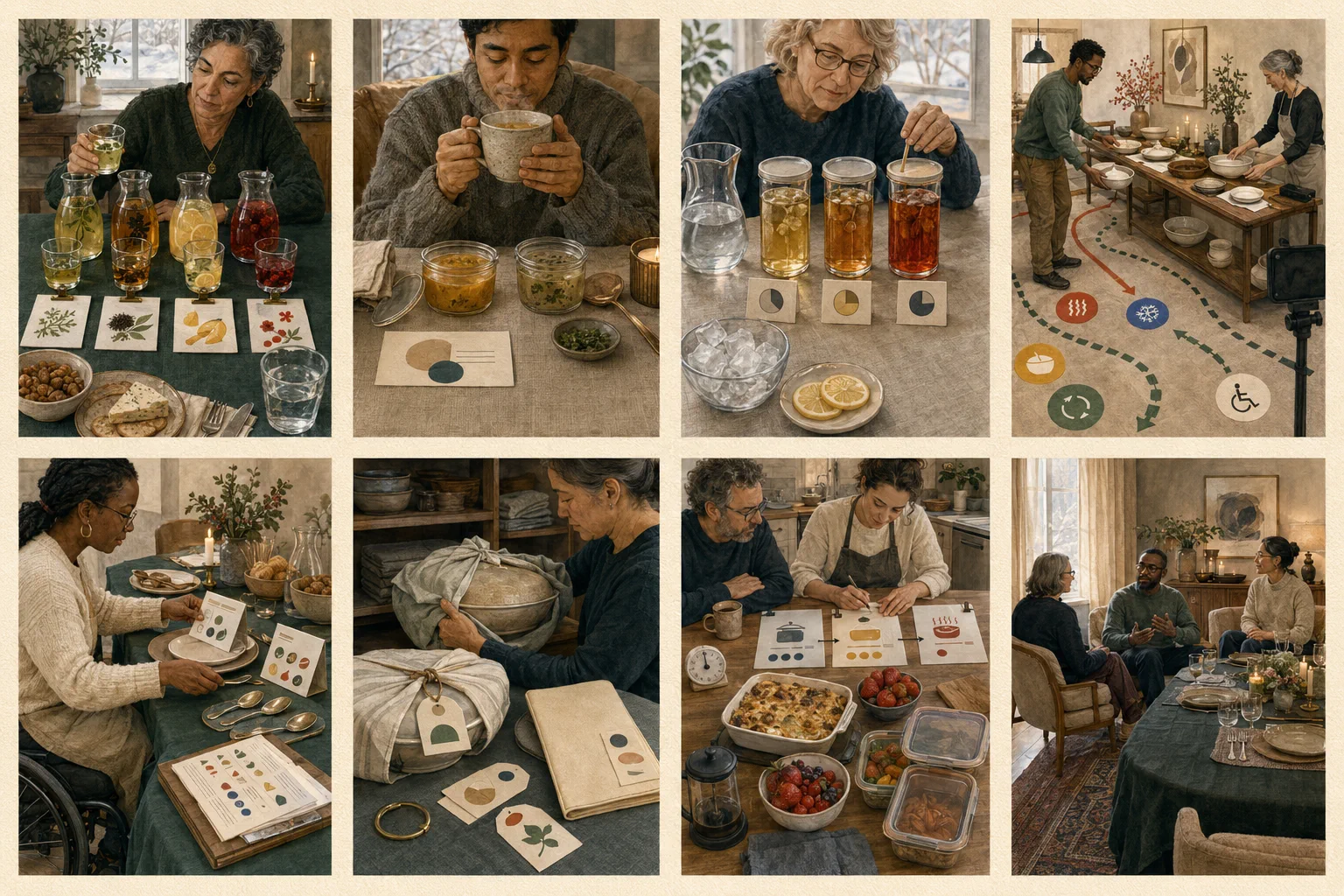
Set up a small blind tasting of four clearly non-alcoholic bitter, botanical, tea-based, or fruit-forward drink styles in tasting portions. Record ingredients, dilution needs, sweetness, accessibility, and the host's chosen occasion without ranking by price or imitation.
See fit and tradeoffs →Cold-steep one tea the recipient already likes at three tested time points, keeping leaf, water, and temperature constant. Taste small portions, record the preferred strength and dilution, and turn the rest into a right-sized pitcher with a clear refrigerated use window.
See fit and tradeoffs →Run a half-size rehearsal of the host's planned brunch menu, separating work into previous-day, morning, and serve-now tasks. Time oven and refrigerator transitions, test one holding method, and reduce the menu until the host has a realistic quiet period with guests.
See fit and tradeoffs →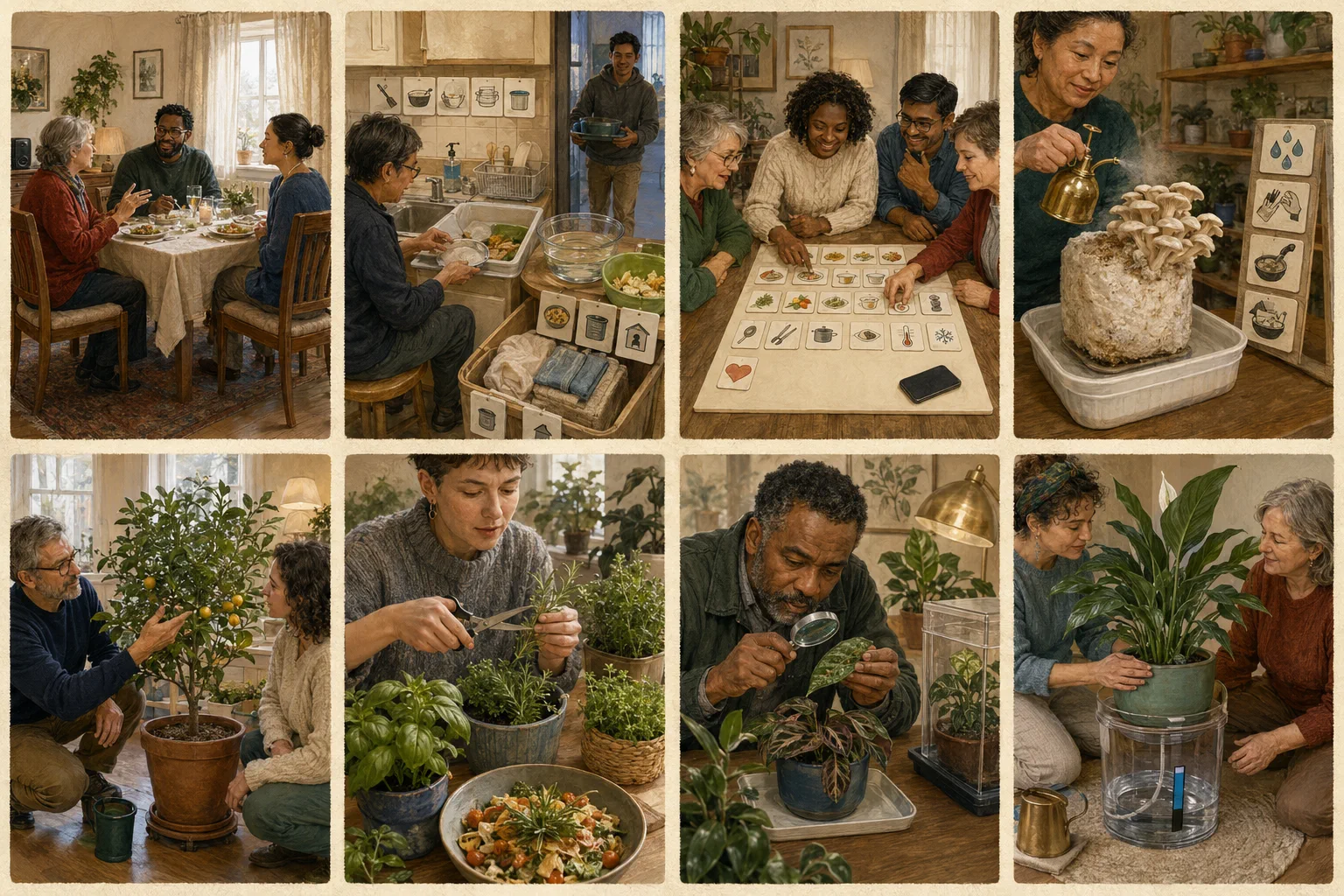
Arrange a consultation around the recipient's existing dwarf citrus plant to review verified identity, light, watering, drainage, seasonal movement, pollination questions, and visible stress. Leave a short observation plan and buy no treatment until the cause is reasonably established.
See fit and tradeoffs →Use the recipient's existing, correctly identified culinary herbs to demonstrate where and how much to harvest for continued growth. Prepare one immediate dish, label any safe cuttings for short storage, and leave a simple plant-specific harvest rhythm.
See fit and tradeoffs →Arrange a qualified plant-health inspection of a small, defined houseplant collection, documenting visible evidence, likely pathways, isolation options, and when laboratory or professional pest support is needed. Purchase treatment only after species, household, and label fit are checked.
See fit and tradeoffs →Observe one defined garden area at several times on a representative day, sketching direct light, reflected heat, structures, tree canopy, and seasonal uncertainty. Produce a simple shade map and a list of questions for local plant guidance rather than prescribing a shopping list.
See fit and tradeoffs →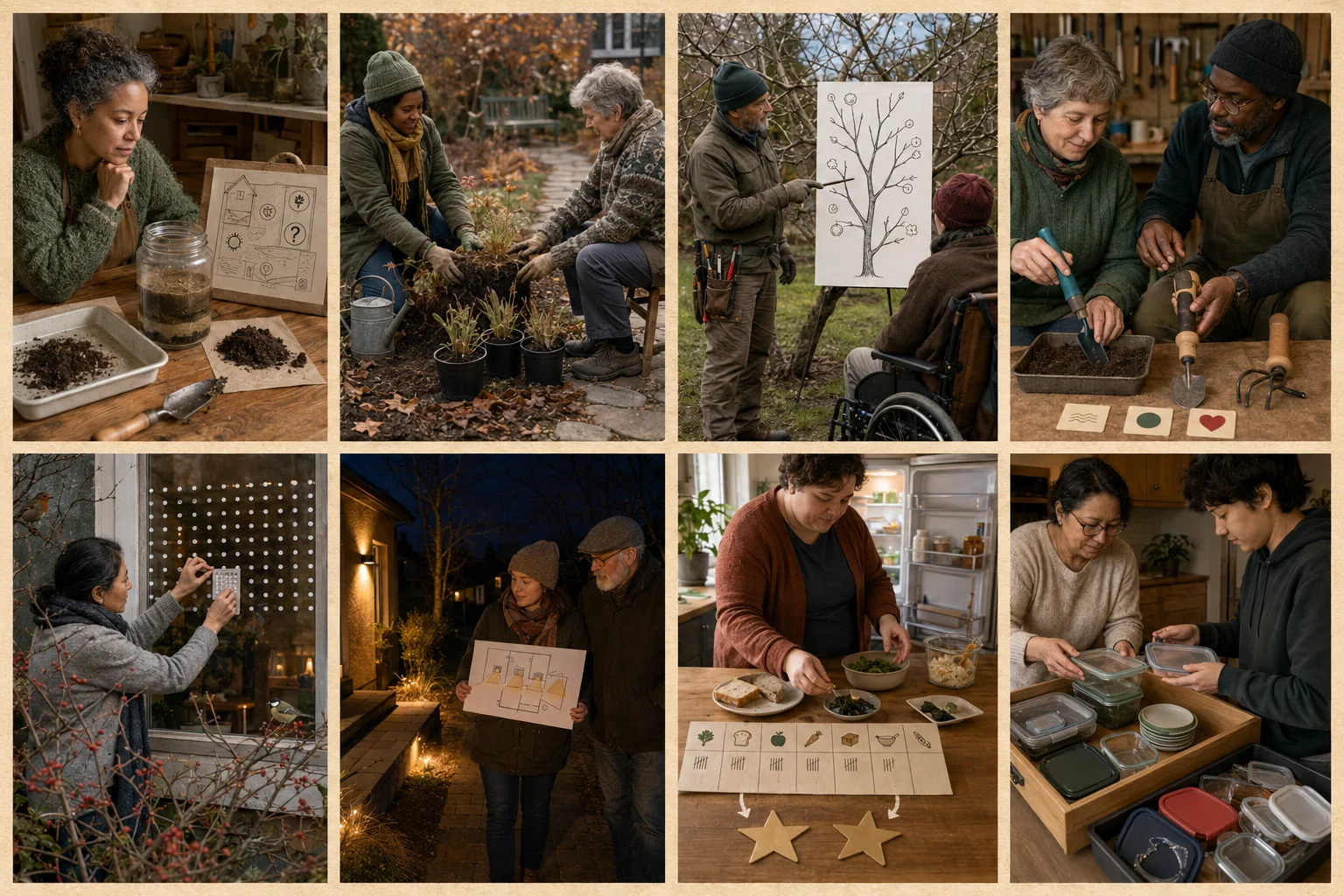
Collect a small permitted sample from one garden bed and run simple texture, drainage-observation, and soil-structure exercises from reliable local guidance. Record what can be observed, what remains unknown, and whether a qualified laboratory test is the sensible next step.
See fit and tradeoffs →Choose one correctly identified perennial that benefits from division, confirm the suitable local season, and help lift, separate, replant, water, and label only the amount the gardener wants. Offer healthy extras to named recipients who have appropriate sites and consent.
See fit and tradeoffs →Hire a qualified arboriculture or fruit-tree professional for a lesson centered on one existing tree, explaining structure, tool hygiene, season, and which cuts are appropriate or deferred. The recipient observes and marks a diagram rather than being asked to climb or copy advanced work.
See fit and tradeoffs →Walk the property at night with the household, mapping which exterior lights support an actual task and where light spills upward, sideways, or into neighboring habitat. Propose shielding, aiming, timing, or lower-output questions for a qualified installer without altering wiring.
See fit and tradeoffs →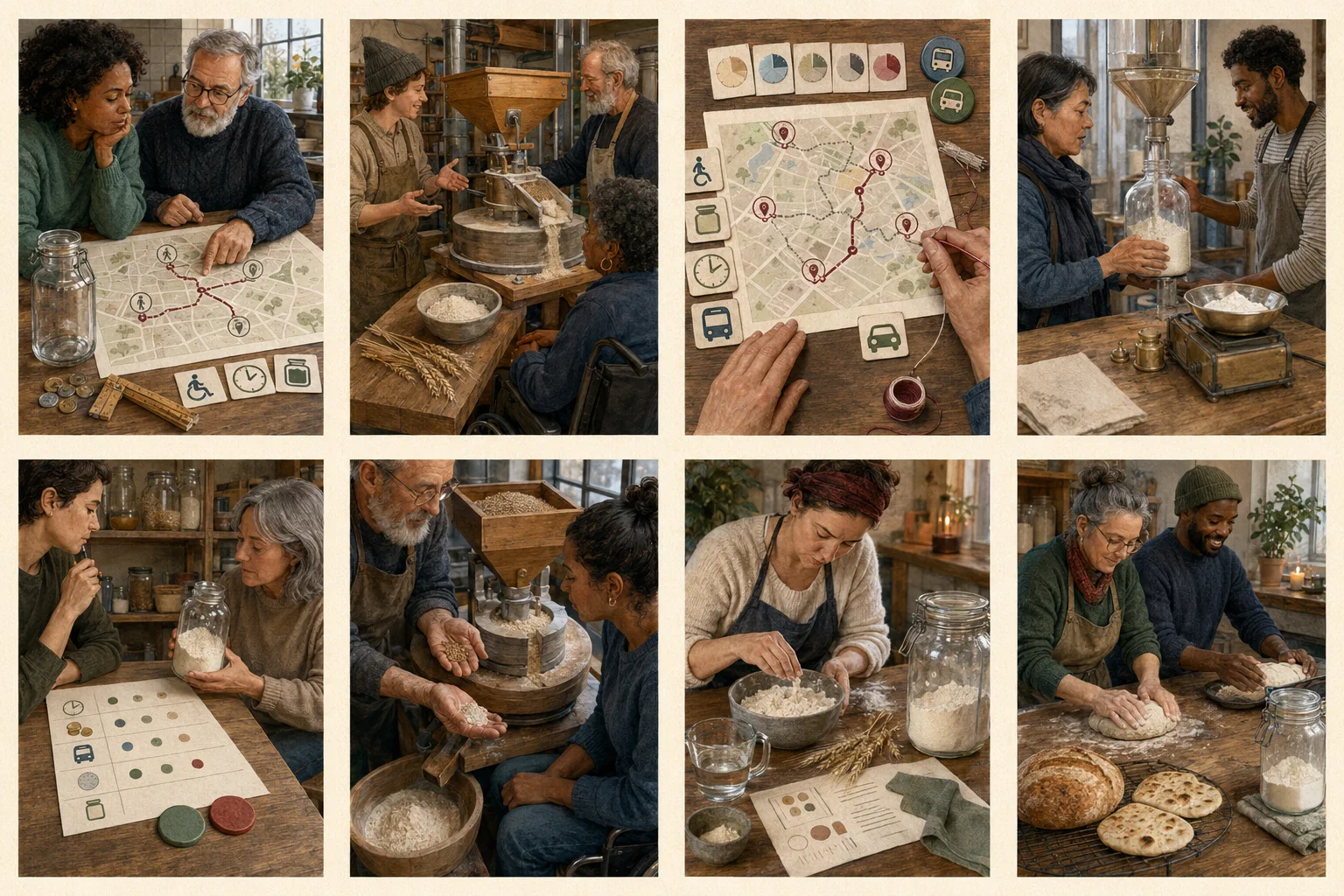
Arrange an educational visit to a working local mill or grain educator that explicitly welcomes visitors, then buy one small, clearly labeled flour and bake a tested simple loaf or flatbread together. Record grain identity, milling date if supplied, storage, and recipe adjustments.
See fit and tradeoffs →
Take a short familiar walk to notice six ordinary sounds, represent each with a child-invented mark, and arrange the marks into a brief rhythm performed later with body percussion or quiet household objects. Record the final piece only if the child wants to keep it.
See fit and tradeoffs →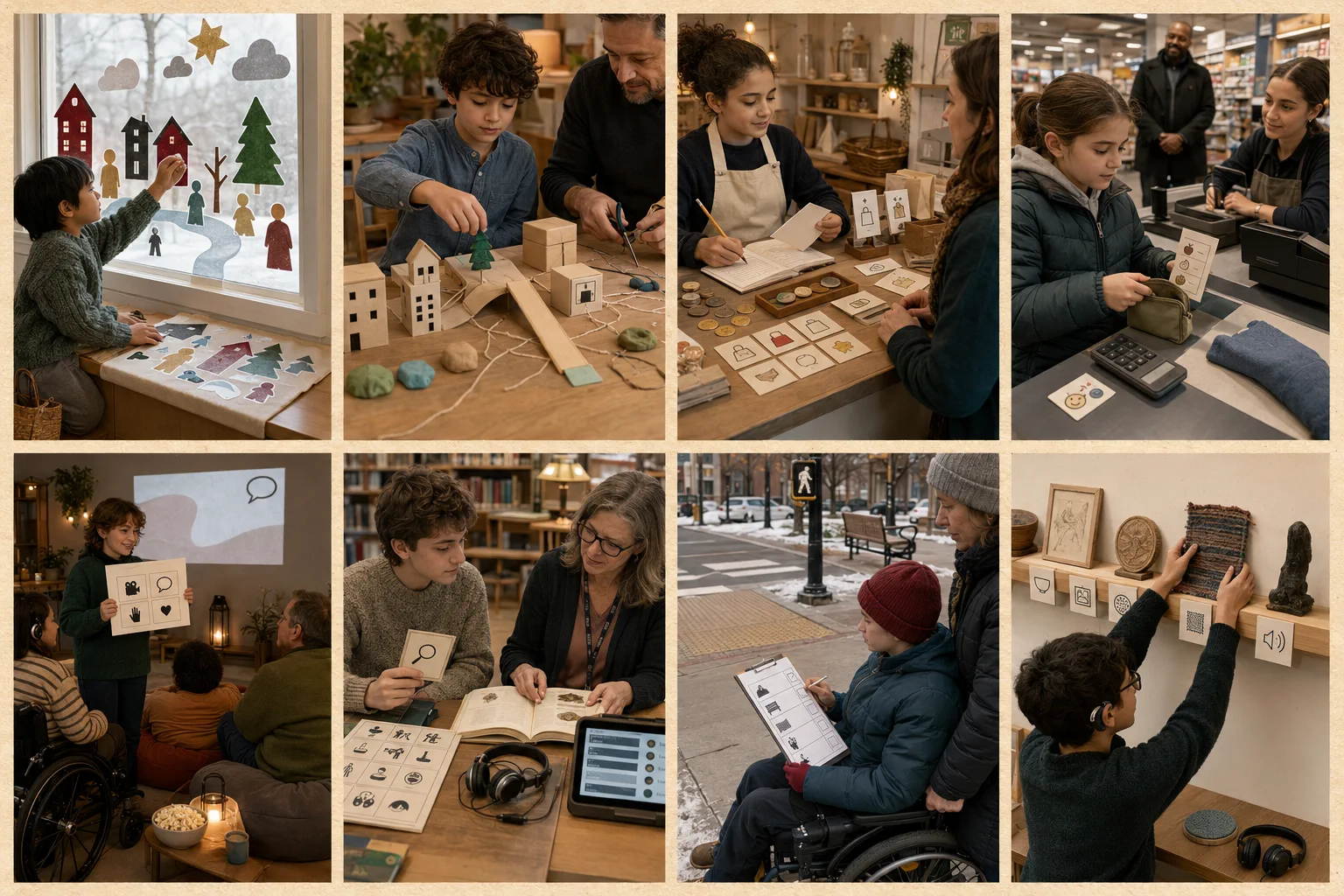
Walk one familiar block with permission, note what the child considers important, then build a loose tabletop model from small boxes, paper, string, and clay. Include real access features and blank parcels for places the child thinks the neighborhood needs, without attempting a precise replica.
See fit and tradeoffs →Help the tween design a one-afternoon simulated shop around paper products or objects they already make, calculate material cost, set sample prices, make change, handle a return, and close the books. Use play currency or invited family customers so there is no pressure to sell publicly.
See fit and tradeoffs →Choose one familiar low-pressure store and rehearse making a list, checking a clearly marked budget, asking for help, paying, reviewing a receipt, and handling an unavailable item. The adult stays nearby under a pre-agreed support plan while the tween completes the parts they are ready to own.
See fit and tradeoffs →Let the tween curate one lawful home screening from a short age-appropriate list, write a two-sentence introduction, choose a pause or discussion point, plan seating and captions, and close with one optional audience question. The adult handles access, food safety, and the end time.
See fit and tradeoffs →Arrange an age-appropriate appointment or quiet visit in which a public librarian helps the tween turn one self-chosen question into search terms, compare the catalog with a reference source, locate material in two formats, ask for help, record a citation, and identify what remains uncertain. The result may be a one-page answer, a new question, or no conclusion.
See fit and tradeoffs →Walk a short familiar route with a printed observation sheet to notice curb cuts, resting places, surfaces, sound, lighting, signs, crossings, and places to pause. The tween marks observations without rating individuals, then redesigns one feature on paper and identifies the appropriate public feedback channel if they want to learn more.
See fit and tradeoffs →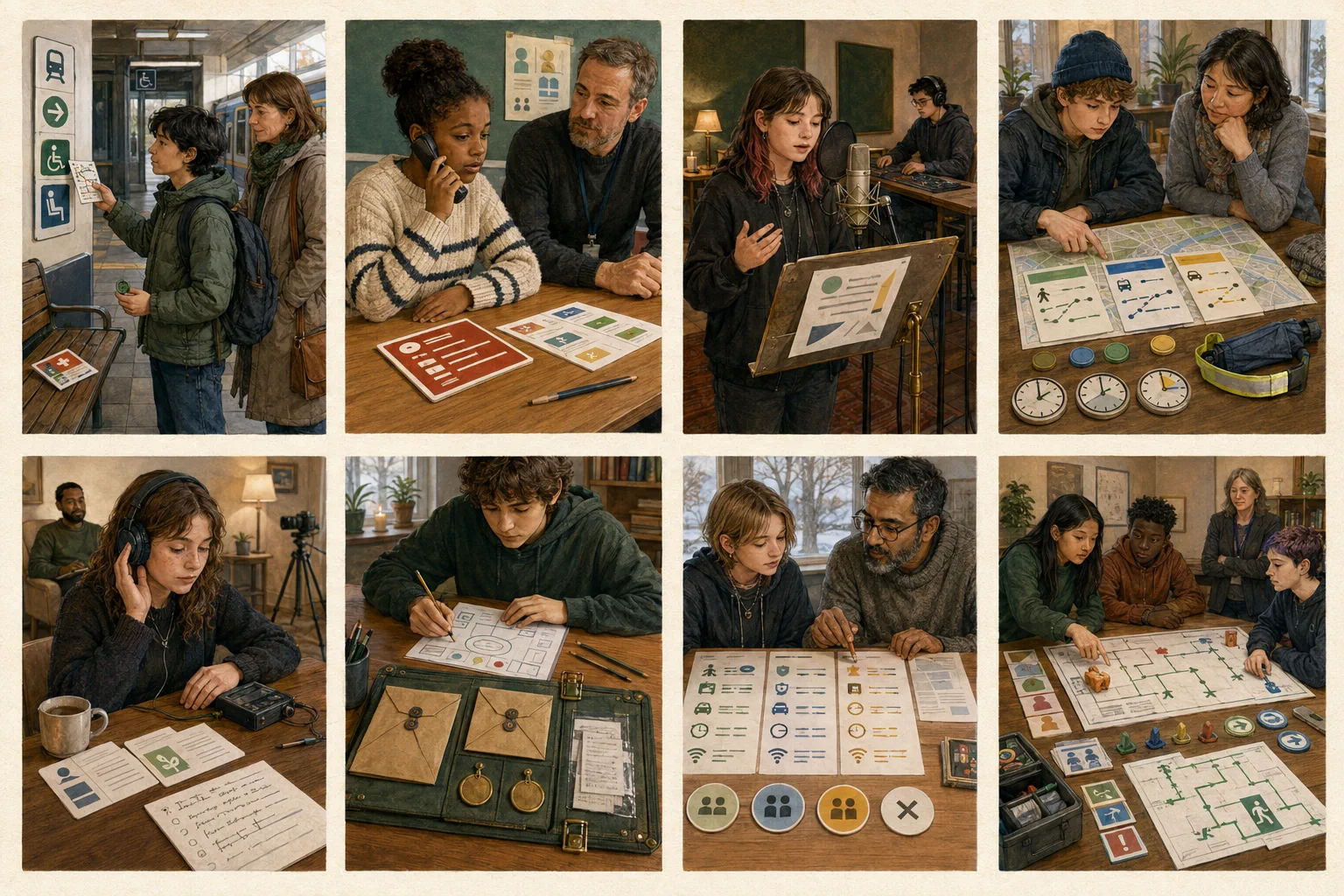
Choose one familiar age-appropriate journey and practice reading the route, recognizing the correct stop, checking direction, using fare, identifying a missed-stop plan, and contacting the trusted adult. Complete the real trip together with the tween leading and support available at the agreed distance.
See fit and tradeoffs →Enroll the tween in an age-appropriate first-aid course from a qualified local provider and attend if the program permits. Afterward, make one household practice card in the tween's own words covering how to get an adult, call emergency services, state the location, and follow dispatcher instructions.
See fit and tradeoffs →Book one private hour in a simple recording room or prepare a quiet home setup where the teen can record one original spoken-word piece. Include a short sound check, several complete takes, private playback, and one clean file, with no expectation that the recording be published or shared.
See fit and tradeoffs →
Arrange one lesson with a qualified driving instructor focused on a route type the teen identifies, such as merging, night preparation, parking, or an unfamiliar intersection pattern. Confirm the instructor will explain the plan, adapt the lesson, and end with a factual practice summary rather than a pass-fail judgment.
See fit and tradeoffs →Give the teen a fixed grocery amount and help them plan three simple meals plus breakfasts or snacks around food already available, realistic package sizes, leftovers, nutrition needs, and one chosen convenience. Shop together with the teen leading, then prepare only the most unfamiliar component side by side.
See fit and tradeoffs →Choose one public local meeting with a manageable agenda, read the official agenda together, explain roles and public-comment rules, attend for a defined portion, and debrief what was decided, deferred, or unclear. The teen may observe silently and leave whenever the agreed exit condition is met.
See fit and tradeoffs →With mutual consent, arrange a one-hour meal or accessible remote conversation with a practitioner whose work matches one question the young adult has. The young adult chooses three questions, the giver handles the meal or connection cost, and both parties receive clear boundaries, timing, and a graceful way to decline future contact.
See fit and tradeoffs →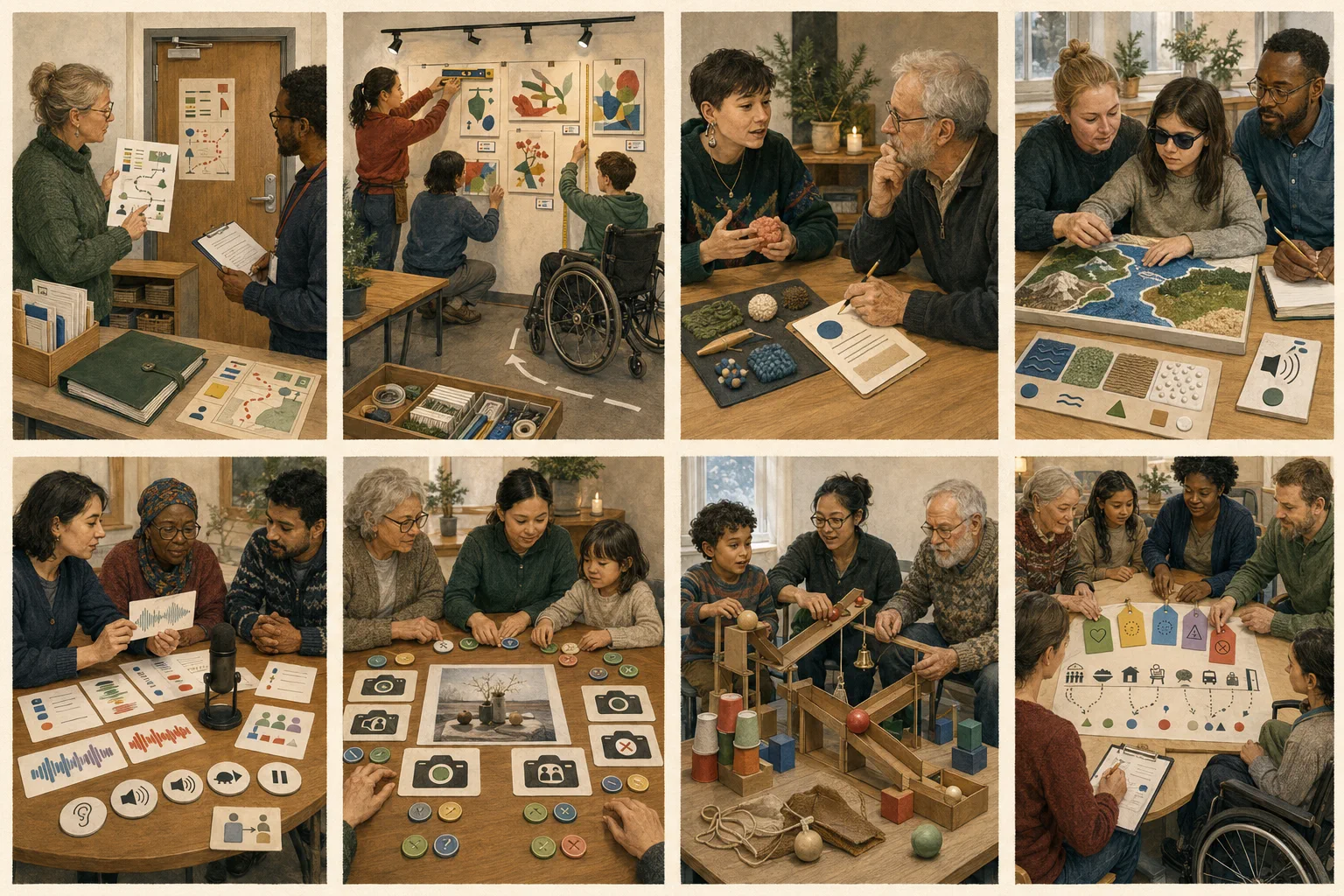
Invite the mentee to design a ninety-minute session showing the mentor one current tool, community, creative practice, access strategy, or way of learning that matters to them. The mentee chooses what remains off-limits, whether the lesson is hands-on, and what the mentor must prepare or unlearn before attending.
See fit and tradeoffs →Set one safe tabletop goal, such as ringing a bell, and give each generation responsibility for one section of a low-energy chain reaction built from cardboard, ramps, string, cups, blocks, and rolling objects. Test interfaces together, allow sections to be operated manually, and stop after one complete run or a shared decision to leave it unfinished.
See fit and tradeoffs →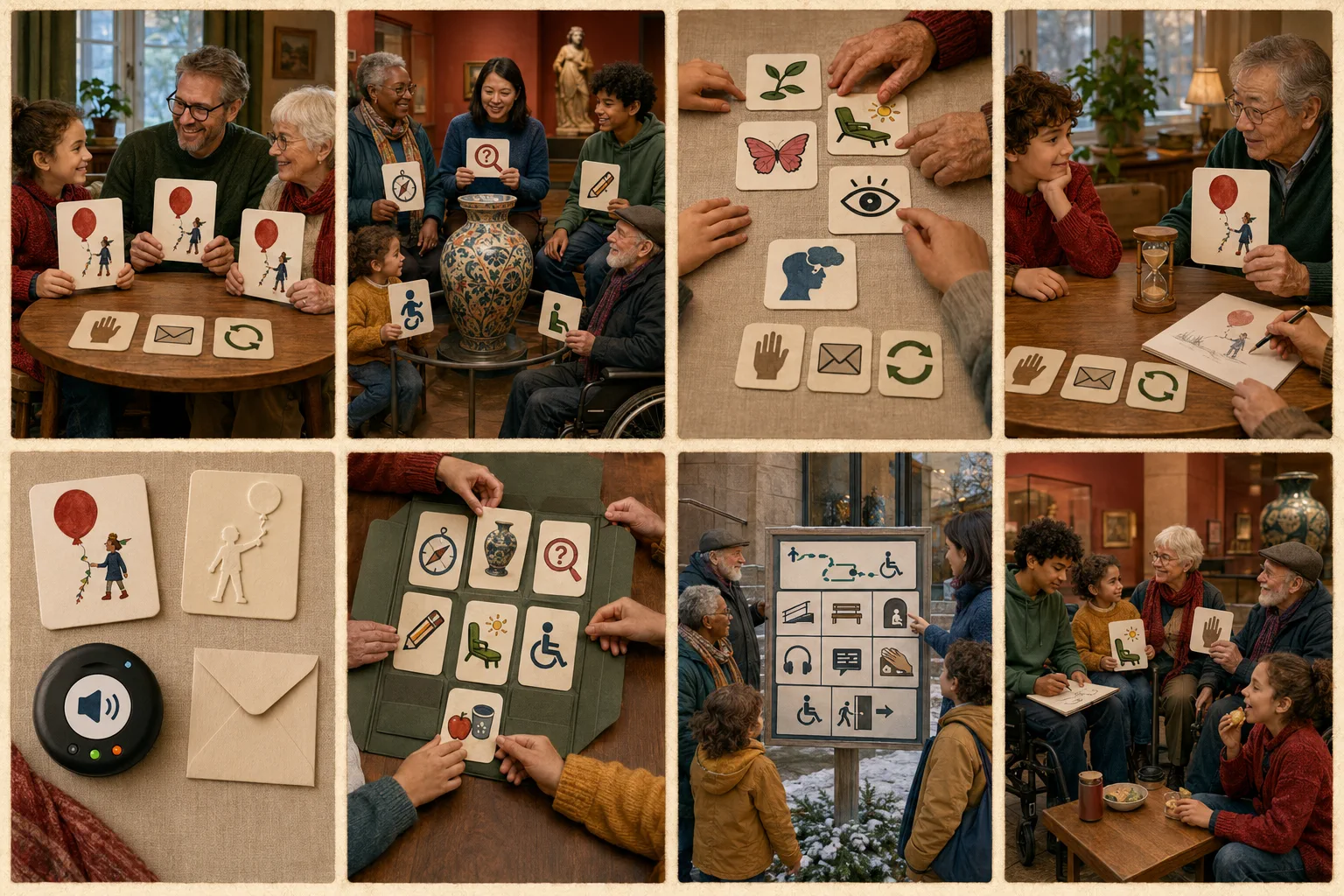
Plan one short museum visit around a single gallery or theme and give participants equal opt-in roles such as navigator, object chooser, question keeper, sketcher, rest caller, access checker, or snack planner. Confirm transport, admission, seating, quiet space, communication access, food, weather, and a clear early finish.
See fit and tradeoffs →
Each person chooses one small household skill they routinely perform, such as folding a fitted sheet, reviving a houseplant, setting up a video call, or sharpening a kitchen tool. Plan two twenty-minute teaching turns with the necessary materials ready, then write one concise reference card for each skill without redistributing chores or scoring competence.
See fit and tradeoffs →Invite the recipient to name one recent win and choose how, or whether, it should be marked. Offer three bounded forms such as a favorite meal with two guests, a quiet walk ending in a handwritten acknowledgment, or a private hour in a meaningful place. Handle the agreed reservations, access, transport, food, cleanup, and ending without adding surprises.
See fit and tradeoffs →Ask each person to submit two narrow curiosities, then choose one overlap and book a single legitimate public demonstration, short tour, lecture, or workshop. Verify the host, content, access, total cost, transport, and finish time; attend the first date together and end with a ten-minute debrief about whether any follow-up is actually wanted.
See fit and tradeoffs →With both friends' consent, produce a one-day reunion around one accessible home base and no more than two activities. Confirm travel, lodging if required, costs, food, quiet time, mobility, communication, caregiving constraints, photo preferences, and a firm finish. Pay or contribute only to the agreed items and provide a complete itinerary with flexible gaps.
See fit and tradeoffs →Offer a clearly bounded two-hour visit built around a recipient-chosen quiet activity: sitting near a window, walking a familiar level route, reading separately, or doing a simple hand task side by side. Bring the agreed drink or snack, handle transport if requested, and use a prearranged signal for conversation, pause, or ending.
See fit and tradeoffs →Plan a half-day in a mutually convenient public place with one current-interest activity, one easy meal, and no family administration. Agree beforehand on topics that are welcome, topics to leave alone, travel responsibilities, total spending, photo rules, and the finish time. Make the activity optional enough that conversation can remain ordinary.
See fit and tradeoffs →
Find a legitimate local art-lending program, library, artist rental, or permission-based family loan and let every resident review a small shortlist. Borrow one modest work only after unanimous approval, document its condition and terms, use renter-safe display hardware if permitted, and schedule the return before it enters the room.
See fit and tradeoffs →Invite the departing roommate to choose four ordinary neighborhood stops that mattered during the shared-home period: the late grocery, bus shelter, laundromat, park bench, or takeaway counter. Walk or travel the accessible route together, buy one familiar snack, and let each person name one thing they will miss and one thing they are ready to leave behind, with no recording required.
See fit and tradeoffs →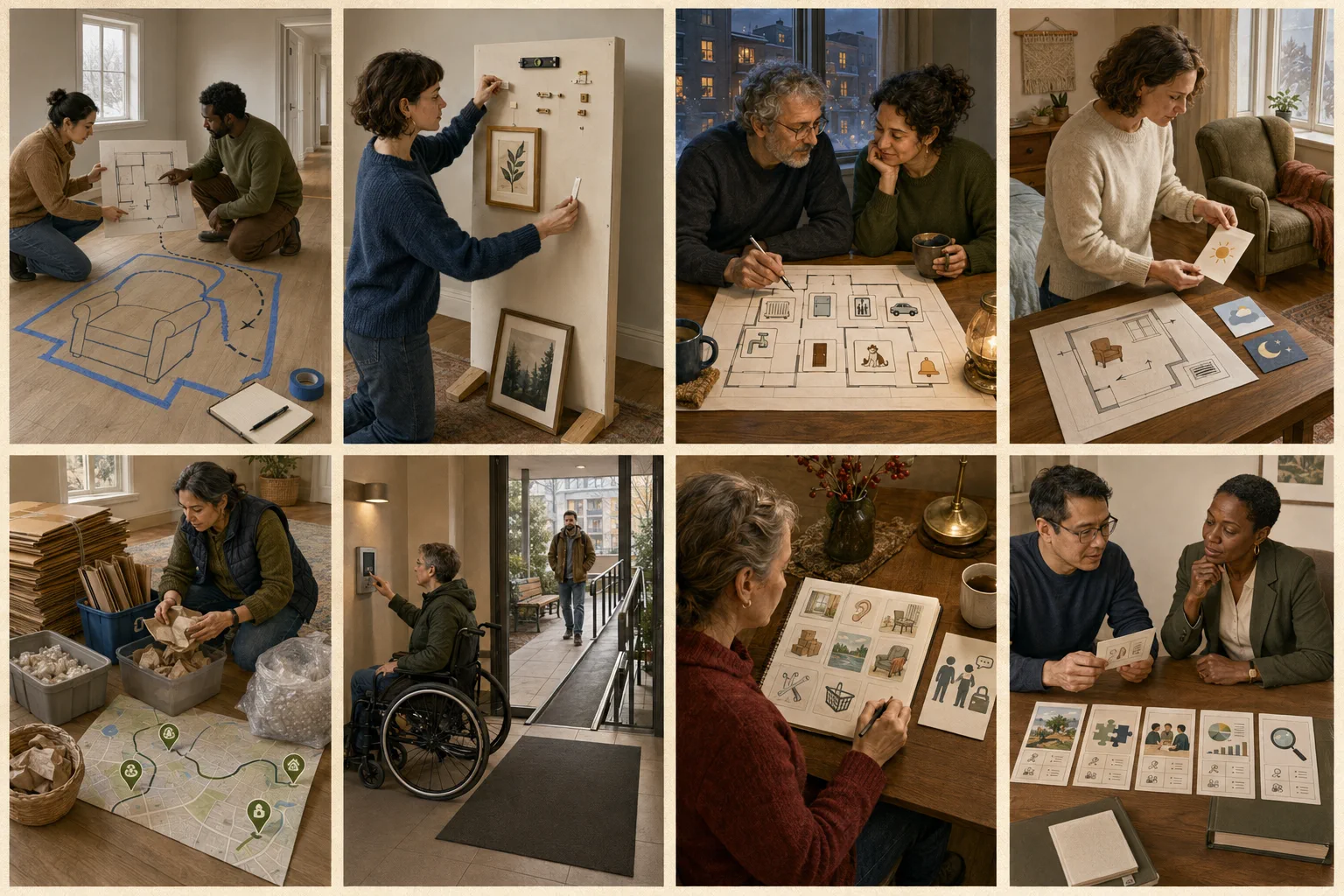
Obtain a scrap panel that is not part of the home, add sample surfaces only from safe known materials, and practice locating support, selecting rated hardware, leveling, spacing, and removing one approved temporary option. Then assess a single real artwork and wall against the lease and hardware instructions, stopping before installation if the wall or permission is uncertain.
See fit and tradeoffs →Have a trusted person make one planned arrival while the resident tests the actual route: address visibility, legal parking or transit drop-off, call box, key or fob, door timing, lift, stairs, lighting, package area, accessible entrance, and how to reach the unit when one step fails. Record only official instructions and questions for building management.
See fit and tradeoffs →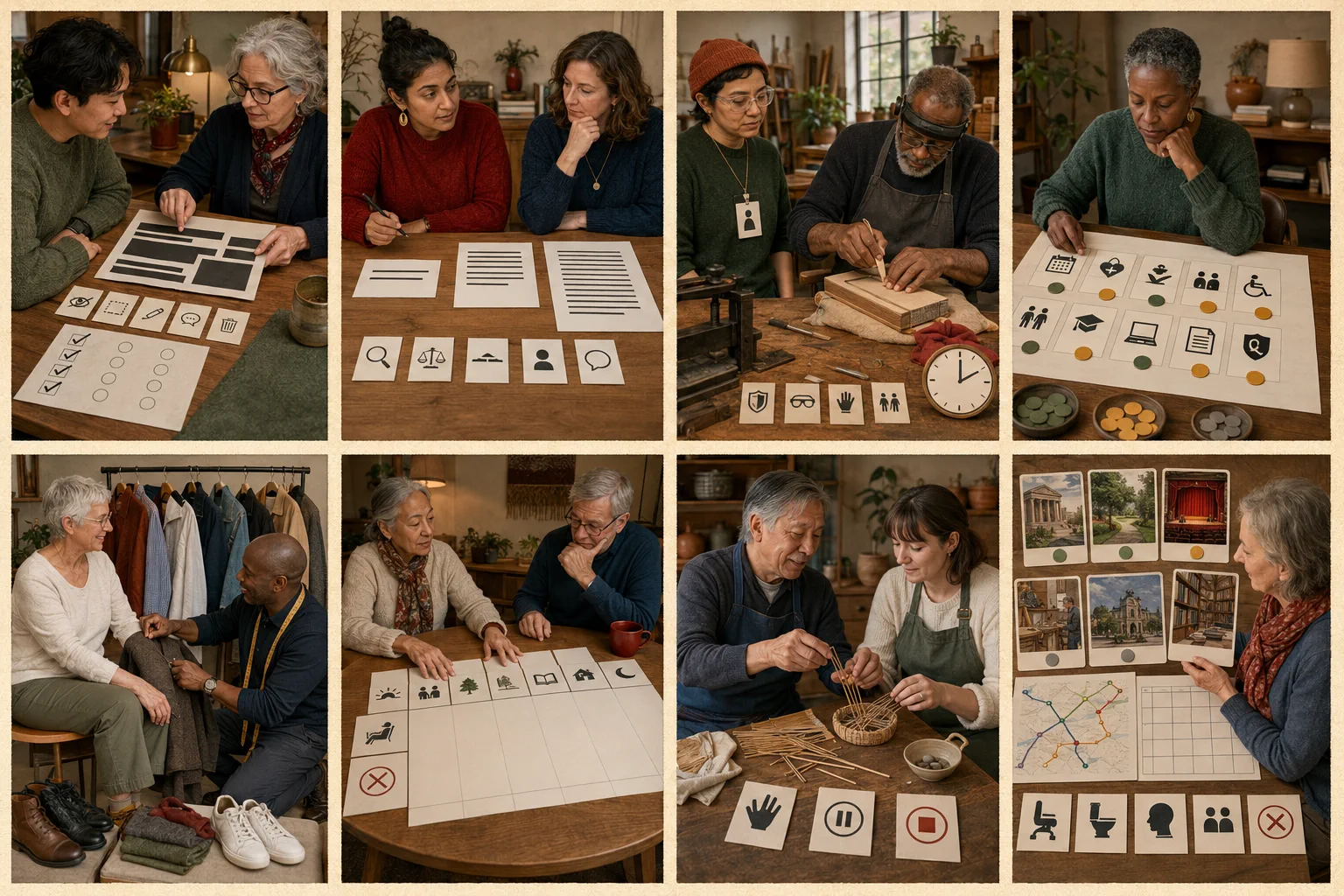
Use an established public program, professional association, training provider, or willing practitioner with workplace approval to arrange a bounded observation. Agree on confidentiality, safety, dress, access, what may be observed, questions, compensation or meal, and finish time. Prepare the recipient to distinguish routine work, exceptional events, and questions still unanswered.
See fit and tradeoffs →Help the recipient design one experimental week with intentionally different kinds of time: one obligation-free morning, one social window, one movement or outdoor option, one learning block, one practical block, one quiet day, and generous unscheduled space. Handle the logistics for one chosen activity, then review energy and enjoyment without turning the week into a productivity plan.
See fit and tradeoffs →Let the recipient choose one narrow skill and one willing learner, then help shape a forty-five-minute pilot with a clear outcome, demonstration, supervised practice if safe, accessible materials, boundaries, and a finish. Handle room setup, copies, cleanup, and feedback limited to the questions the new teacher wants answered.
See fit and tradeoffs →Offer a choice among six verified weekday possibilities, then schedule three across two months: for example a quiet museum hour, public garden walk, matinee rehearsal, maker demonstration, courthouse architecture tour, or library program. Confirm current access, transport, total cost, seating, food, and finish; each outing stands alone and can be skipped.
See fit and tradeoffs →
Let the recipient choose one familiar concert, lecture, service, game, film, or community event they already understand. Secure a transferable or flexible seat where genuinely available, choose aisle or quiet-area placement, plan transport and an early exit, and identify a nearby non-event option so the evening still works if entering feels wrong.
See fit and tradeoffs →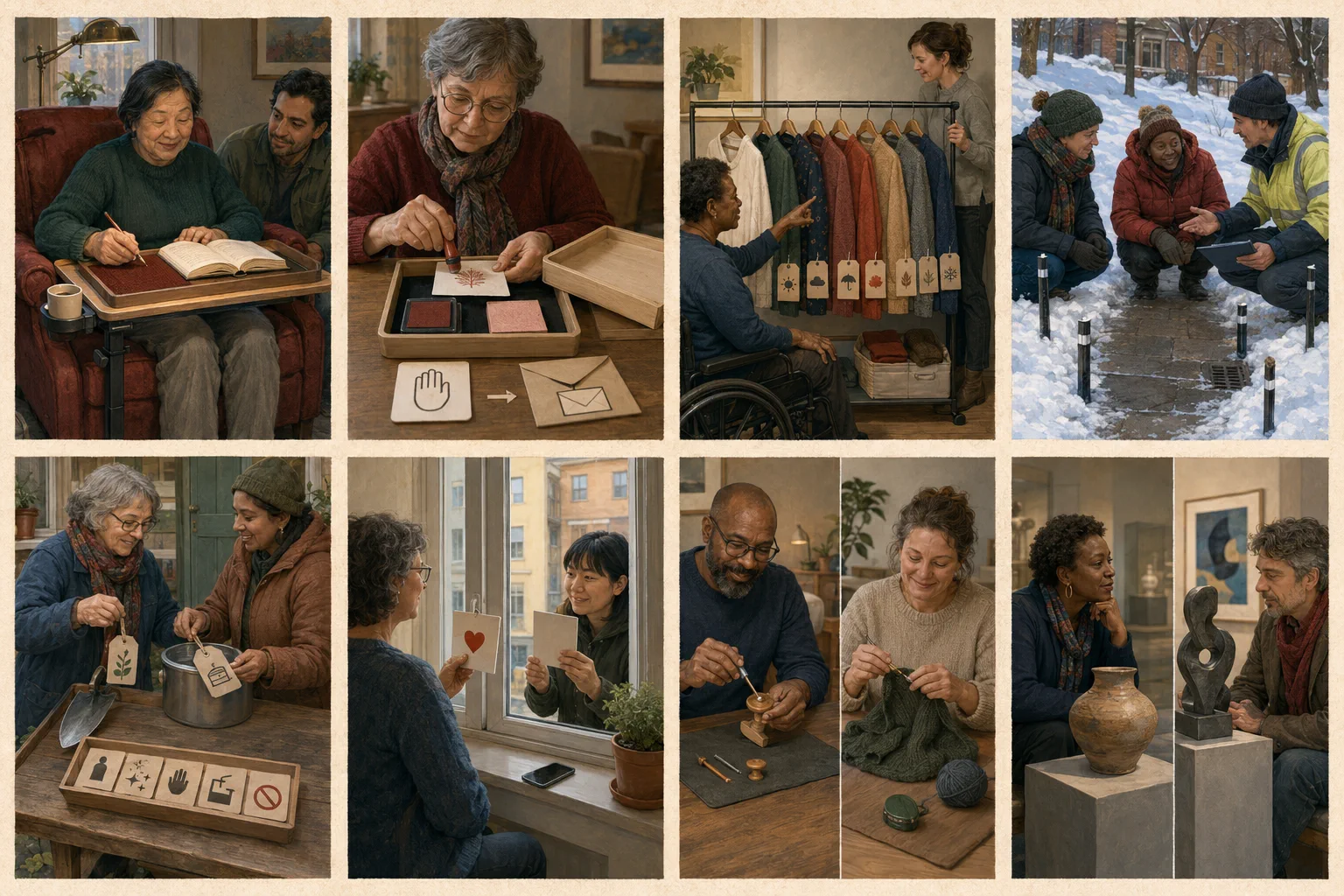
Each person chooses one low-risk object from the same broad category, such as a loose wooden drawer pull, a sweater snag, a paper book jacket, or a simple bicycle accessory removed from the bicycle. Verify repair methods separately, obtain the small correct materials locally, then meet by video for a one-hour side-by-side repair with stopping points and no expectation that both tasks finish.
See fit and tradeoffs →Each person chooses one current local museum or gallery and one object they want the other to encounter through an official online record, their own notes, or a live call where venue rules allow. Verify admission, photography, connectivity, source details, and access. Meet afterward for a forty-minute conversation using the same prompts about material, scale, context, uncertainty, and personal response.
See fit and tradeoffs →
Book a short print-studio session to design and press one sturdy outer envelope and two matching sheets for a letter the recipient may write now or later. Keep the design abstract, leave the contents private, and include a second plain envelope if the letter should eventually travel.
See fit and tradeoffs →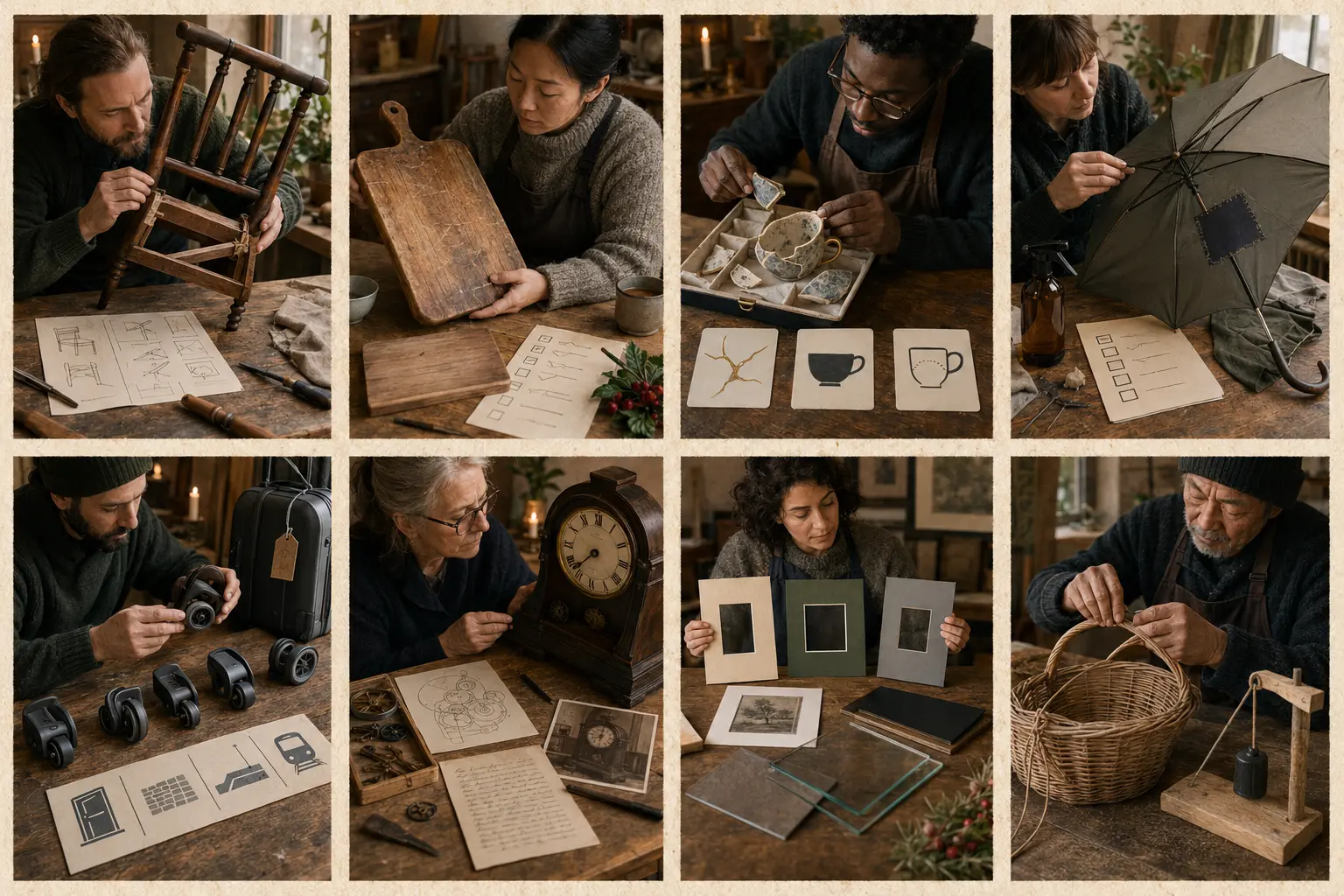
Have a knowledgeable maker inspect one wooden board for splits, warping, construction, contamination concerns, and remaining thickness. If appropriate, demonstrate controlled resurfacing on a practice offcut before flattening, smoothing, cleaning, drying, and finishing the board with materials intended for that use.
See fit and tradeoffs →Bring one recipient-approved umbrella to a repair clinic or experienced maker to assess ribs, runner, tips, handle, canopy, and safe opening. Replace or stitch only suitable components, then perform a controlled spray test outdoors and a full dry-down rehearsal before returning it to service.
See fit and tradeoffs →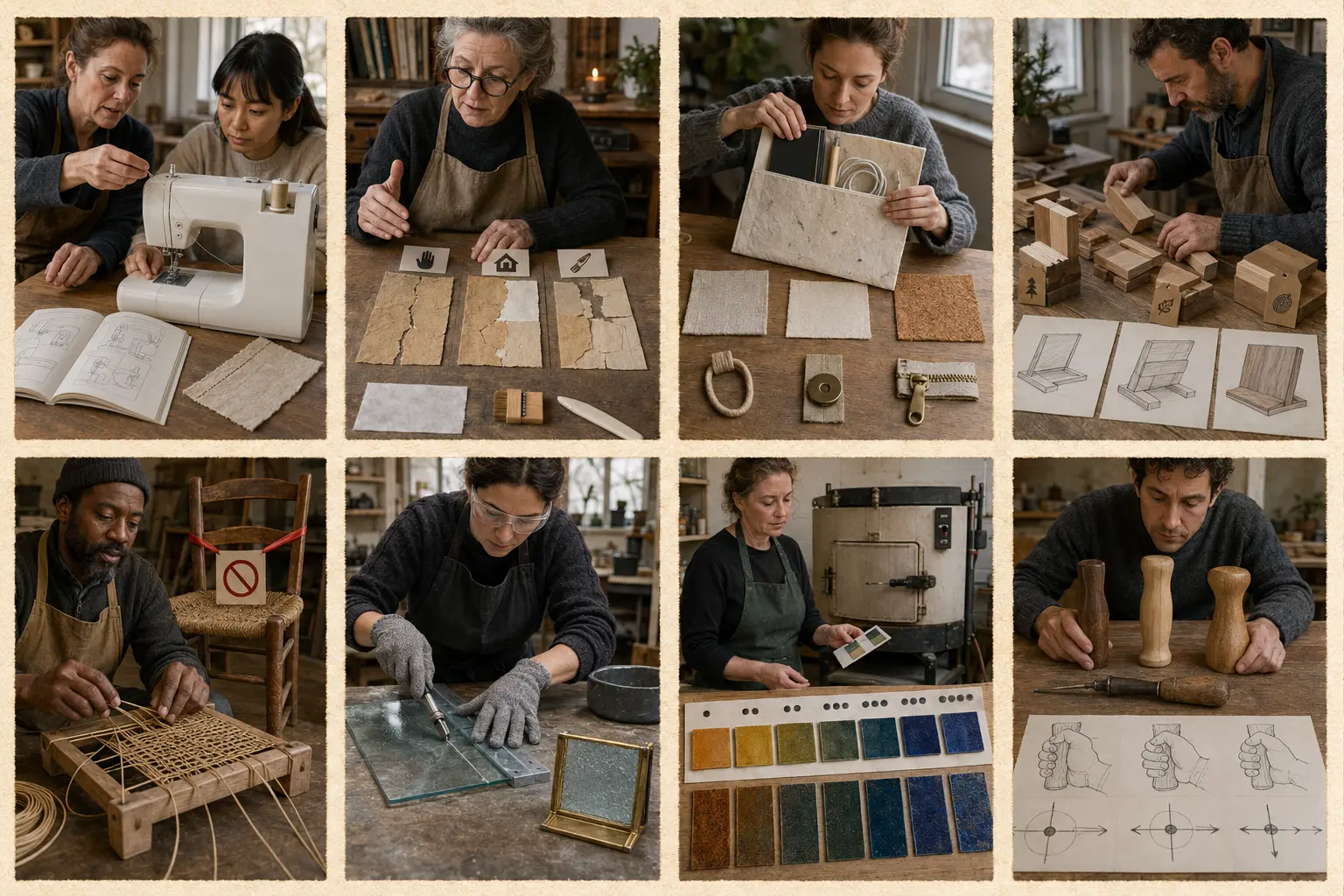
Arrange a model-specific orientation using the recipient's own machine and manual. Cover safe setup, threading, bobbin, straight stitch, reverse, tension observation, needle changes, jam response, shutdown, and one scrap-fabric practice seam, stopping before repairs or advanced adjustments.
See fit and tradeoffs →Build a supervised practice session around discarded modern paper samples with clean tears, folds, losses, and unstable tape. Compare doing nothing, safe housing, and simple reversible repair approaches, and label every sample so none can be mistaken for guidance on valuable originals.
See fit and tradeoffs →Gather a safe, known set of workshop offcuts and define one recipient-chosen household job such as holding mail, lifting a plant pot, or supporting a book. Sketch three solutions, build one within a fixed session, and record material identity and finish limits rather than disguising scraps as premium stock.
See fit and tradeoffs →Arrange a qualified seat weaver's assessment and, if appropriate, an owner-observation window during preparation or a small practice frame demonstration. Document material, pattern, frame condition, expected appearance, and future use limits before authorizing repair.
See fit and tradeoffs →Book a supervised studio demonstration using instructor-provided scrap to show scoring, breaking, edge finishing, fit, cleanup, and safe disposal. Let the recipient complete a small nonfunctional sample grid only if the studio's equipment, ventilation, protective practices, and instruction support it.
See fit and tradeoffs →Arrange a supervised enamel studio taster centered on a small numbered test strip. The instructor explains substrate preparation, color change through firing, kiln boundaries, ventilation, cleanup, and material limits; the recipient chooses a few colors and records expectations beside the fired results.
See fit and tradeoffs →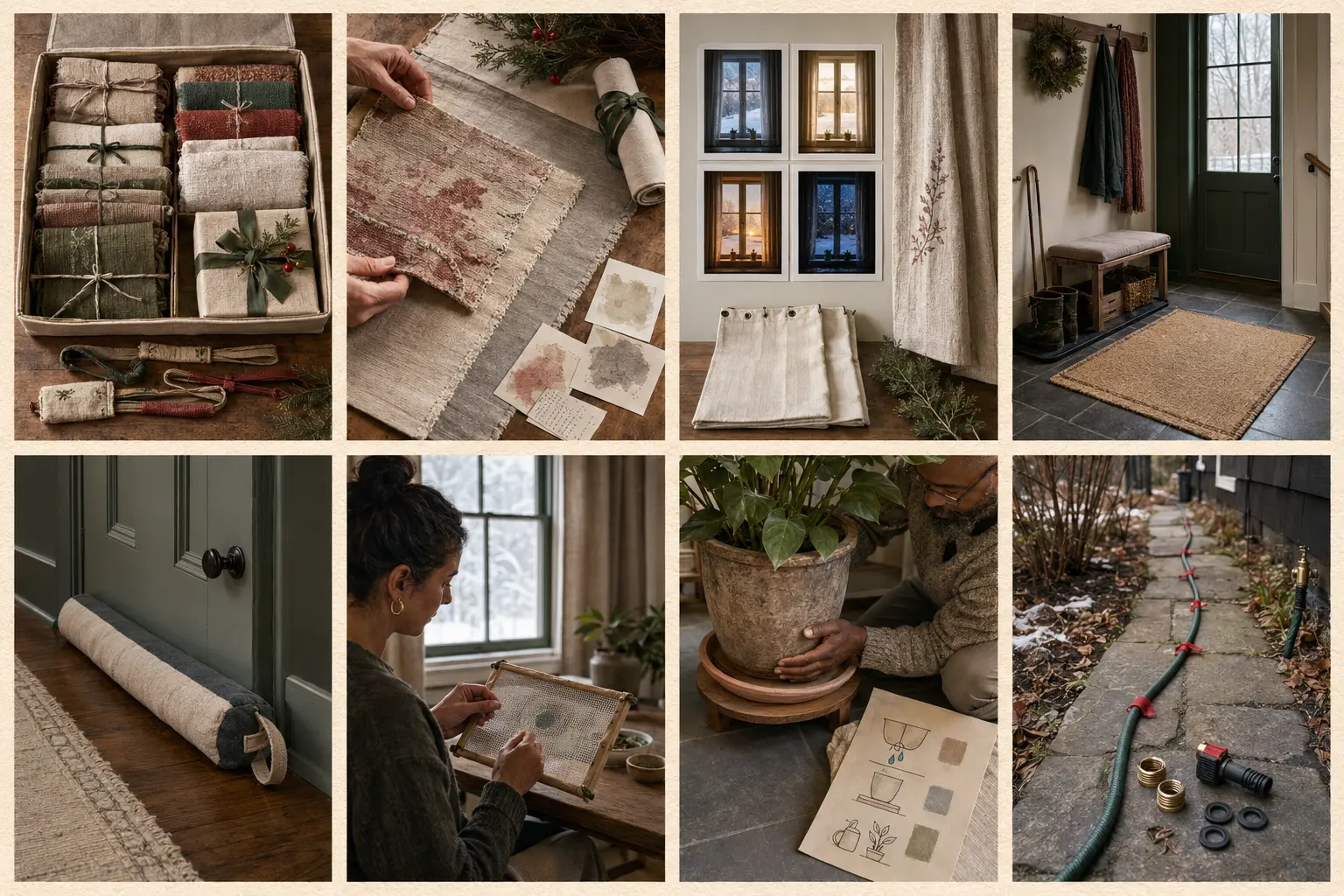
Use a small removable practice frame to demonstrate material identification, patch size, edge finishing, spline awareness, tool handling, and visual tradeoffs. Assess the real screen and rental permission separately, then decide whether a patch, full rescreen, professional repair, or no work is appropriate.
See fit and tradeoffs →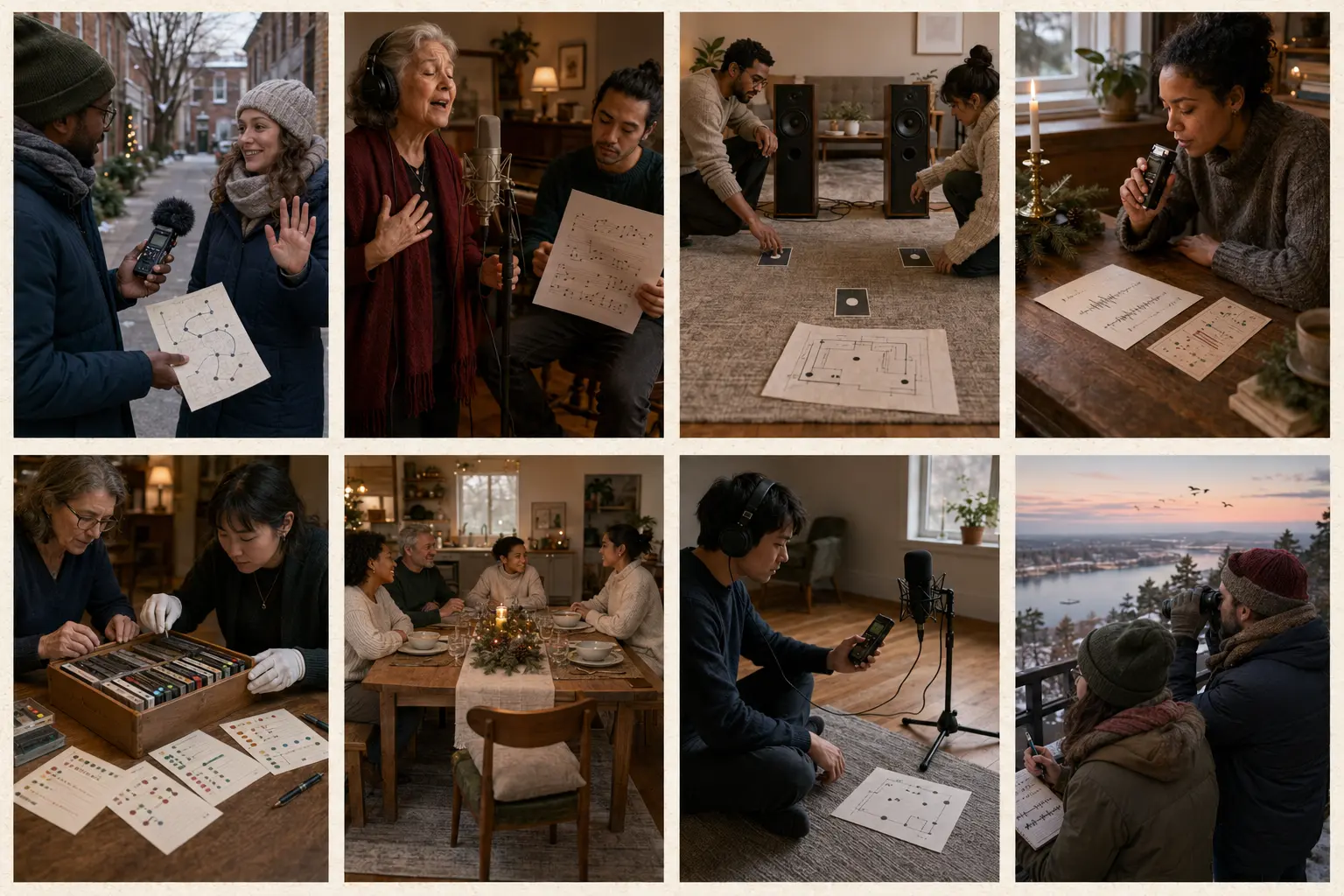
Walk one short recipient-chosen route at two agreed times, recording only ambient sound where rules and consent allow. Mark each clip on a hand-drawn map with time, weather, what is known, and what remains unidentified, then edit a private five-minute sequence together.
See fit and tradeoffs →Choose four locations the recipient already has permission to use and record sixty seconds of steady room tone in each, noting time, appliance state, microphone position, and interruptions. Import the clips into one practice project and demonstrate how consistent labels support editing without claiming noise can always be removed.
See fit and tradeoffs →Choose one safe accessible listening point and visit for twenty minutes on three mornings, recording time, light, weather, direction, rhythm, and only species identifications the recipient can support. Compare the three sound patterns without playback calls, baiting, approaching nests, or ranking the mornings.
See fit and tradeoffs →
Choose one thirty-second scene and test three looks using only safely placed household lamps, daylight control, white card, and camera settings the recipient already has. Photograph each layout, note exposure and color compromises, restore the room, and edit the scene only after choosing one intentional look.
See fit and tradeoffs →Choose one lawfully accessible film with verified captions, test their accuracy and readability on the actual screen, and plan two optional pause points for reading or rest. Send a short content and timing note beforehand, keep discussion optional, and close at the promised time.
See fit and tradeoffs →Choose a short verified public-domain silent film, divide it into four cue sections, and invite willing guests to create simple live sound using voices, household percussion, or an instrument they already play. Rehearse volume and cues once, provide captions or plot context, and serve an easy meal after the performance rather than during it.
See fit and tradeoffs →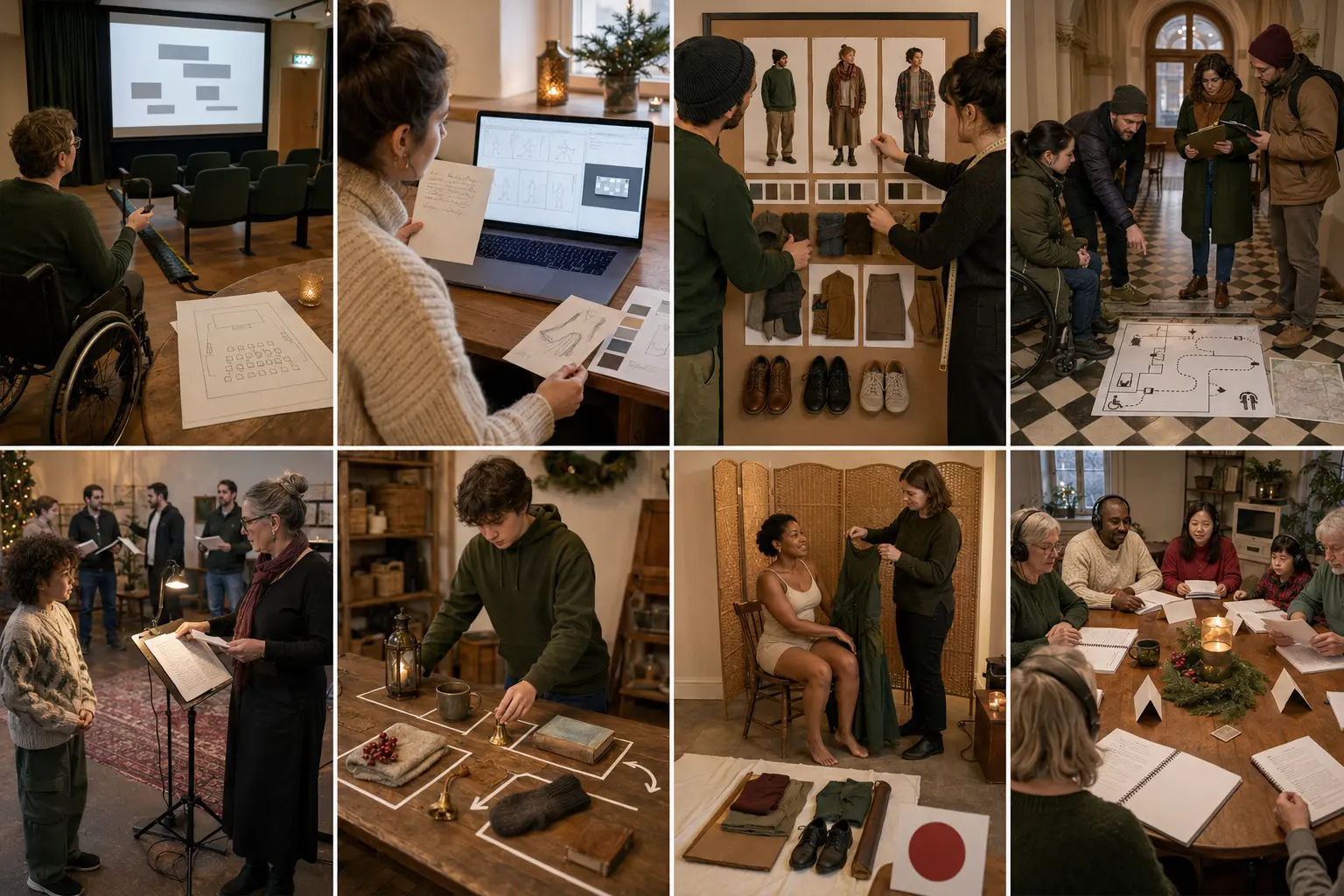
Arrange a permitted observation window with a working stage manager during a rehearsal or demonstration, focused on one short cue sequence from preset through reset. Provide the recipient with a blank sample cue sheet, glossary, questions in advance, and a debrief that separates venue practice from universal rules.
See fit and tradeoffs →Using safe ordinary objects and a fictional or school-approved scene, let the teen design a compact prop table with outlines, labels, preset order, handoff path, breakage substitute, and end-of-rehearsal check. Run the scene twice, changing one constraint so the layout has to be revised rather than merely decorated.
See fit and tradeoffs →Choose a short verified public-domain script, edit only a working copy for large print and role clarity, and hold a ninety-minute table read with voluntary speaking, sound-cue, timekeeper, and listener roles. Share content notes and pronunciation questions beforehand, then close without requiring a recording or performance.
See fit and tradeoffs →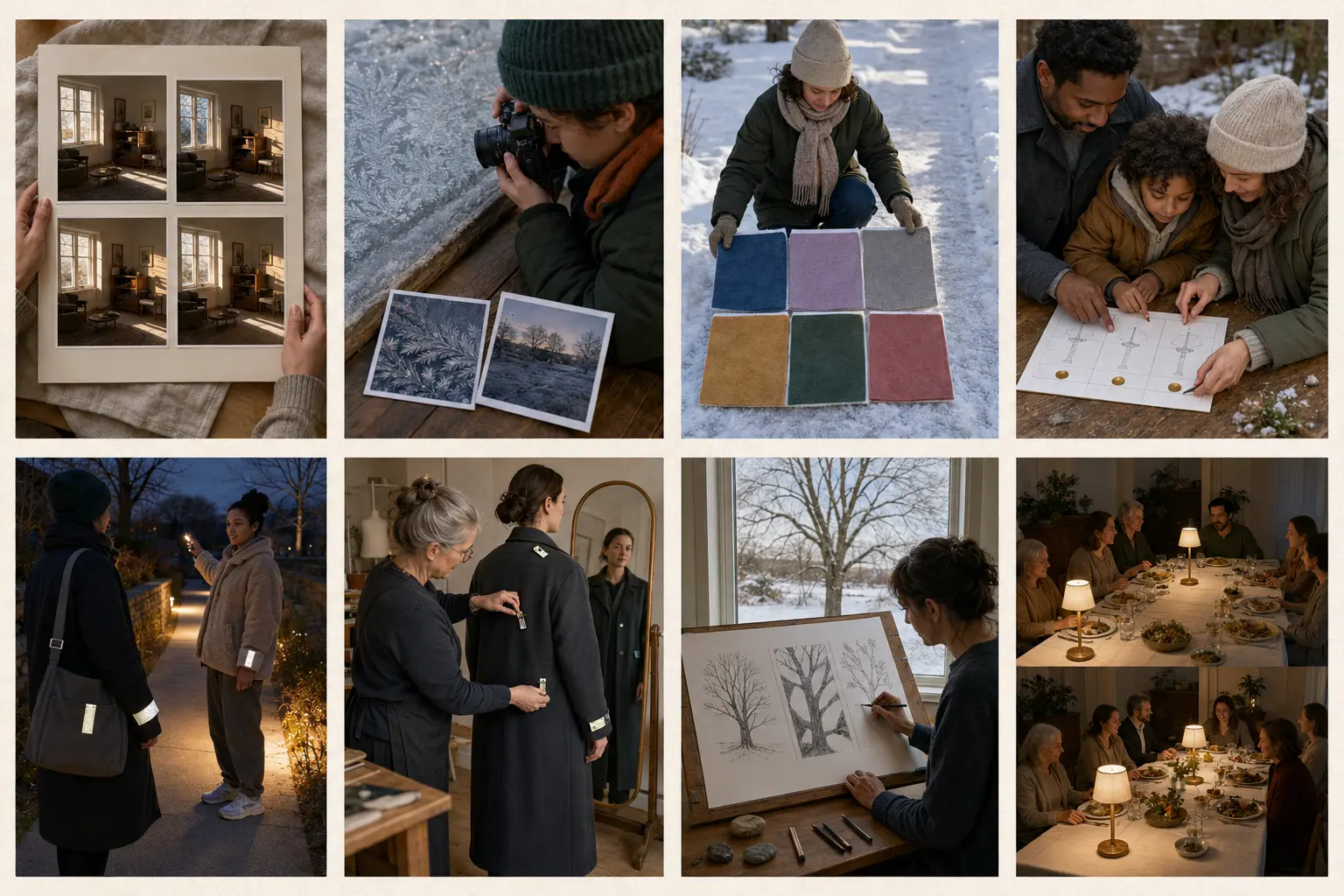
Choose one room and photograph the same fixed composition at four moments between first direct light and dusk, without rearranging the household for effect. Record time, weather, curtain position, what the room was being used for, and one change in shadow or color the recipient noticed.
See fit and tradeoffs →On one forecast frost morning, photograph ten naturally occurring frost patterns from safe public or household surfaces without scraping, breathing on, or altering them. Pair each close view with a wider context image and let the teen group them by visual form rather than claiming crystal classification.
See fit and tradeoffs →Take a short safe walk at a chosen hour and mix or select paper swatches for eight observed snow colors created by sky, shade, streetlight, vegetation, soil, and reflected buildings. Photograph each swatch in context, then label the condition rather than giving the color a universal name.
See fit and tradeoffs →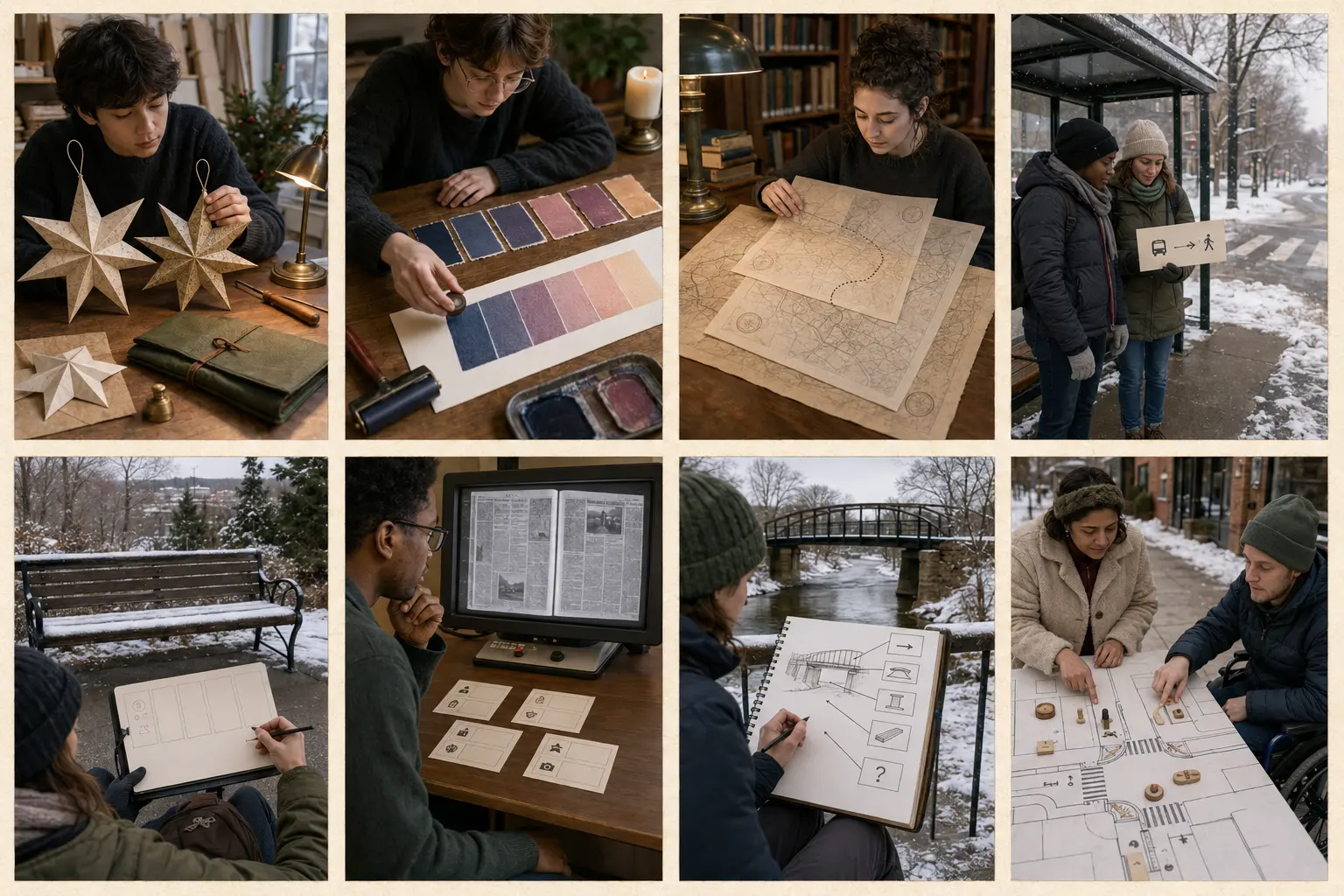
Choose one legal public bench and visit for fifteen minutes on four dates across the season, recording sun, wind, temperature source, surface condition, approach, view, sound, activity, and whether sitting felt welcome. Photograph the empty bench only where allowed and keep other users out of the record.
See fit and tradeoffs →At a library or lawful archive, choose one meaningful date and read the complete local issue or a bounded section, noting front-page priorities, small advertisements, weather report, public notices, omissions, language, and what cannot be inferred. Create a citation card with five observations instead of a nostalgic collage detached from context.
See fit and tradeoffs →From a safe permitted viewpoint, sketch one small public footbridge or road bridge as span, support, deck, railing, drainage, approach, material, and visible maintenance detail. Compare the observation with an official or educational source about bridge types while labeling every unknown and never assessing structural safety.
See fit and tradeoffs →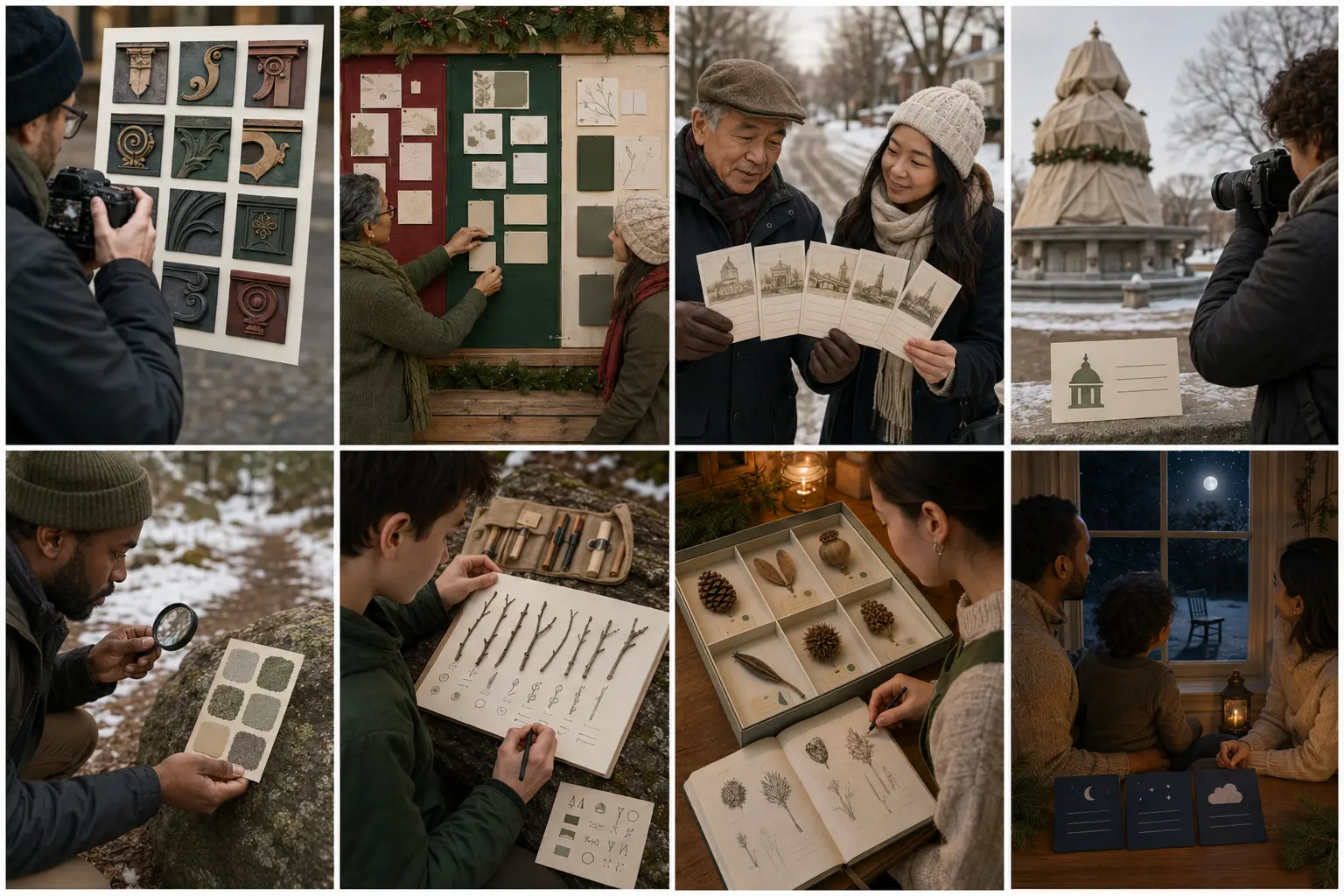
Walk one commercial block and photograph twelve permitted details of painted, tiled, carved, neon, vinyl, hand-written, repaired, faded, multilingual, or temporary lettering without capturing customers. Record material, scale, viewing distance, apparent age, function, and uncertainty, then edit the sequence by visual contrast rather than ranking businesses.
See fit and tradeoffs →Photograph one public fountain or water feature from the same permitted viewpoint in its winter state, recording whether it is dry, covered, lit, repaired, fenced, snowbound, or still operating. Pair the image with official title, maker or department when verified, date, and what remains unknown rather than romanticizing neglect.
See fit and tradeoffs →From one safe indoor window, choose a fixed object and record whether a moon shadow appears at the same clock time on three separated clear or partly clear nights. Note official moon information, cloud, indoor reflections, streetlight interference, and no-result nights without manufacturing a shadow.
See fit and tradeoffs →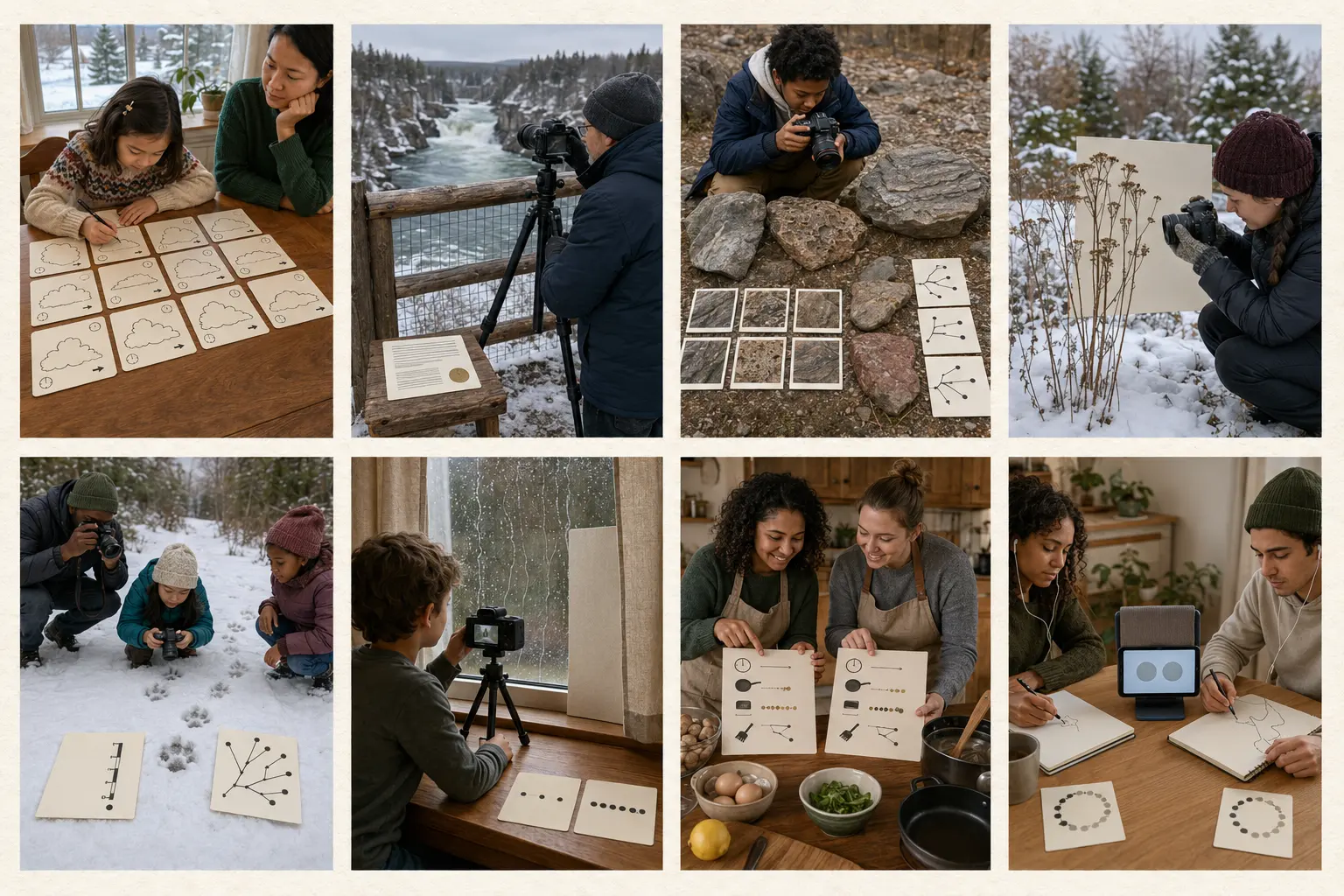
Choose an official overlook or stable public path and photograph the same framed river view on four dates, recording official gauge or weather information separately when available, visible bank and vegetation changes, and access conditions. Keep the activity entirely away from the water edge and make no flood prediction.
See fit and tradeoffs →Along one permitted path, photograph six in-place examples that may illustrate cracking, rounding, staining, flaking, biological growth, or human wear, always with a wider context and scale reference that does not touch the surface. Use a reputable educational source to frame possible processes as questions, not diagnoses.
See fit and tradeoffs →From a safe public route, photograph no more than six track patterns with one context image and one close view that includes a noncontact scale card. Record substrate, direction, gait impression, freshness uncertainty, and habitat without following the trail or claiming species unless a reliable local guide supports it.
See fit and tradeoffs →Set an existing device securely inside one chosen window and record a short time-lapse focused on raindrop paths while framing out neighboring interiors, faces, addresses, and street detail. Compare two intervals, add an accessible still sequence, and keep the original ambient sound separate rather than fabricating a storm soundtrack.
See fit and tradeoffs →Each person chooses one ordinary object they are comfortable showing, gives a thirty-second nonvisual description, then completes three two-minute blind-contour drawings while looking at the object rather than the page. Exchange only the drawings each person wants to share and finish by naming one detail newly noticed.
See fit and tradeoffs →
Each person chooses two safe ordinary objects and records five short sounds in a quiet permitted room, announcing every recording first. Exchange unlabeled clips privately, guess the action rather than the object, then reveal setup, distance, surface, and what made the sound misleading.
See fit and tradeoffs →Each person chooses one document, object, or photograph they own and are comfortable discussing, then gets ten uninterrupted minutes for what it is, what is known, what is uncertain, and what should remain private. Reserve ten minutes for questions that may be declined, with no valuation, scanning, or public sharing.
See fit and tradeoffs →Invite three willing makers to bring one work fragment that can be seen or heard in under three minutes. After each, responders may name what they noticed, where attention changed, and one genuine question, but give no advice, diagnosis, market judgment, or comparison unless the maker later requests a separate conversation.
See fit and tradeoffs →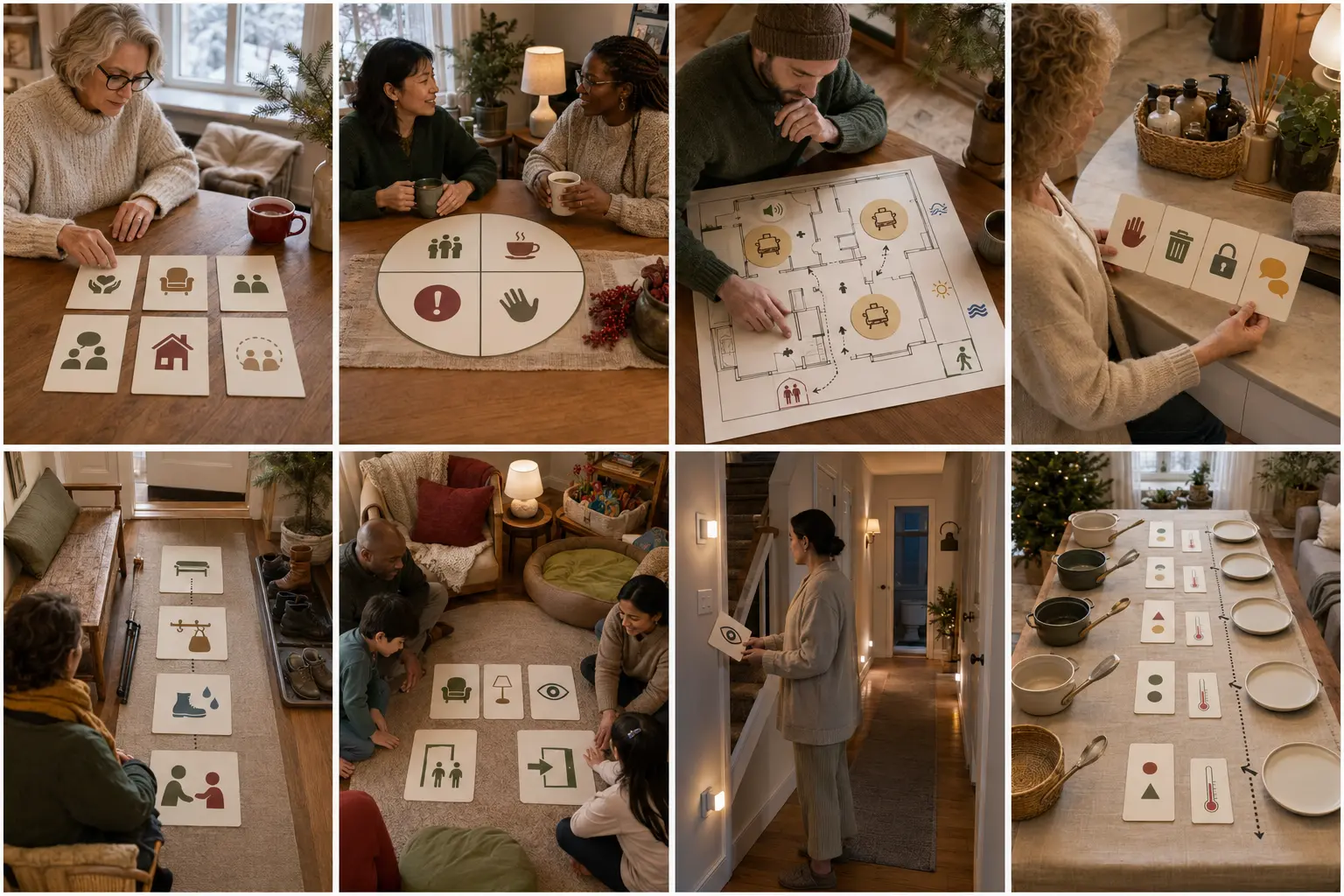
Invite the recipient to a specific thirty-minute tea or chosen drink with arrival, one simple refreshment, no hosting task for them, and a visible closing plan that the giver keeps. Offer home, doorstep, nearby accessible place, or remote versions and make rescheduling or ending early easy.
See fit and tradeoffs →
At a stable seated work surface, offer three locally available nonfragrant stems or branches approved by the recipient and one stable easy-to-lift vessel. Trim only with suitable tools and help, compare height and negative space, choose one stem, clean the surface, and arrange disposal or composting before leaving.
See fit and tradeoffs →No placement or order is currently paid. Future commercial links will be clearly labeled beside the link and will not silently determine this collection.