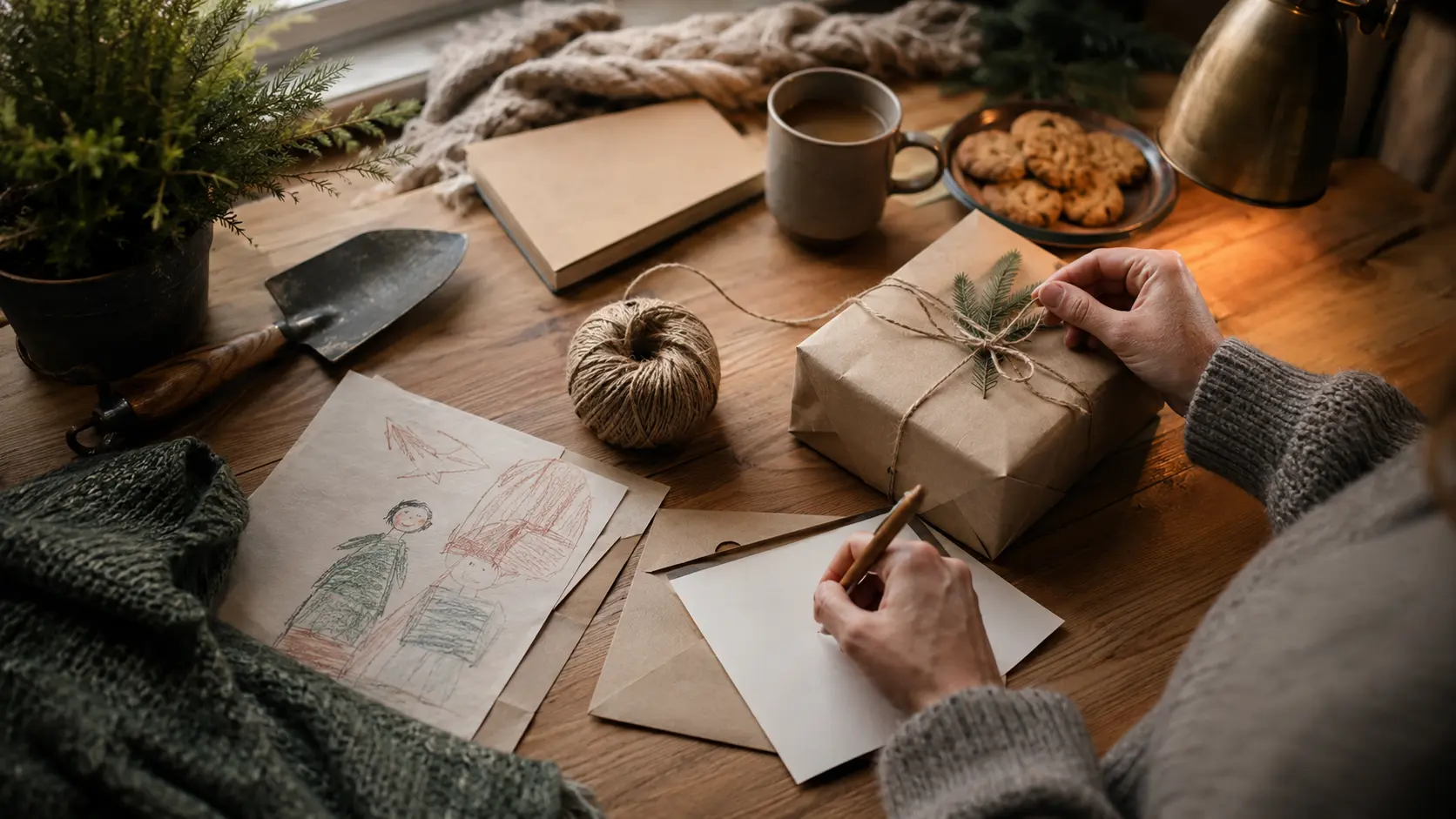
The home cook: make the relationship visible
Create a tested family-recipe folio with notes about who made each dish and when it appeared.
See fit and tradeoffs →Curated editorial collection · 136 ideas
Projects scaled to the maker's available time and the recipient's actual taste, use, and storage.
Create a tested family-recipe folio with notes about who made each dish and when it appeared.
See fit and tradeoffs →
Illustrate or photograph the first view, doorway, key, or gathering in the new place.
See fit and tradeoffs →Turn one shared route into a small map, annotated photo set, or recorded story.
See fit and tradeoffs →Record the garden across a year with a simple map, bloom notes, and photographs.
See fit and tradeoffs →Write a brief record of books shared between you and what each one opened up.
See fit and tradeoffs →Document one finished object and its making story with excellent photographs and the maker's own words.
See fit and tradeoffs →Map a meaningful route and mark the ordinary places, conversations, or milestones attached to it.
See fit and tradeoffs →Create a short annotated playlist or restore a recording connected to a shared period of life.
See fit and tradeoffs →Record the caregiver's voice, ordinary details, or a letter to the future without demanding a polished milestone.
See fit and tradeoffs →Write a specific note naming the judgment, steadiness, humor, or craft you value in their work.
See fit and tradeoffs →Preserve their stories in their voice, caption photographs together, or reproduce a meaningful family document.
See fit and tradeoffs →Create a private, non-performative object from a shared joke, playlist, trip, pet, or family story.
See fit and tradeoffs →Make a story, map, audio message, costume piece, or small book featuring the child's own ideas.
See fit and tradeoffs →Create a portable family recipe set, small photo folio, or map of people and places that remain available to them.
See fit and tradeoffs →Share one concrete memory, photograph, recipe, or recording without asking them to respond or display it.
See fit and tradeoffs →Write a letter, record a story, make a playlist, or create a digital archive they can keep or delete freely.
See fit and tradeoffs →Collect one sentence or photograph from guests and turn it into a modest record of a gathering.
See fit and tradeoffs →Create a topographic print, field-note booklet, species list, or route story from a shared place.
See fit and tradeoffs →Restore old recordings, scan family media, or build a simple private archive with clear ownership.
See fit and tradeoffs →Exchange letters, voice notes, a small map, or a two-location photo sequence over several weeks.
See fit and tradeoffs →Create a small portrait, paw-and-place map, story, or photo sequence grounded in ordinary companionship.
See fit and tradeoffs →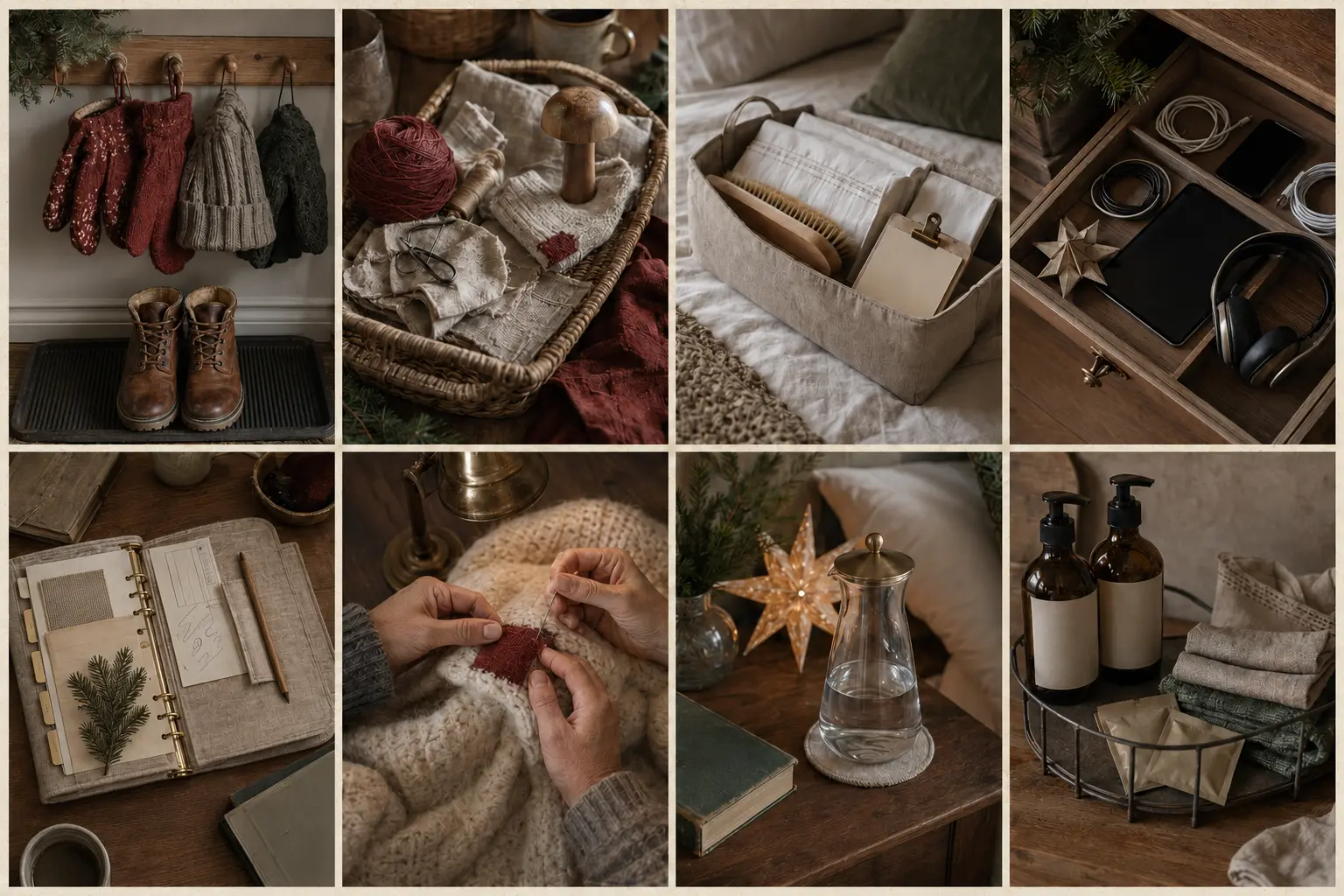
Assemble a compact basket for replacing buttons, closing small seams, and patching household linens. Match the thread and patch fabrics to three textiles they already own rather than filling it with random supplies.
See fit and tradeoffs →Build a twelve-month folio that records the home's actual filter sizes, seasonal checks, service dates, and warranty locations. Leave blank spaces for unknowns and include only tasks the household has confirmed belong to its property or lease.
See fit and tradeoffs →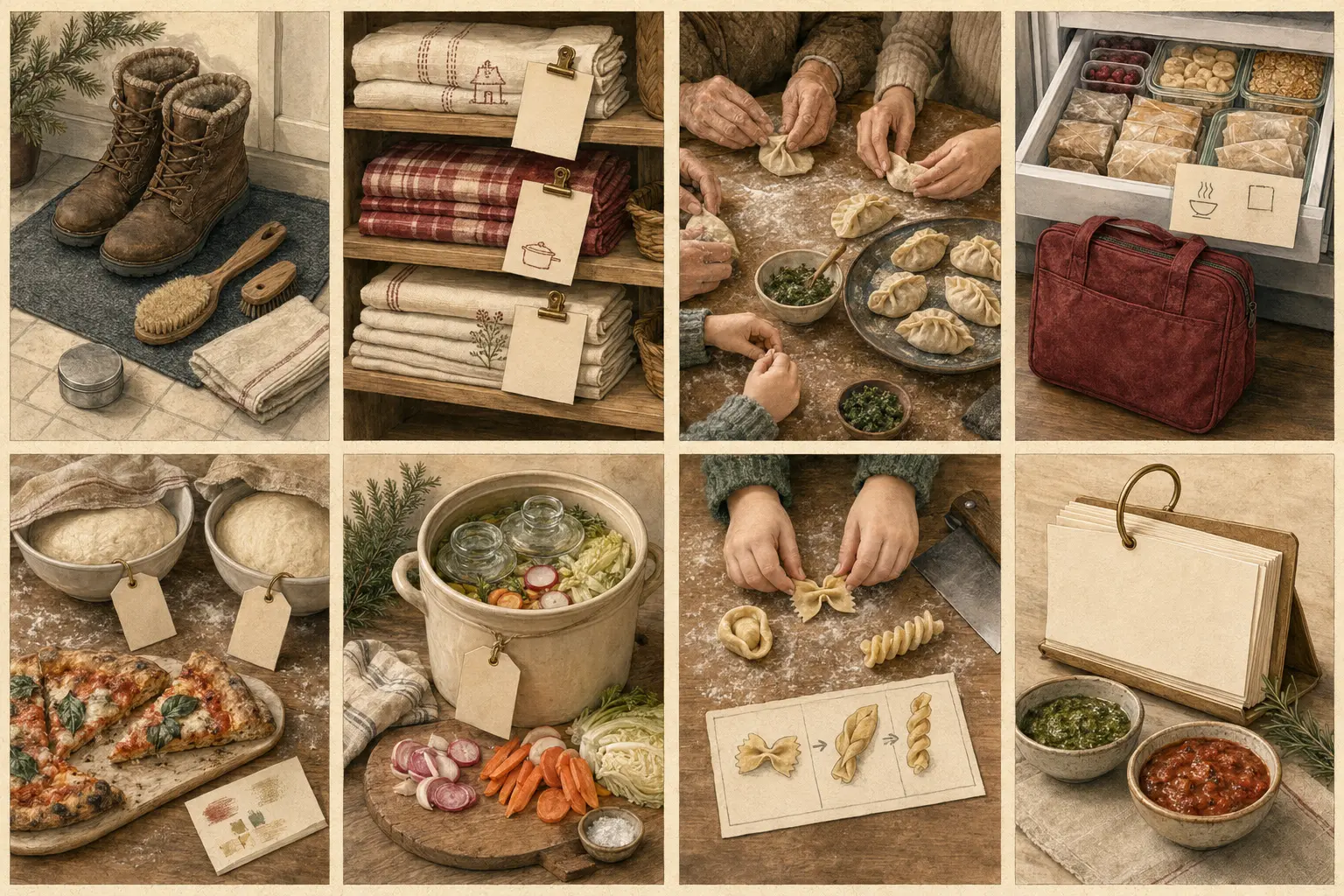
Create washable shelf labels and bed-set tags that identify linen size, room, and rotation order at a glance. Fold complete sets inside one pillowcase so fitted sheets and matching pieces remain together.
See fit and tradeoffs →Prepare a washable work board marked with three simple hand-shaped pasta forms and pair it with a tested egg-free or standard dough recipe suited to the household. Schedule a first practice session in which the child's pieces become part of the family meal.
See fit and tradeoffs →Write eight tested sauce formulas on wipeable cards, each built around ingredients the recipient normally keeps and paired with two realistic uses. Organize the cards on a ring by effort level and mark substitutions you have actually tested.
See fit and tradeoffs →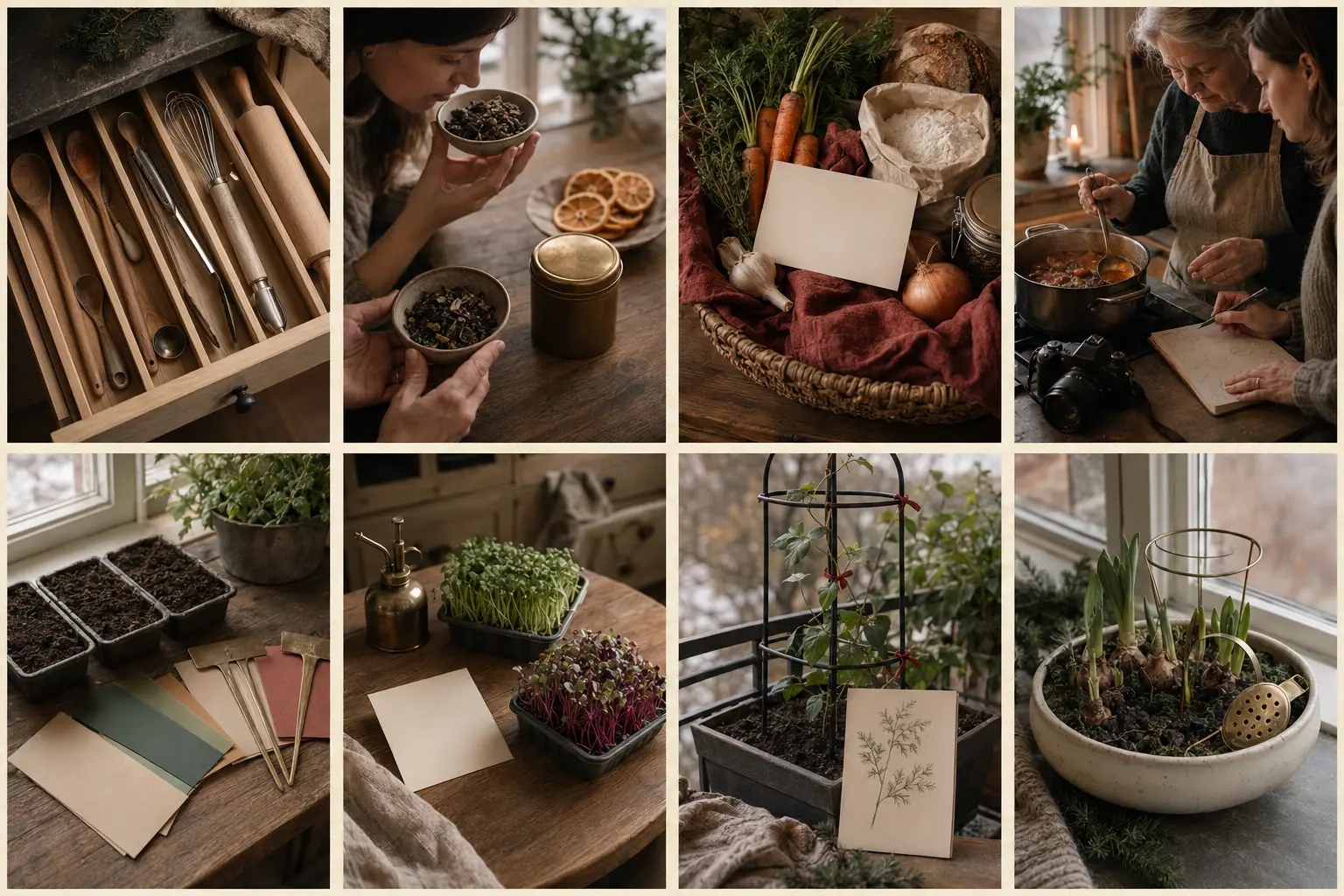
Build or commission a removable divider insert around the recipient's twelve most-used cooking utensils rather than a generic compartment pattern. Leave one open section for the drawer's contents to change over time.
See fit and tradeoffs →Create a measured paper map for one bright window showing where a small number of seed trays can sit without blocking normal use. Pair it with a sowing calendar built from the gardener's location, intended transplant dates, and seed-packet guidance.
See fit and tradeoffs →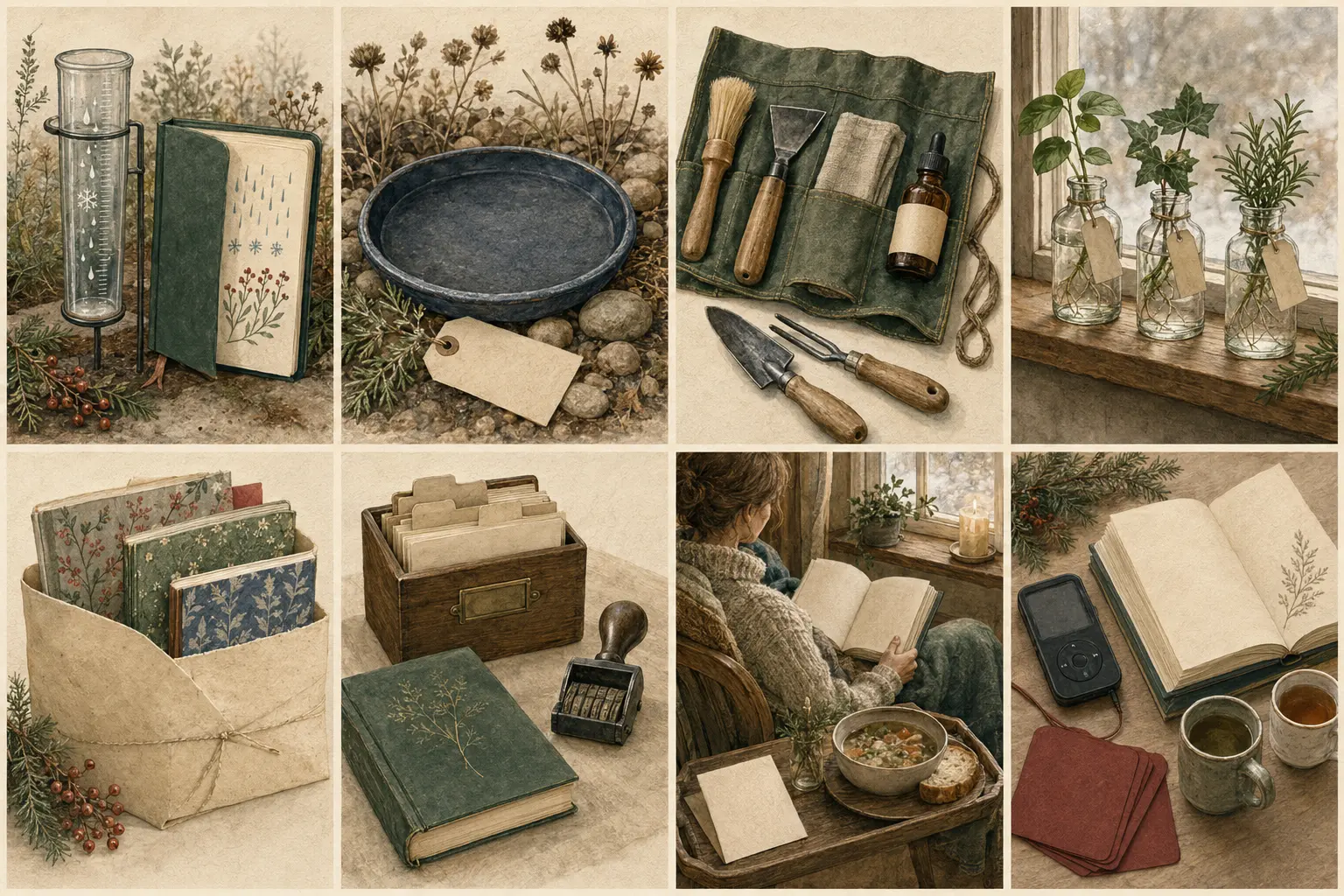
Assemble a very shallow outdoor dish with stable landing stones and a simple refill routine for a garden the recipient already tends. Choose its location together so water stays shallow, visible, clean, and away from pesticide use or high foot traffic.
See fit and tradeoffs →Make a small index-card box with sections for request, borrowed, return, and recommend, sized to the recipient's real library habits. Seed it with ten titles copied from their own list and include fields for format, branch, due date, and who suggested each book.
See fit and tradeoffs →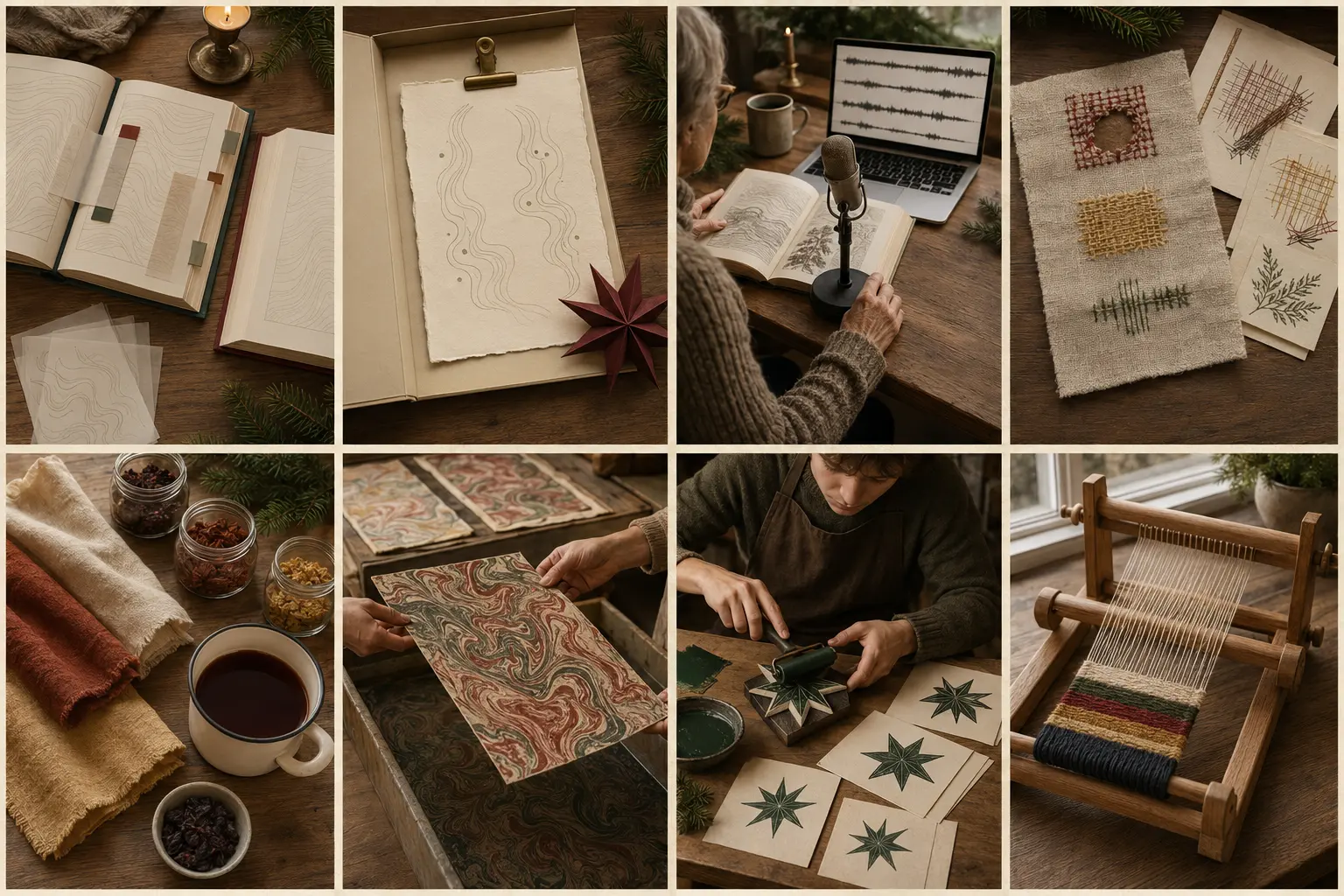
Create a practice cloth with three common damages already prepared: a small hole, a thin area, and an opened seam. Pair each with one clearly illustrated repair and enough matching or contrasting thread to complete the sample before touching a favorite garment.
See fit and tradeoffs →Plan a controlled dye experiment using one documented kitchen byproduct, small prewashed fiber samples, and equipment that will not return to food use when the method requires separation. Make labeled swatches rather than a finished garment so results can be observed without promising a color.
See fit and tradeoffs →Set up one afternoon to marble a limited stack of paper using a tested beginner method, washable tools, and a protected work surface. Plan two later uses for the dried sheets, such as book covers and gift tags, so the experiment becomes useful material.
See fit and tradeoffs →Provide one soft carving block, a properly sized carving tool, two ink colors, and twelve blank cards for a single original motif. Include a safety-tested practice block and a plan for drying and mailing the finished cards.
See fit and tradeoffs →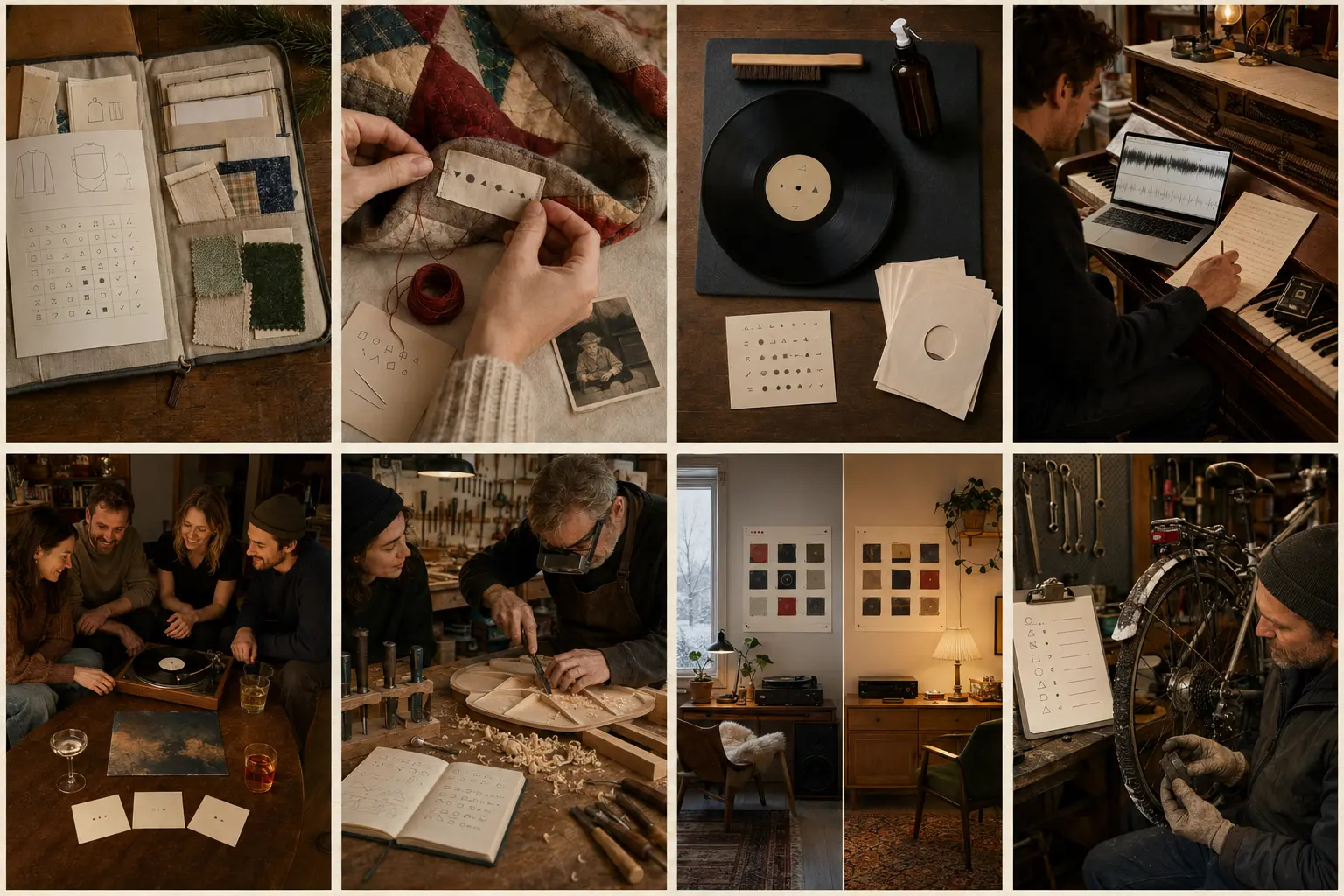
Build an archival-style portfolio with large flat envelopes for a selected set of frequently reused sewing patterns. Label each envelope with garment type, size range, traced changes, fabric notes, and every piece that should be inside.
See fit and tradeoffs →Prepare acid-free interview cards and washable fabric label blanks for documenting three completed quilts in the maker's own words. Record maker, date, materials, intended recipient, pattern source, and one honest story before lettering or stitching the final labels.
See fit and tradeoffs →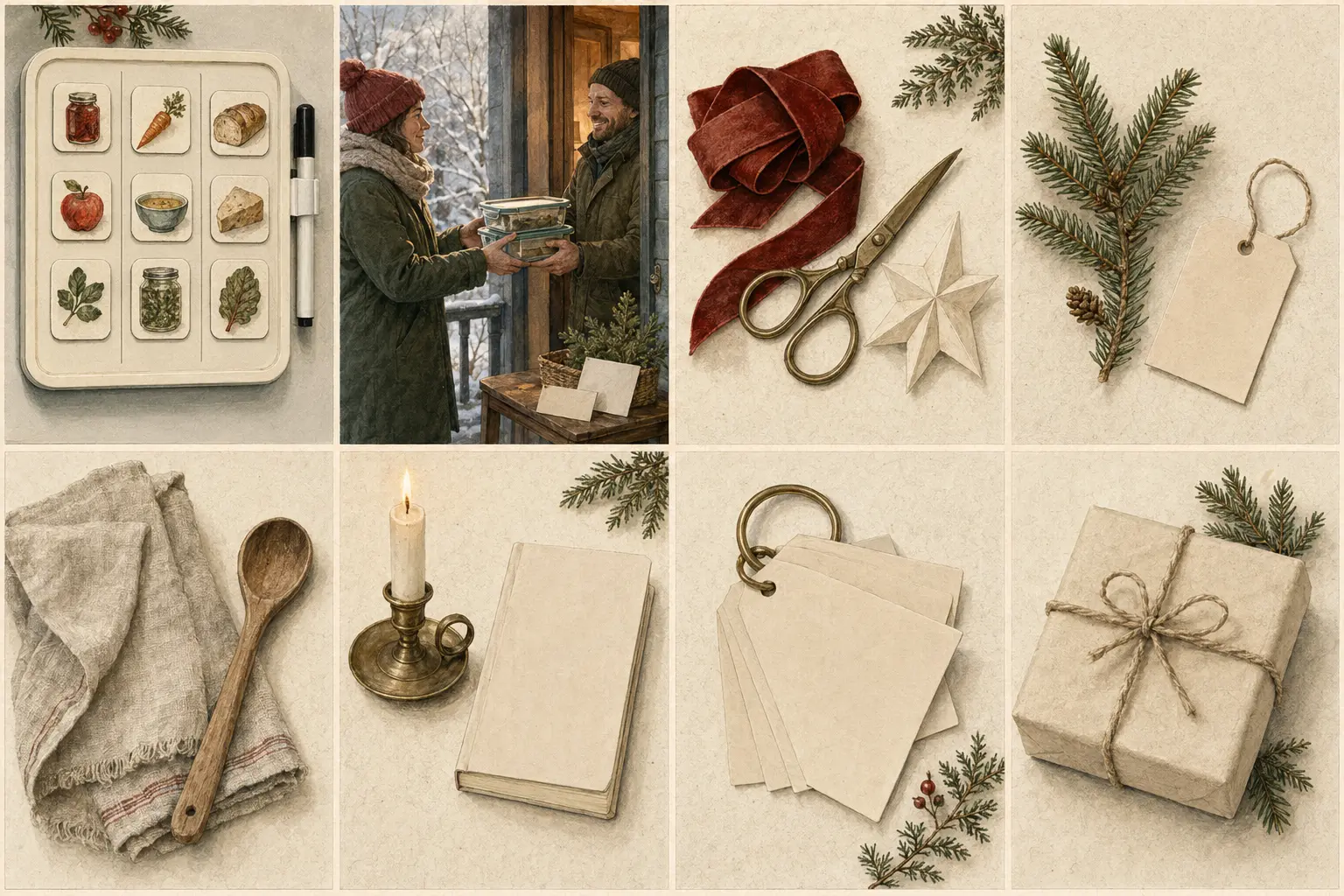
Make a small magnetic or removable board with three columns: use soon, planned meal, and replace. Seed it only with the household's ten most commonly forgotten pantry or freezer items and include a weekly two-minute reset prompt.
See fit and tradeoffs →Create a voluntary two-household meal exchange plan with one tested dish each, a specific week, portion count, container return method, and complete ingredient labels. Include an easy opt-out and begin with a single exchange rather than announcing a recurring tradition.
See fit and tradeoffs →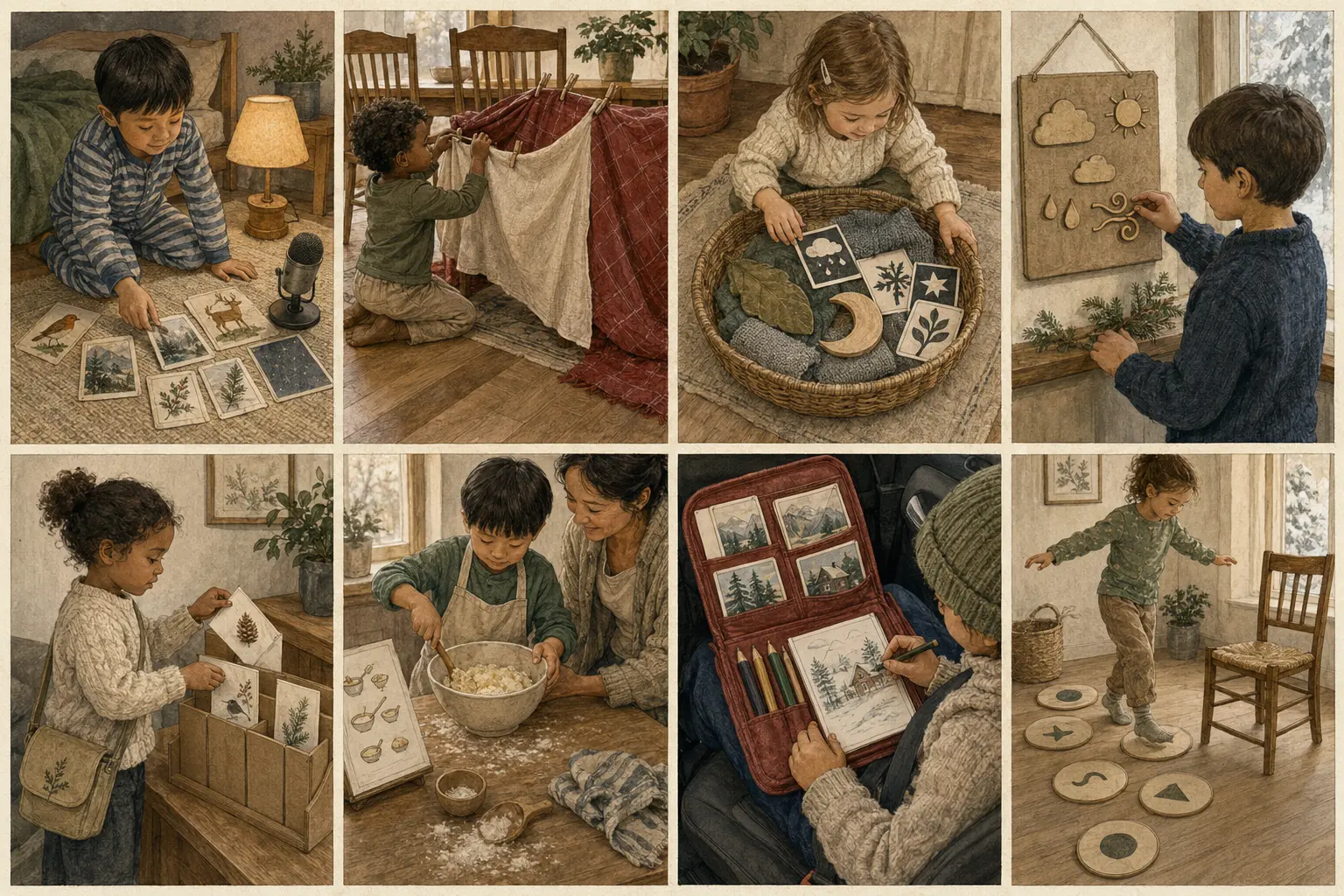
Gather two sturdy lightweight cloths, broad reusable ties, and oversized clips that fit the household's chairs or table. Include three illustrated den plans but leave enough ambiguity for the child to invent new structures.
See fit and tradeoffs →Choose one familiar story and gather five safe objects or textures that correspond to moments in it. Label each item in large print and braille only when accurately produced, then give the adult a short sequence for offering rather than testing the objects.
See fit and tradeoffs →Make a reusable observation board with movable symbols for cloud, wind, precipitation, light, and temperature feel. Pair it with a notebook that asks for one drawing and one comparison each week rather than daily homework.
See fit and tradeoffs →Create six reusable delivery envelopes, a chunky date stamp, picture-address cards, and a canvas route bag. Invite family members to leave drawings or short notes in designated household mail slots so the play has real material to deliver.
See fit and tradeoffs →Sew or assemble a flat folio with a drawing surface, three refillable activity pockets, and a secure pencil loop. Fill it with route-specific observation prompts and calm activities that do not depend on internet access.
See fit and tradeoffs →Create eight flat washable markers with actions such as reach, press, pause, turn, or choose the next path. Design seated, standing, and floor-level routes so the child can rearrange the sequence without being timed or scored.
See fit and tradeoffs →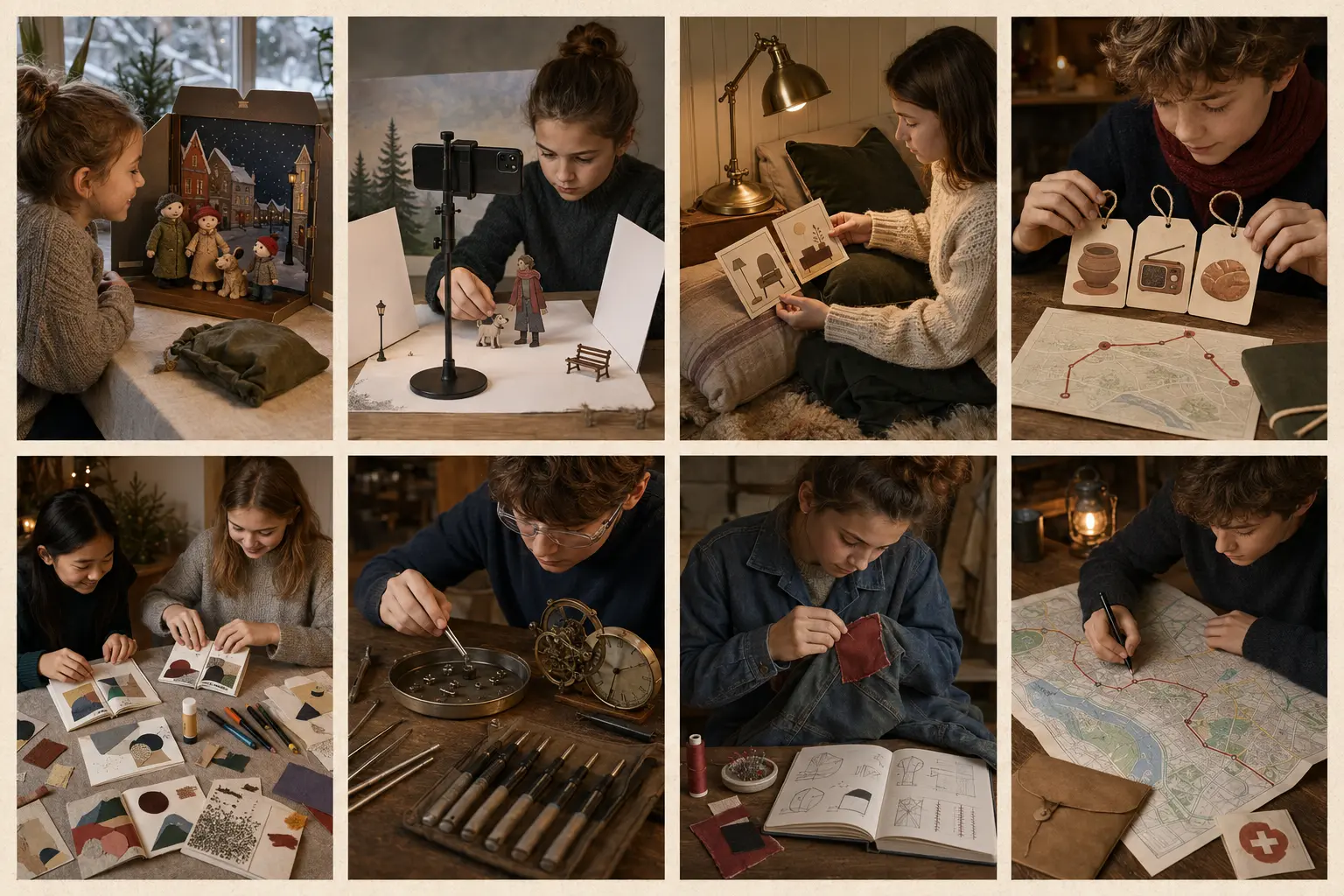
Make six sturdy hand or stick puppets based on willing family members, pets, and one invented character. Add a folding tabletop backdrop with home, winter street, and impossible-place panels so the child can tell ordinary or fantastical stories.
See fit and tradeoffs →Invite one friend for a defined afternoon with paper, copying access, snacks, and prompts for lists, comics, reviews, or invented advice. Help them duplicate a small number of copies while making it clear that the zine can remain entirely private.
See fit and tradeoffs →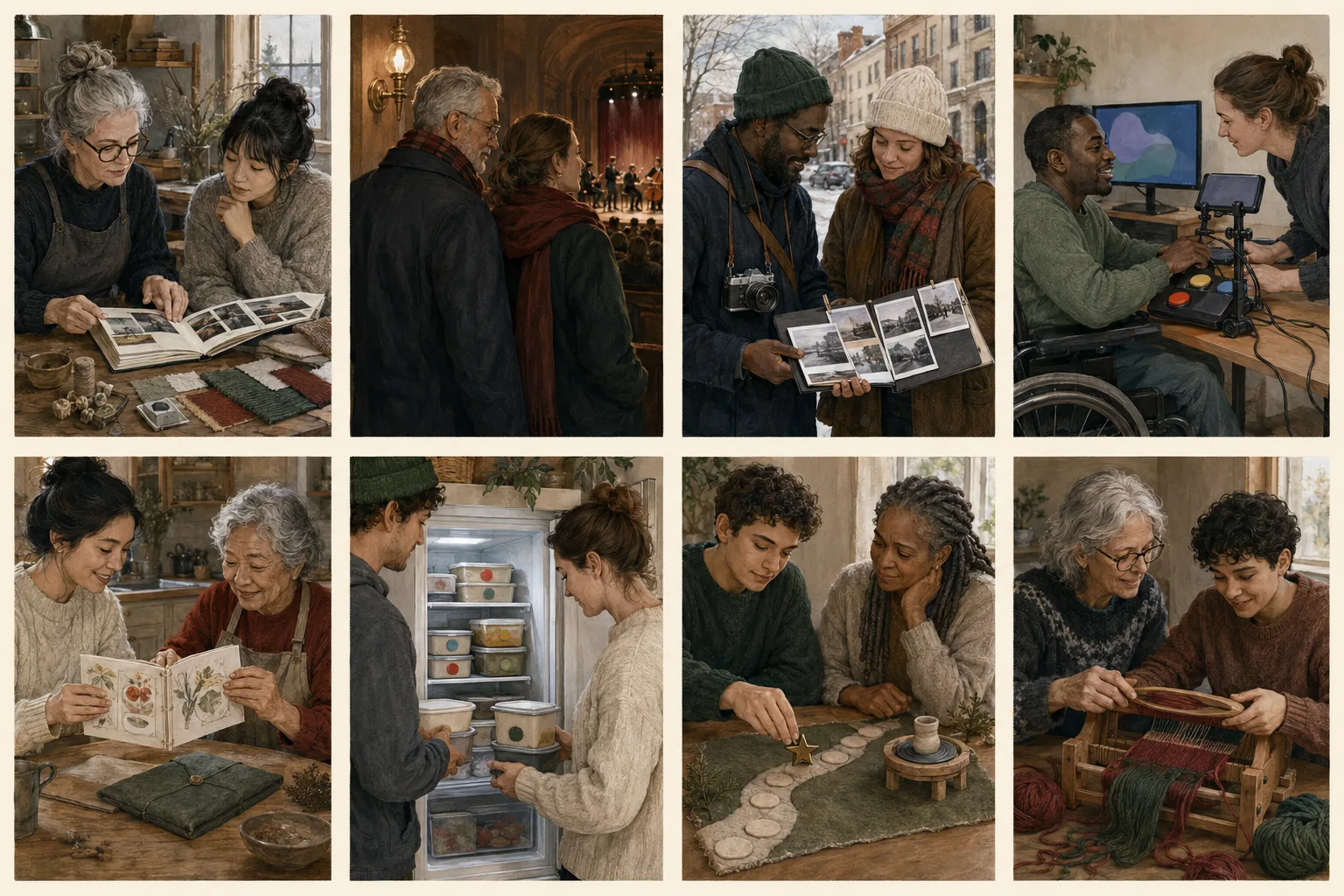
Select eight genuinely used family recipes and retest unclear measurements, timing, and yield before editing them into a compact booklet. Add substitutions for smaller kitchens, common dietary needs, and the equipment each recipe actually requires.
See fit and tradeoffs →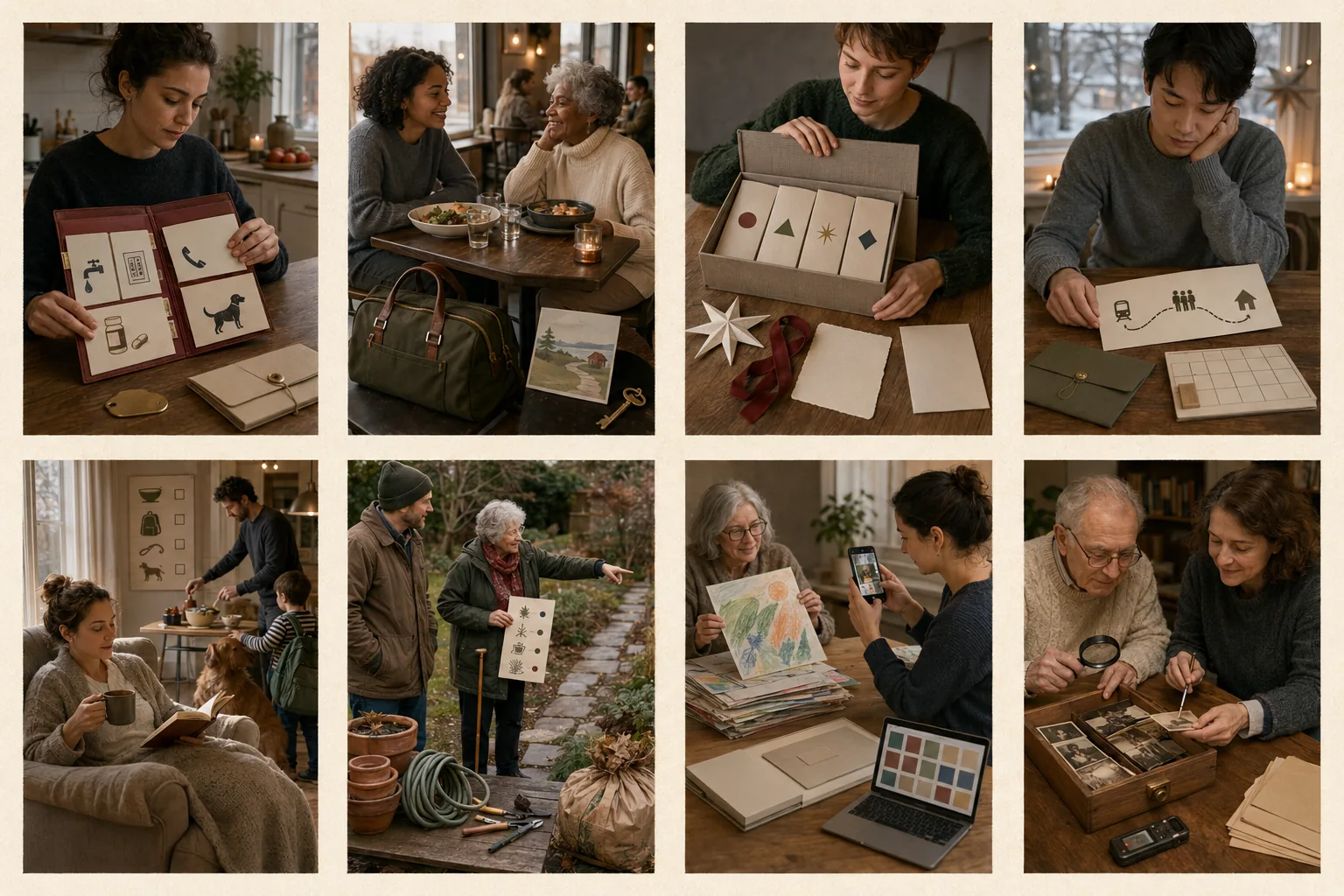
Work with the recipient to build a slim folio containing chosen emergency contacts, utility shutoff notes, medication or pet instructions they elect to include, and copies of nonsecret household procedures. Add a removable card for the fridge and an encrypted digital backup plan without asking to retain their private information.
See fit and tradeoffs →Invite the adult child to choose three family traditions they genuinely want to carry forward and one they want to reinterpret. Pack only the small durable elements needed for those rituals, with concise origin notes and room for the recipient's own additions.
See fit and tradeoffs →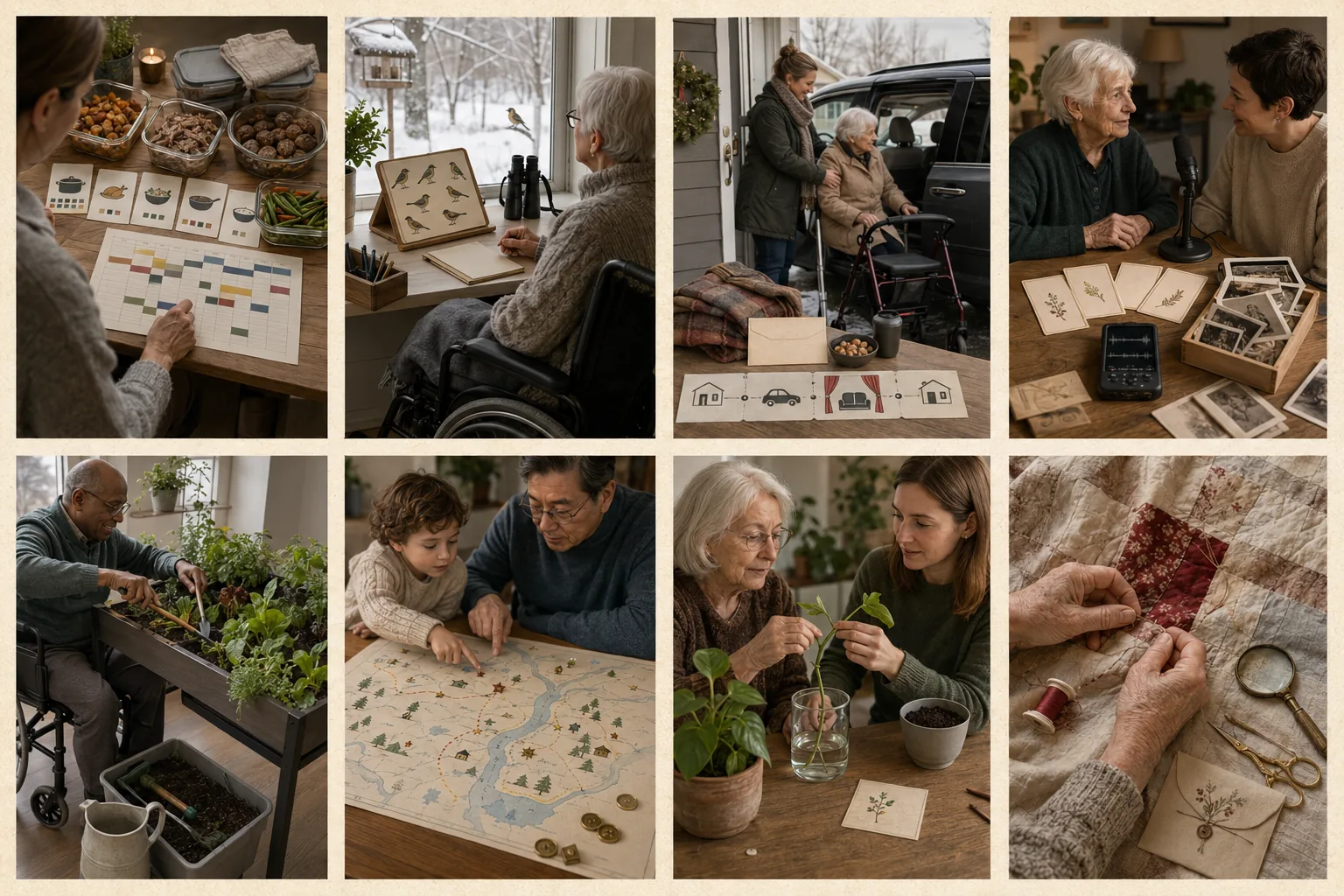
Ask the grandparent to select six meaningful places and write or dictate one line about each, then draw a simplified high-contrast map linking them. Print it large enough to read comfortably and provide a digital version with full text descriptions rather than dense geographic detail.
See fit and tradeoffs →Ask the grandparent whether one established plant may be propagated and schedule a calm session to take only suitable cuttings with proper technique. Label each new plant with its common or verified botanical name, the parent plant's story, care needs, and intended recipient.
See fit and tradeoffs →
Choose one ordinary shared moment from each month and pair it with a photograph, receipt fragment, map mark, message excerpt, or short description used with permission. Bind the twelve entries into a compact almanac with blank space for both partners to correct, annotate, or leave alone.
See fit and tradeoffs →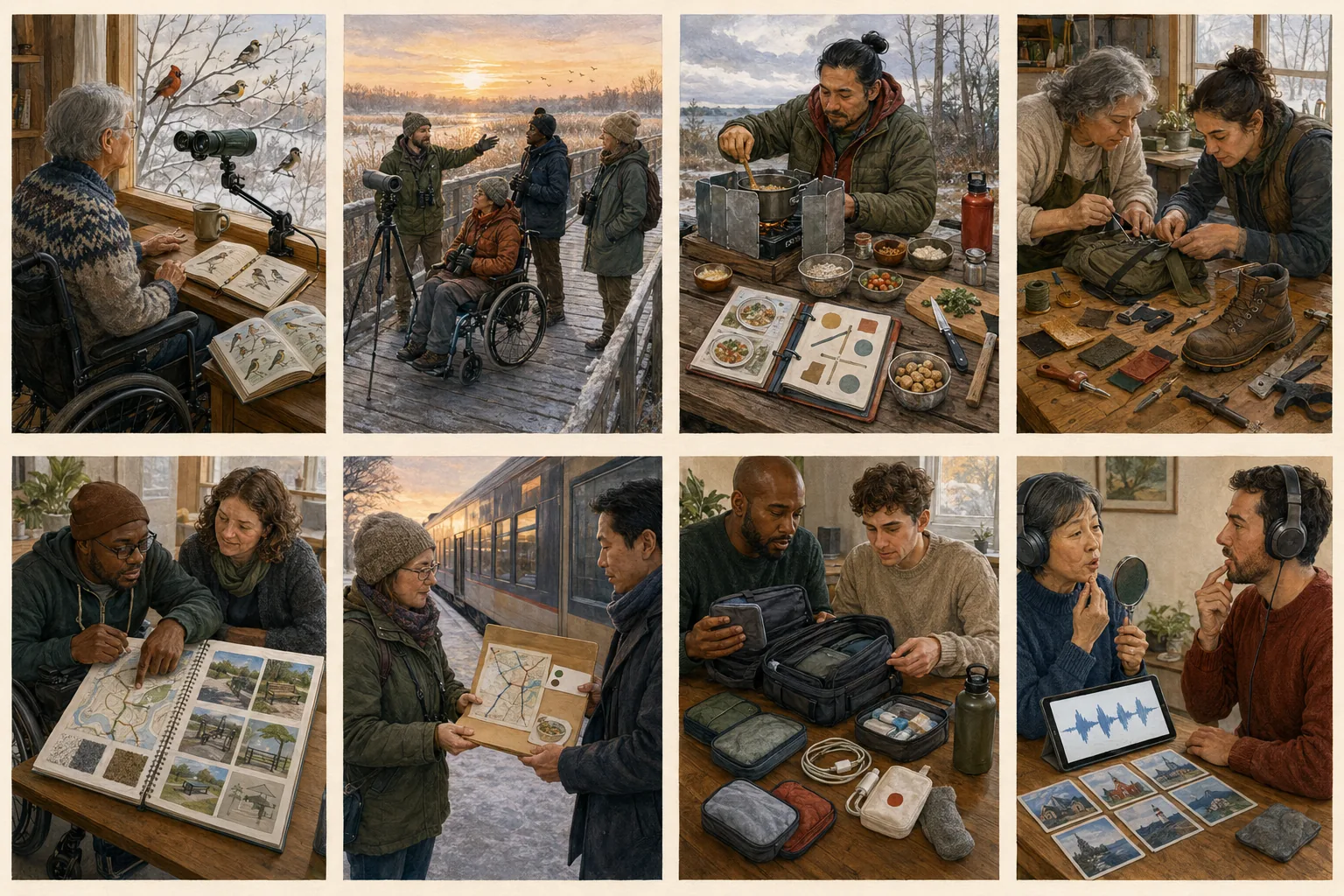
Test and write six compact meals that use the recipient's existing stove, pot size, dietary needs, and usual trip length. Put each recipe on a wipeable card with fuel assumptions, packed ingredient quantities, water needs, and one no-cook backup.
See fit and tradeoffs →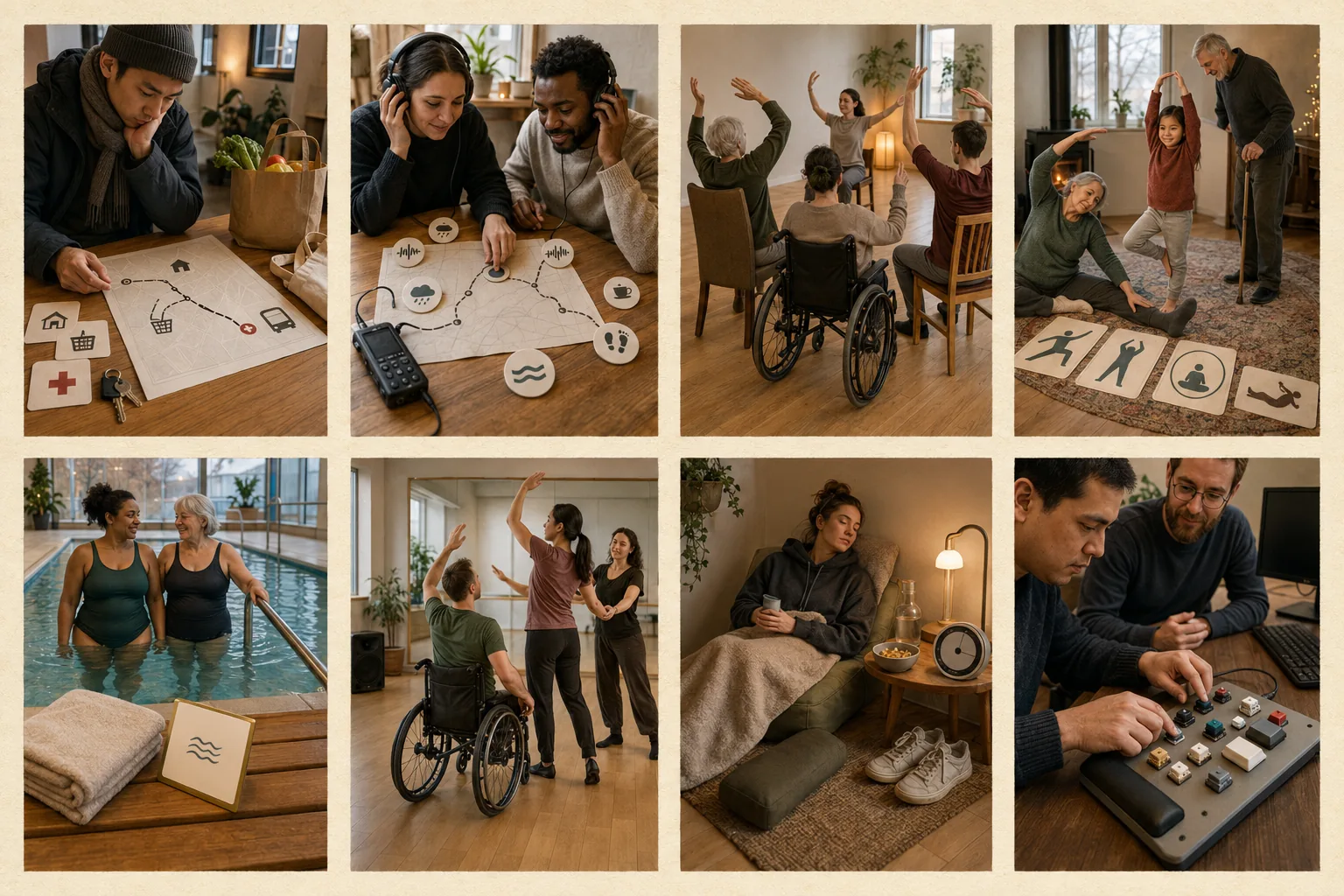
Edit five to ten consented recordings from a shared trip into a short sequence of station sounds, weather, laughter, street ambience, or spoken notes. Pair the private audio file with a small folded route map that marks where each sound was captured without exposing sensitive locations.
See fit and tradeoffs →Illustrate twenty simple cards that invite a stretch, shake, breath, reach, or quiet pause with standing, seated, and imagination-only versions. Test every prompt with the household, remove anything uncomfortable, and add five blank cards for movements they invent together.
See fit and tradeoffs →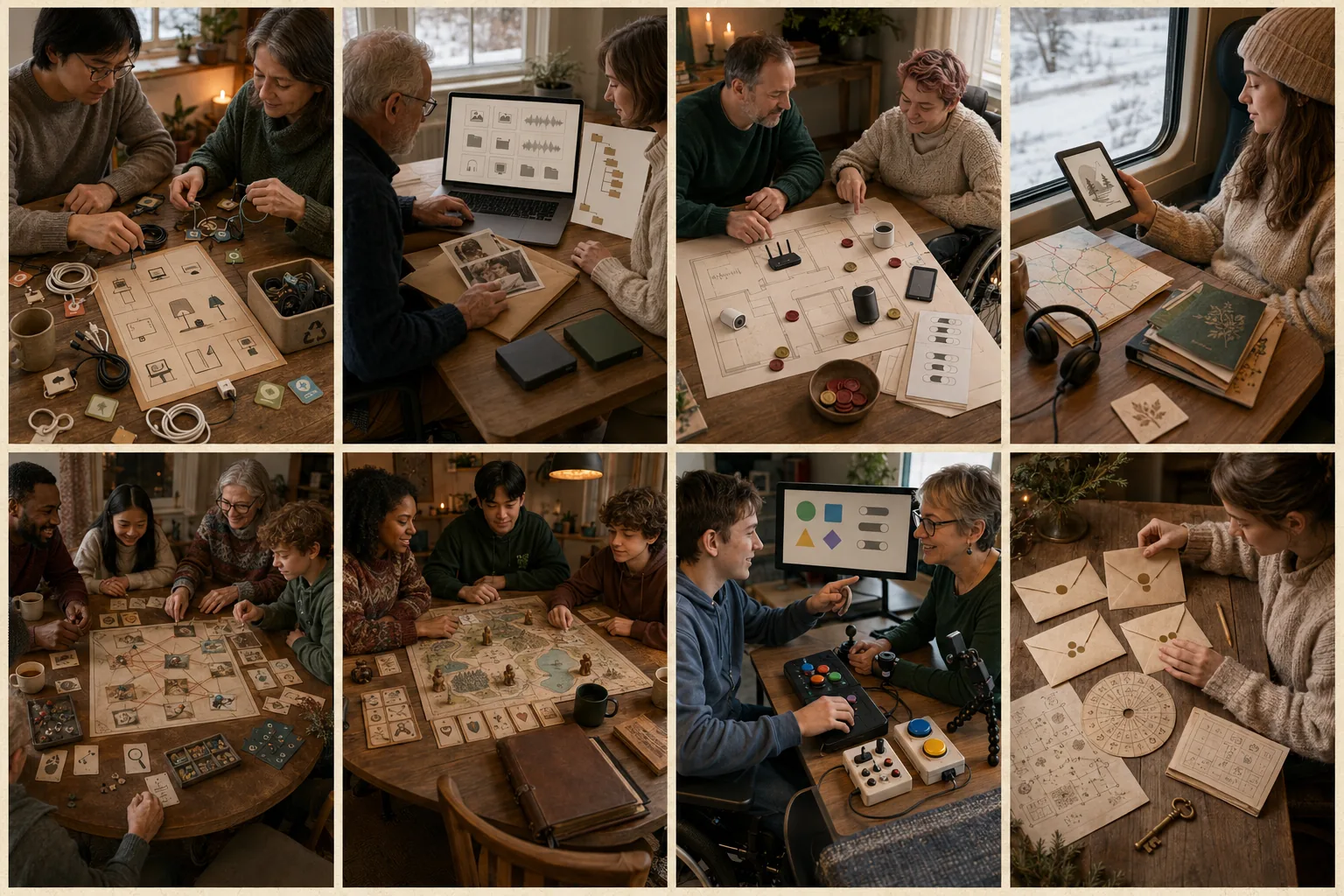
Write a short system-neutral adventure built around the recipient's preferred tone, group size, session length, and accessibility needs, with three locations and several flexible solutions. Include a facilitator outline, large-print clues, pre-made character prompts, and permission to alter or abandon any scene.
See fit and tradeoffs →Create four mailed puzzles that unfold over a month and use different strengths such as pattern finding, wordplay, spatial reasoning, and observation. Include a private hint line, large-print duplicates, a clear final answer method, and an optional shared call after each envelope.
See fit and tradeoffs →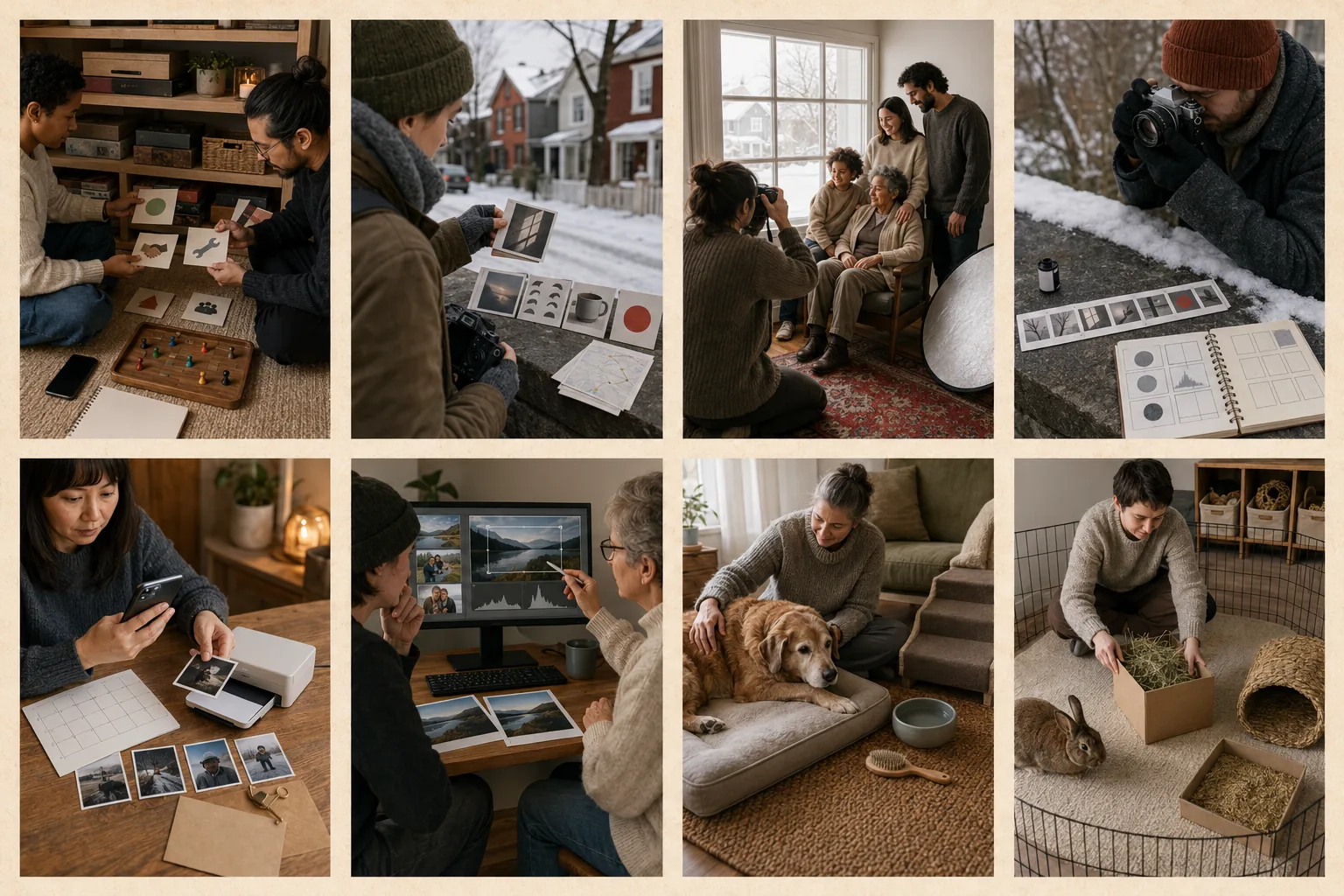
Write thirty photo prompts about winter light, repeated shapes, working hands, public details, weather, distance, and change that can be completed with the recipient's existing camera or phone. Add a route-safety card, consent reminders for photographing people, and a reflection question on the reverse of every prompt.
See fit and tradeoffs →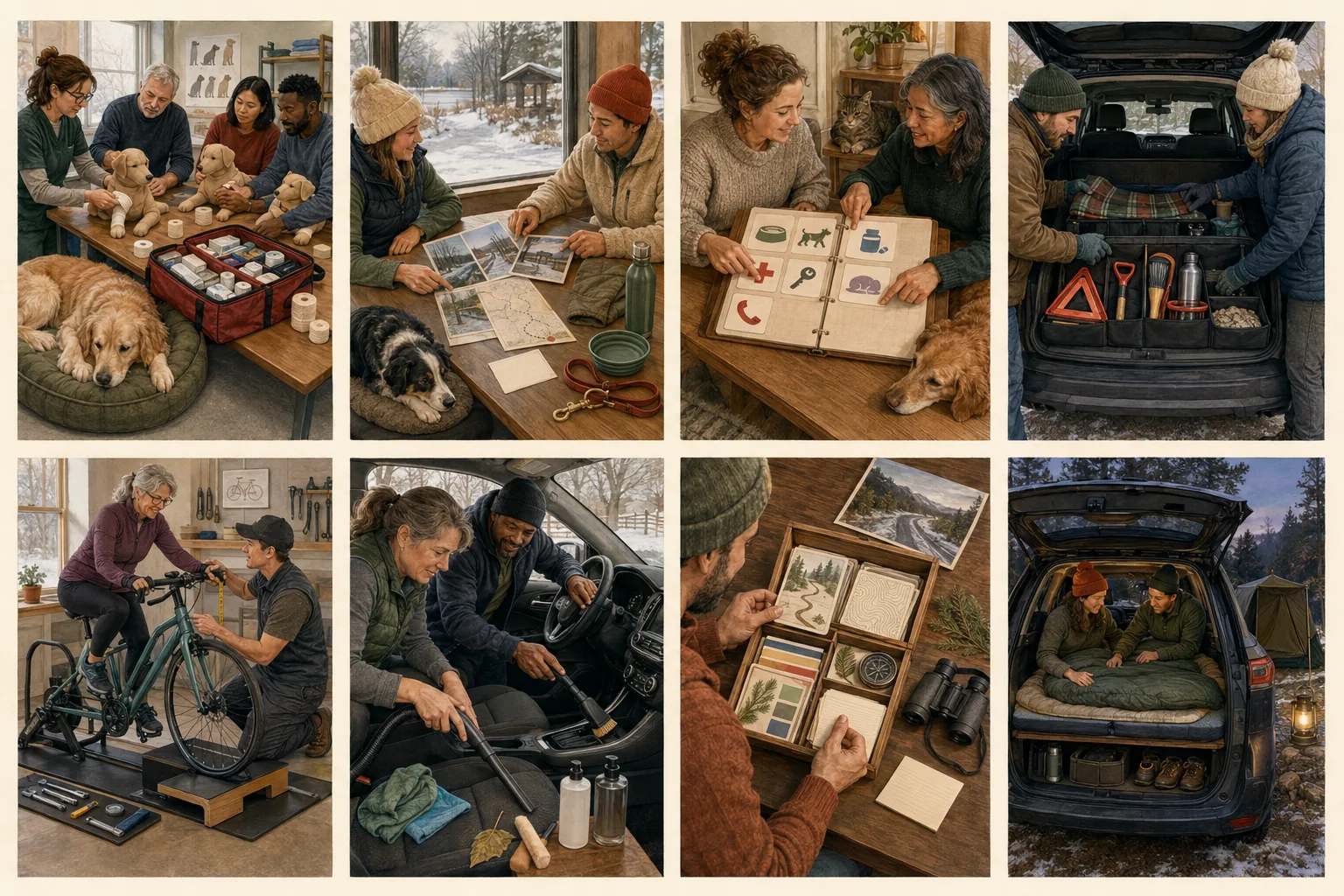
Interview the owner and build a concise binder covering feeding, medication as prescribed, walks or habitat care, behavior cues, household boundaries, veterinarian contacts, and what requires an immediate call. Add dated update pages, a pet-sitter handoff checklist, and a sealed section for sensitive information the owner controls.
See fit and tradeoffs →Research three short scenic loops with official road information, safe pull-offs, accessible rest stops, a weather backup, and one observation theme for each route. Put the maps, mileage estimate, current source links, and reusable field-note cards in a compact glove-box case.
See fit and tradeoffs →
Create a refillable ledger with fields for object name, photograph reference, maker or origin if known, date acquired, source, story, condition note, location, and uncertainty. Fill the first five entries with the collector in their own words and explicitly mark family memory, documentation, and unknown information differently.
See fit and tradeoffs →
Write one page naming a decision, piece of judgment, or quiet act that changed the work, and describe its effect without disclosing confidential details. Give the original privately and, with permission, send a shorter version to someone who can formally recognize the contribution.
See fit and tradeoffs →
Invite participating families to contribute one short, nonidentifying sentence about a routine that made the route safer or steadier. Edit the approved notes into a compact booklet, follow school gift policy, and deliver it through the official channel rather than interrupting boarding.
See fit and tradeoffs →Collect five brief notes that name observable skill, such as careful explanation, clean work, route knowledge, or reliable follow-through, rather than generic praise. Edit for privacy and accuracy, then mount each note on a separate card the recipient may keep, share, or discard.
See fit and tradeoffs →
Paint or collage four cards from the giver's real local conditions, each recording date, temperature feel, light, sound, and one small seasonal detail. Address and stamp them in advance, then mail them at spaced intervals with an invitation rather than a requirement to answer.
See fit and tradeoffs →Choose six ordinary shared places and write a compact field entry for each using coordinates only when privacy permits, sensory details, one true event, and what has changed. Bind the entries with a blank seventh page the friend may fill, revise, or leave empty.
See fit and tradeoffs →Write one answerable question connected to the friend's present life, include your own short answer first, and provide a stamped addressed return envelope with optional response formats. State clearly that the recipient may keep the stationery, answer later, reply digitally, or not respond.
See fit and tradeoffs →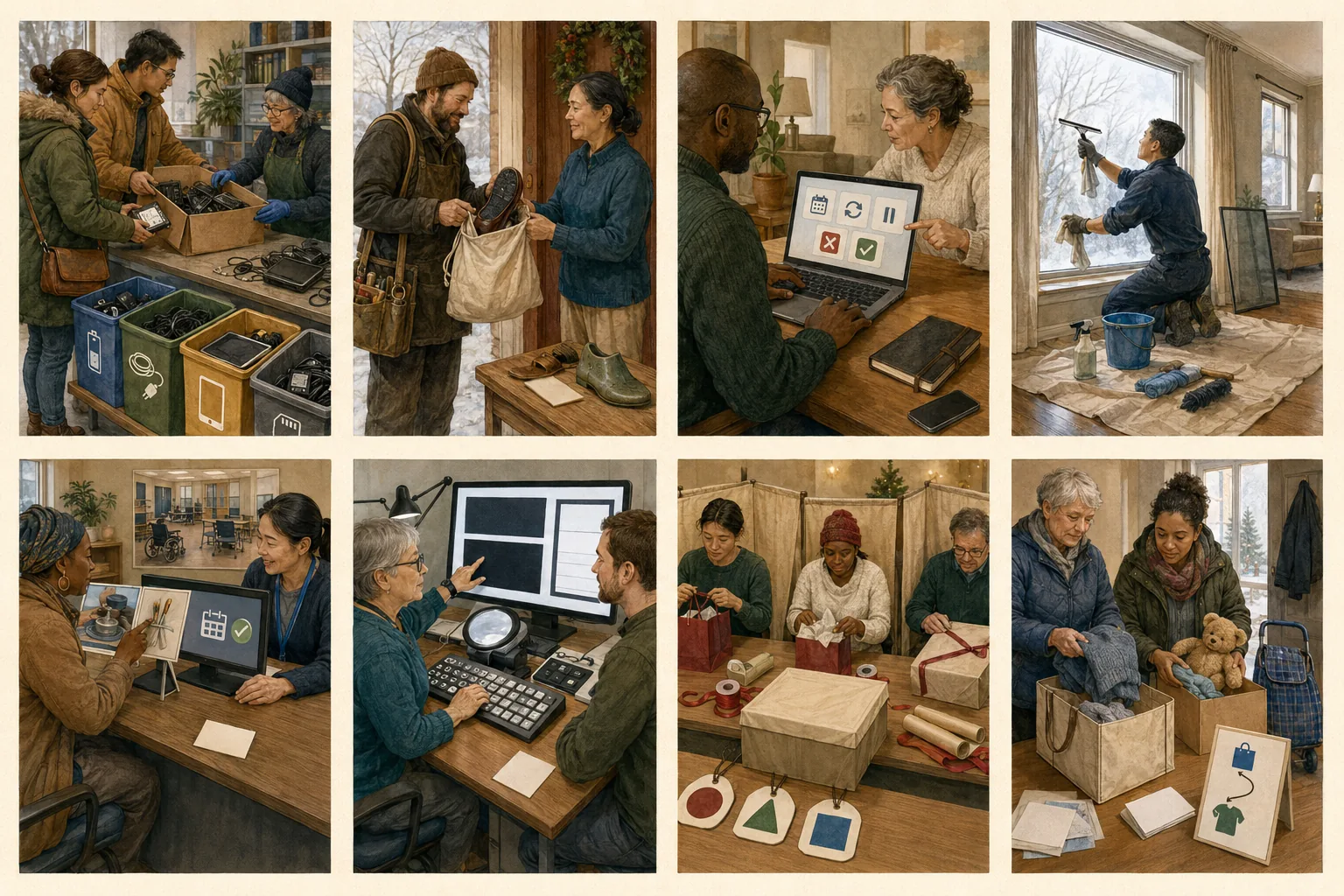
Agree on a coded recipient list, wrapping style, reusable materials, concealment, fragile items, and a defined batch before anything changes hands. Wrap at the recipient's home or transport securely, label every parcel clearly, return leftovers sorted, and delete the code key after handoff.
See fit and tradeoffs →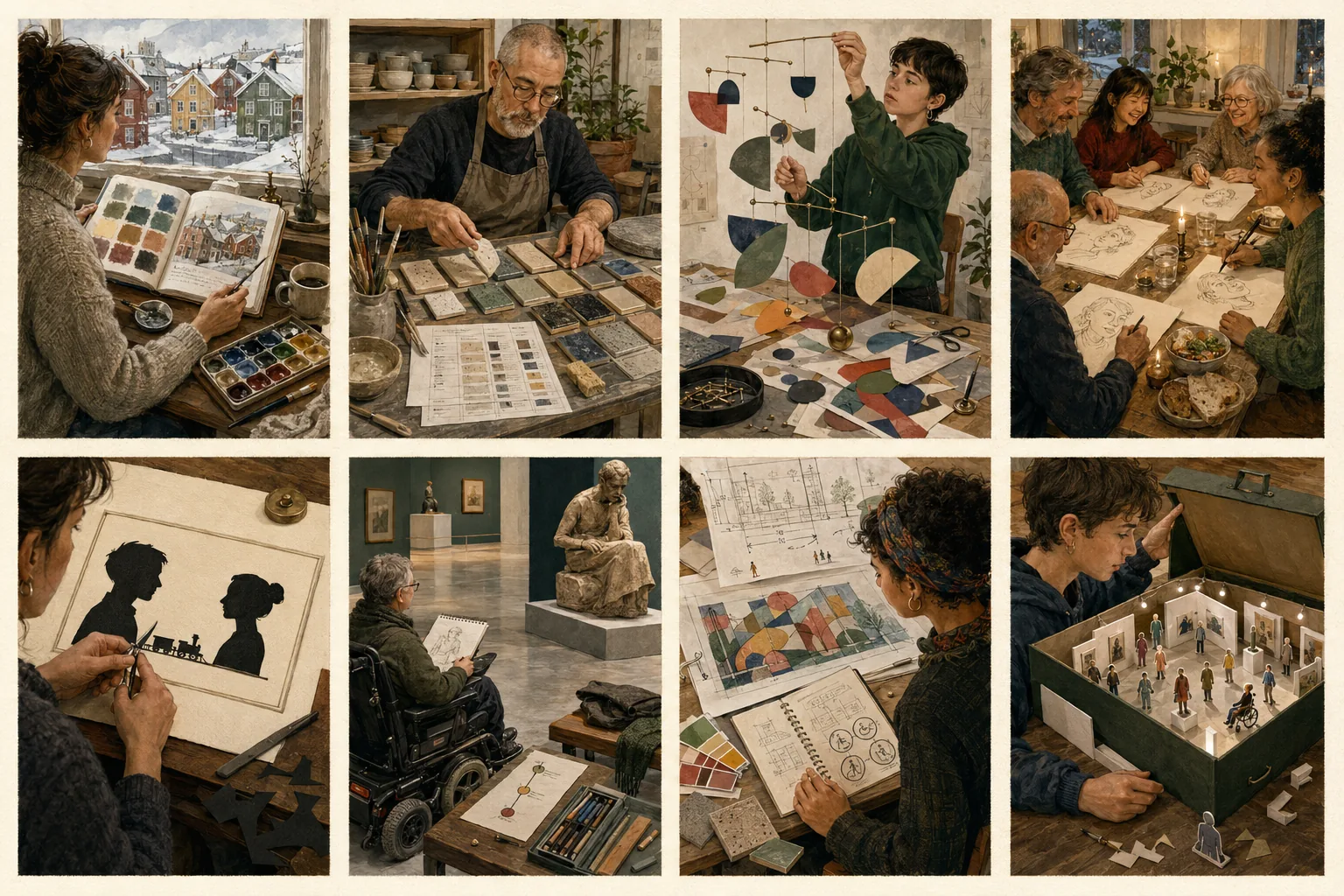
Choose one room, landscape, or neighborhood the recipient knows well, then mix twelve distinct colors from your own photographs or an in-person visit. Paint each swatch on sturdy paper, name it with a concrete local reference, and bind the cards with a short note about the light, season, and memory behind the palette.
See fit and tradeoffs →Assemble a compact set of scored paper shapes, removable connectors, thread, a safe hanging arm, and three balance challenges that move from tabletop counterweights to a small kinetic mobile. Leave the color scheme and final composition entirely open, and include a photo-free diagram explaining center of mass without prescribing a finished model.
See fit and tradeoffs →With permission, photograph each person's side profile against plain light, trace only the outer contour, and cut two simple silhouettes from archival dark paper. Mount them facing a shared central detail, such as a tiny paper branch or transit line, and add names and the year on a removable backing rather than across the artwork.
See fit and tradeoffs →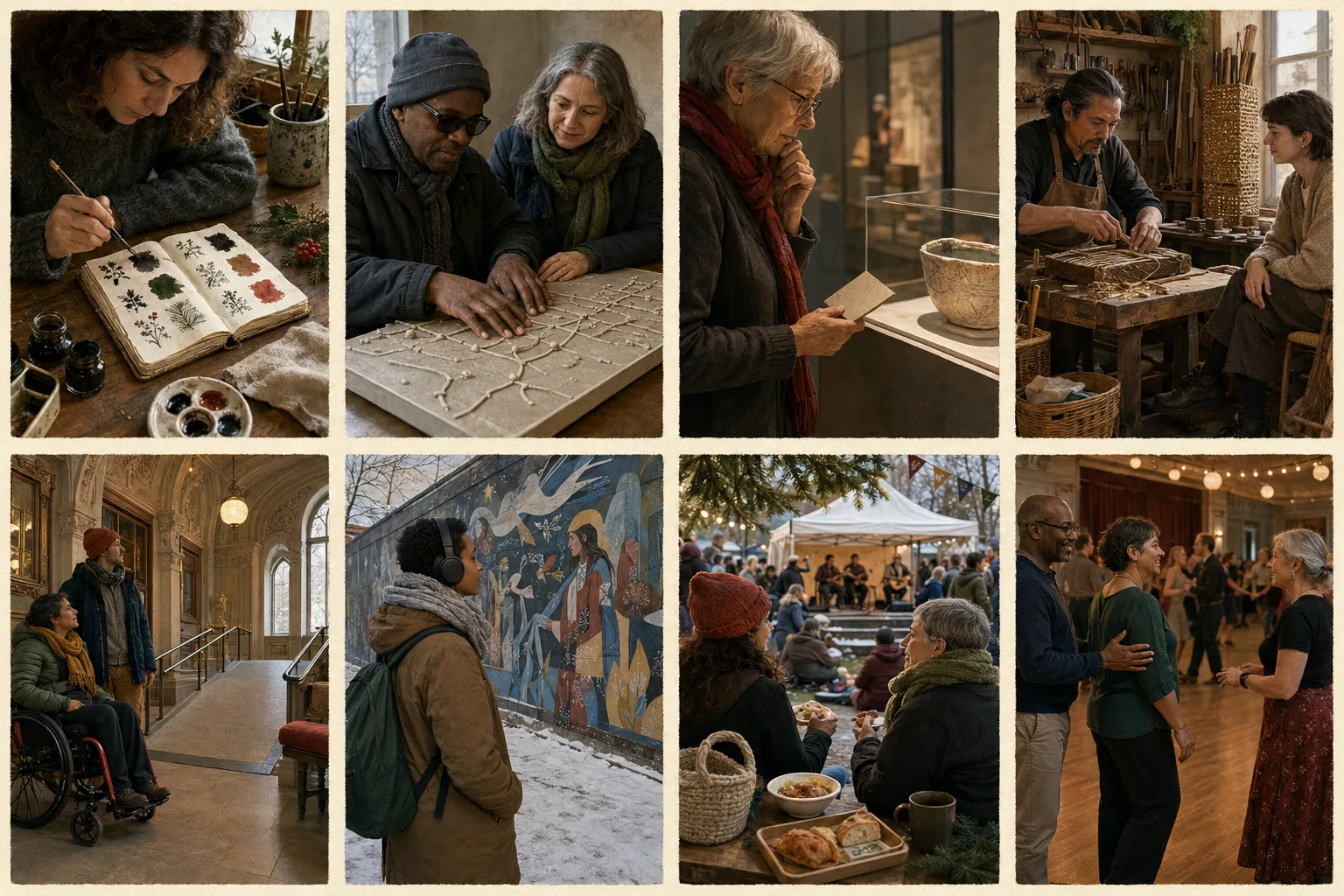
Prepare a bound fieldbook for testing a small set of clearly identified, safely sourced ink materials under a knowledgeable instructor's method. Give each spread room for ingredient, binder, tool, paper, date, lightfastness uncertainty, and a wet-to-dry sample, then pair it with one supervised making session rather than unlabeled jars of homemade liquid.
See fit and tradeoffs →Choose one short route the recipient welcomes, simplify it into raised clay or paper-pulp lines, and mark three landmarks with distinct textures rather than tiny labels. Add a detachable key in plain language and braille only if accurately produced, then finish the piece as a hand-sized wall tile or tabletop object with the recipient's display consent.
See fit and tradeoffs →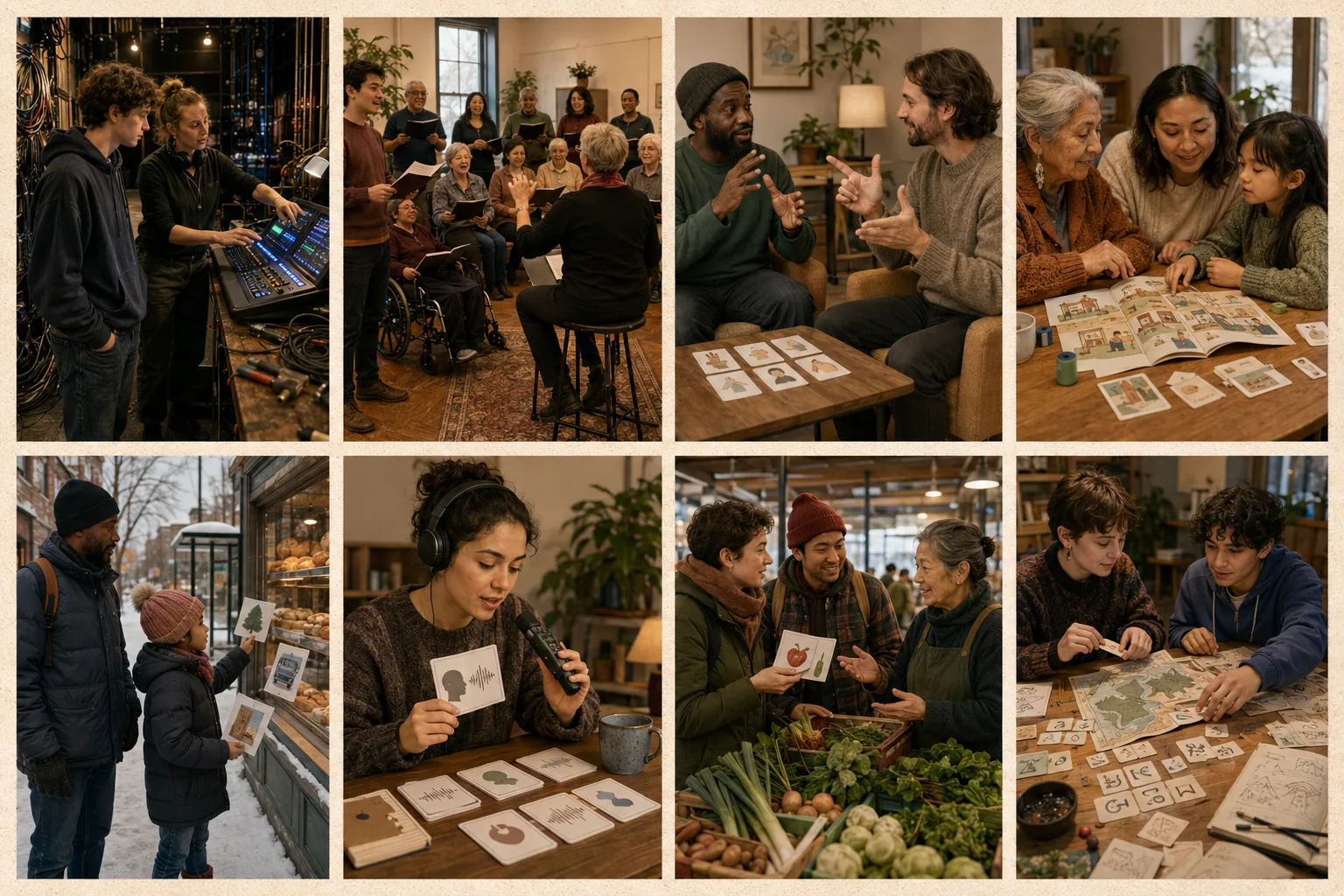
With willing speakers, choose twelve phrases still useful in family life, record accurate pronunciation, note who uses each variant, and arrange them on a foldout map of situations such as arriving, eating, teasing, comforting, and leaving. Have a fluent speaker or qualified language resource review spellings and meanings before printing a small family-only edition.
See fit and tradeoffs →Create a reusable language-design folio with cards for sound inventory, word order, naming patterns, politeness, time, color, and one writing system experiment. Begin with the society and speakers the teen imagines, then build twenty related words and a short dialogue whose grammar is consistent enough to revise, without borrowing sacred or marginalized language features as decoration.
See fit and tradeoffs →
Invite family members to contribute eight expressions they actually use, then put the original phrase, literal rendering, ordinary meaning, speaker or region, and a playful illustration on separate cards. Have fluent contributors approve the wording and let them remove any phrase that feels private, insulting, or impossible to detach from context.
See fit and tradeoffs →Ask the teen for five current fascinations and three prompt types they dislike, then write thirty concise cards that combine their interests with form constraints, point of view, stakes, dialogue, research, and revision moves. Include skip, remix, and make-your-own cards, and keep every response private unless the writer chooses to share it.
See fit and tradeoffs →Choose a short work whose public-domain status is verified in both recipients' locations, typeset it legibly with generous margins, and make two slim copies. Annotate only five opening passages with questions, associations, or disagreements, then invite the recipient to add, skip, or answer privately before the copies are exchanged once.
See fit and tradeoffs →
Agree on a fictional premise, content boundaries, and six-message limit, then send the first in-character letter with a return envelope or digital reply route. Each person advances the story in three messages without puzzles, deadlines, or hidden real-life tests, and either may end early using an agreed closing line.
See fit and tradeoffs →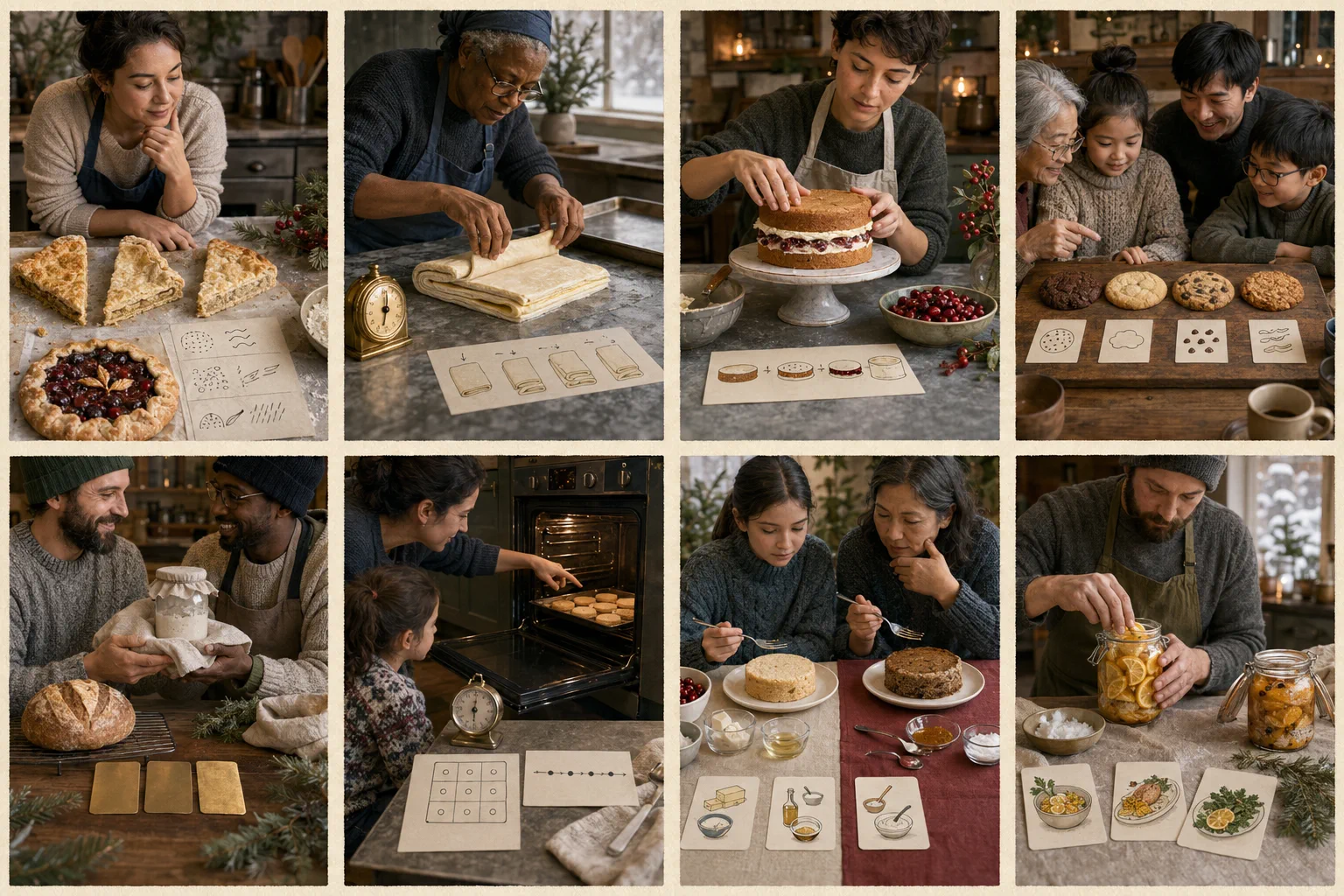
Give a small active portion from a healthy starter only after the recipient opts in, then schedule three brief check-ins covering feeding, refrigeration, discard use, and a first tested loaf. Include a written exit plan for pausing or composting it without guilt.
See fit and tradeoffs →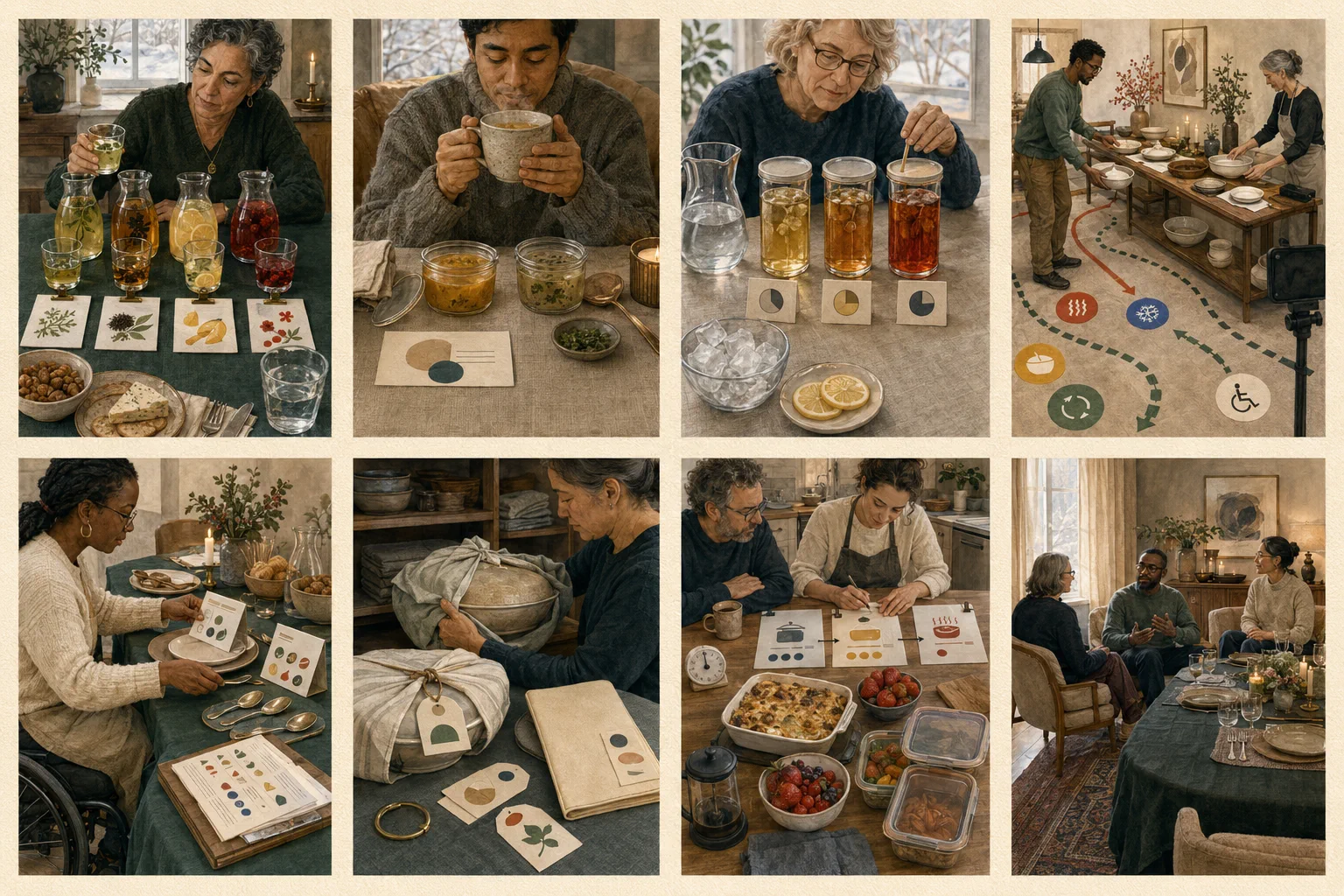
Walk through one planned meal using empty serving pieces, paper food labels, and the actual table or buffet. Test where hot, cold, heavy, allergen-sensitive, and refill items can move safely, then photograph the agreed layout and assign only necessary helper roles.
See fit and tradeoffs →Create a reusable set of plain-language food cards that name each dish, its preparer, major ingredients, known allergens, and a contact-free way to ask questions. Include separate serving tools and a clear statement when cross-contact cannot be ruled out.
See fit and tradeoffs →Create a slim reusable folio for borrowed serving pieces that records owner, item, existing condition, food-use limits, arrival date, event role, cleaning instructions, and agreed return. Add removable owner tags and designate one protected return shelf before the gathering.
See fit and tradeoffs →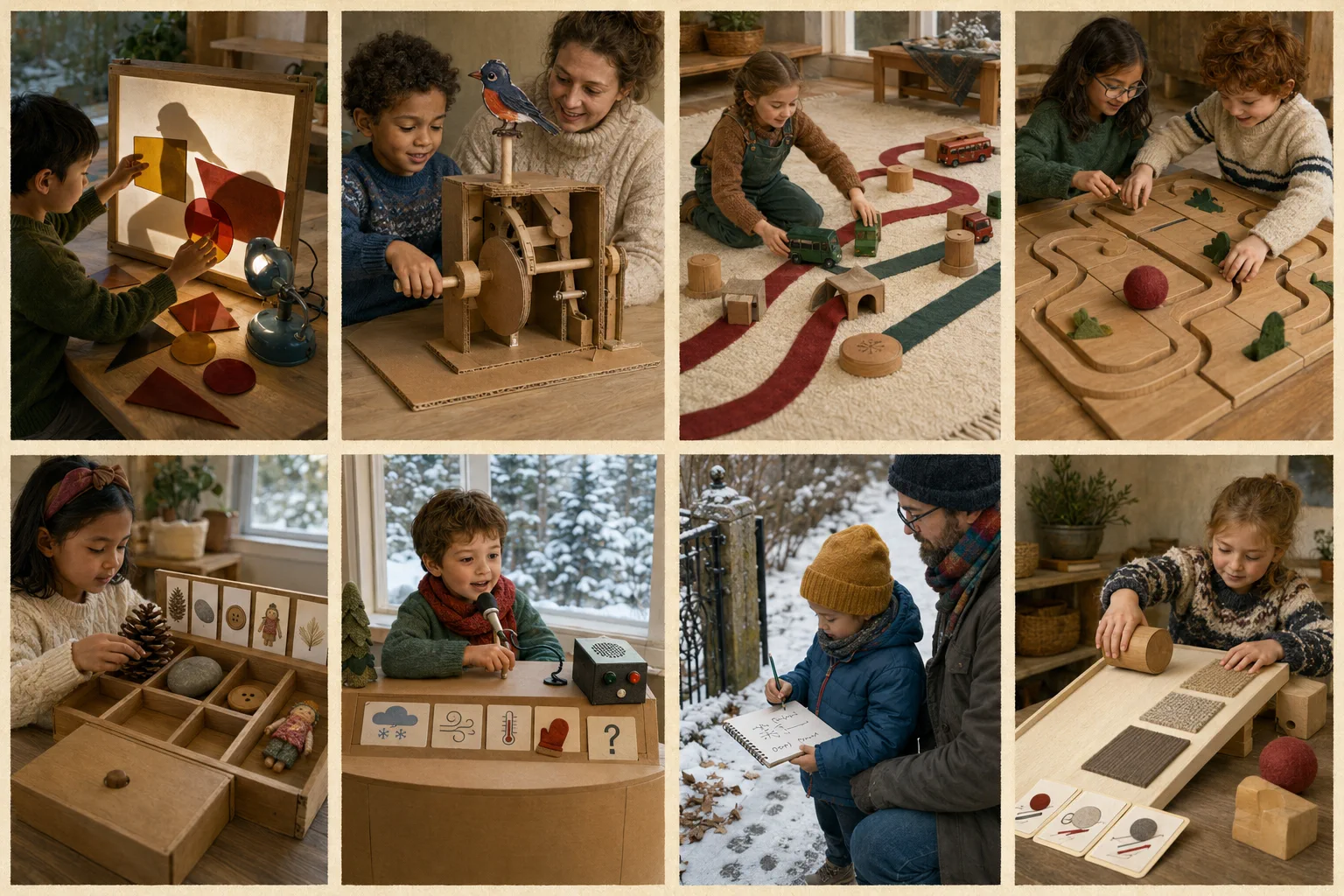
Prepare a two-hour build in which the child chooses one simple motion, then constructs a hand-cranked cardboard automaton using a large cam, follower, axle, and character of their own design. Precut only the high-resistance parts and leave the visible engineering decisions to them.
See fit and tradeoffs →Make a reusable set of broad route ribbons, stop markers, blank destination cards, and a few sturdy non-branded vehicles so the child can design a transit network across the floor, change service when a route is blocked, and explain who needs to get where.
See fit and tradeoffs →Build a small broadcast desk with reusable picture cards for observed sky, temperature feel, wind, clothing choices, and tomorrow's uncertainty. The child looks outside, chooses evidence, and records a sixty-second audio or live report without being expected to predict dangerous weather.
See fit and tradeoffs →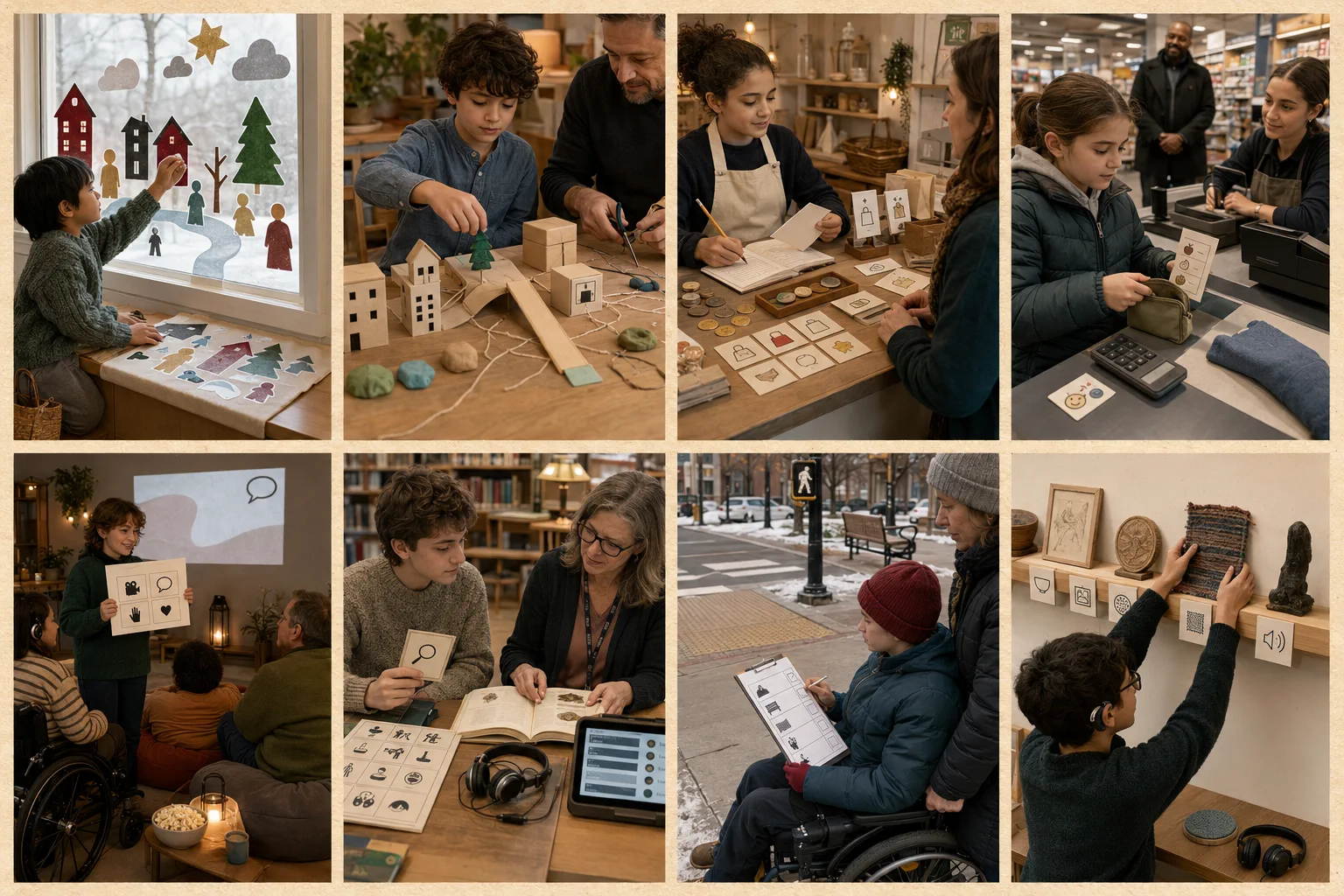
Cut large reusable static-cling shapes into doors, paths, trees, figures, weather, and abstract pieces that the child can arrange on a low safe window or smooth backlit panel. Keep faces and roles undefined so the same pieces can become many places and relationships.
See fit and tradeoffs →Walk one familiar block with permission, note what the child considers important, then build a loose tabletop model from small boxes, paper, string, and clay. Include real access features and blank parcels for places the child thinks the neighborhood needs, without attempting a precise replica.
See fit and tradeoffs →Give the tween a finite tabletop or wall area, removable display materials, and one afternoon to curate five objects, images, or reproductions around a topic they know deeply. They choose the audience, write or record concise labels, decide the viewing order, and close the exhibition on a known date.
See fit and tradeoffs →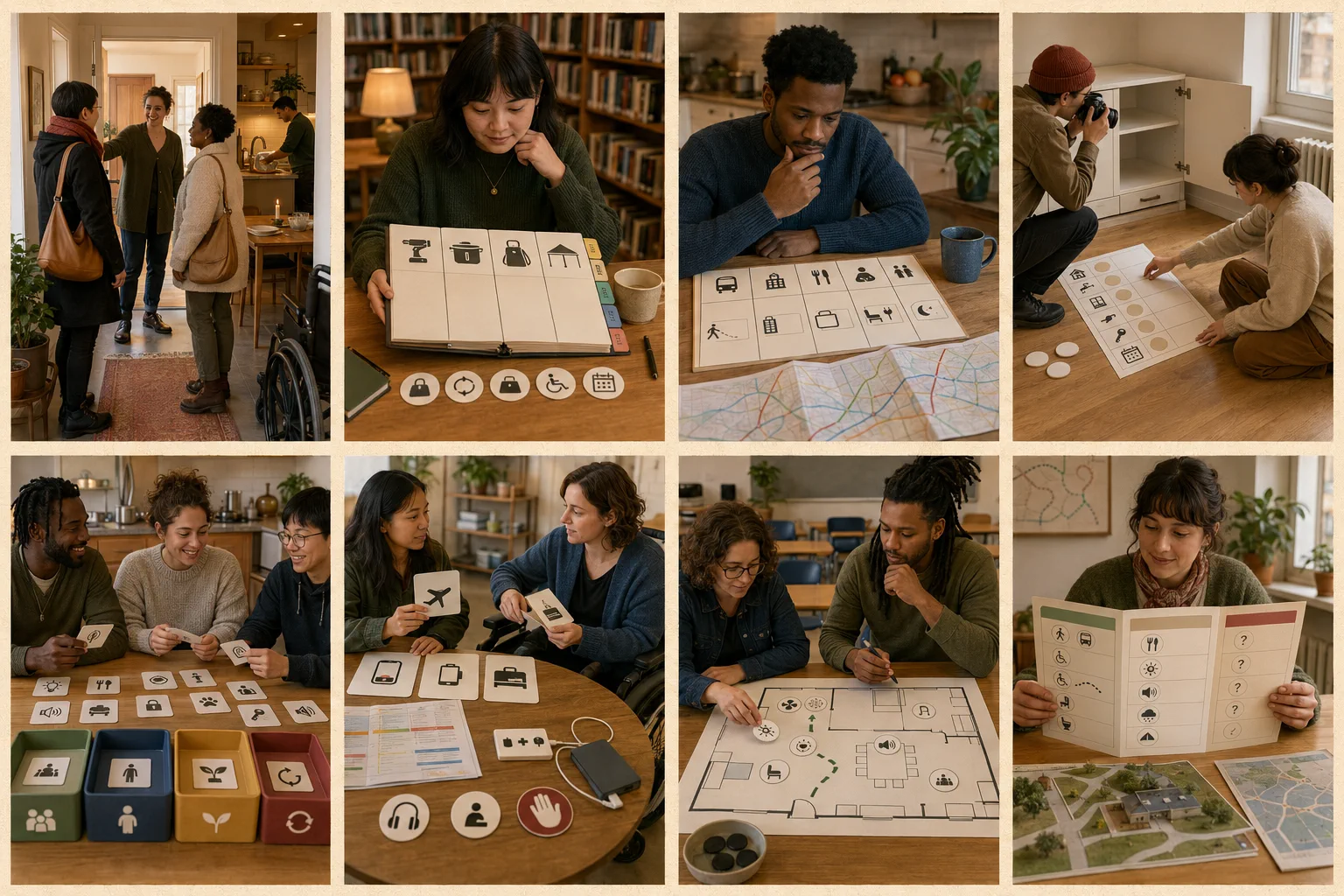
Create a neutral card set for a voluntary housemate conversation covering bills, food, cleaning, guests, quiet, shared items, privacy, security, pets, temperature, accessibility, conflict, and move-out communication. Include 'not shared,' 'try for two weeks,' and 'ask later' options so agreement is not forced.
See fit and tradeoffs →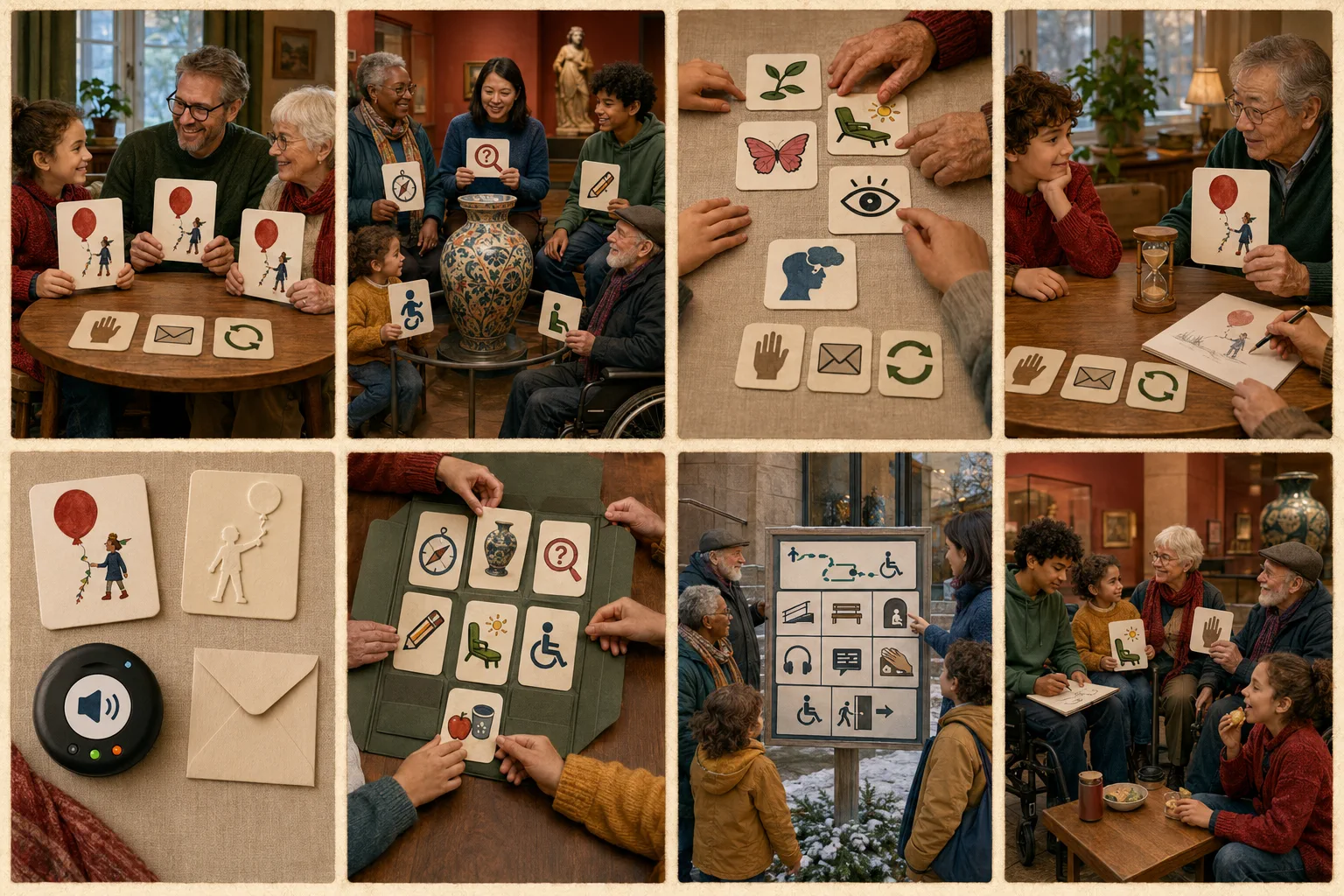
Create a concise deck of present-tense paired prompts in which every generation answers the same question, such as what they are learning, what helps them rest, which tool they rely on, what changed their mind, or what they want others to understand. Include pass, answer privately, and ask a different question cards.
See fit and tradeoffs →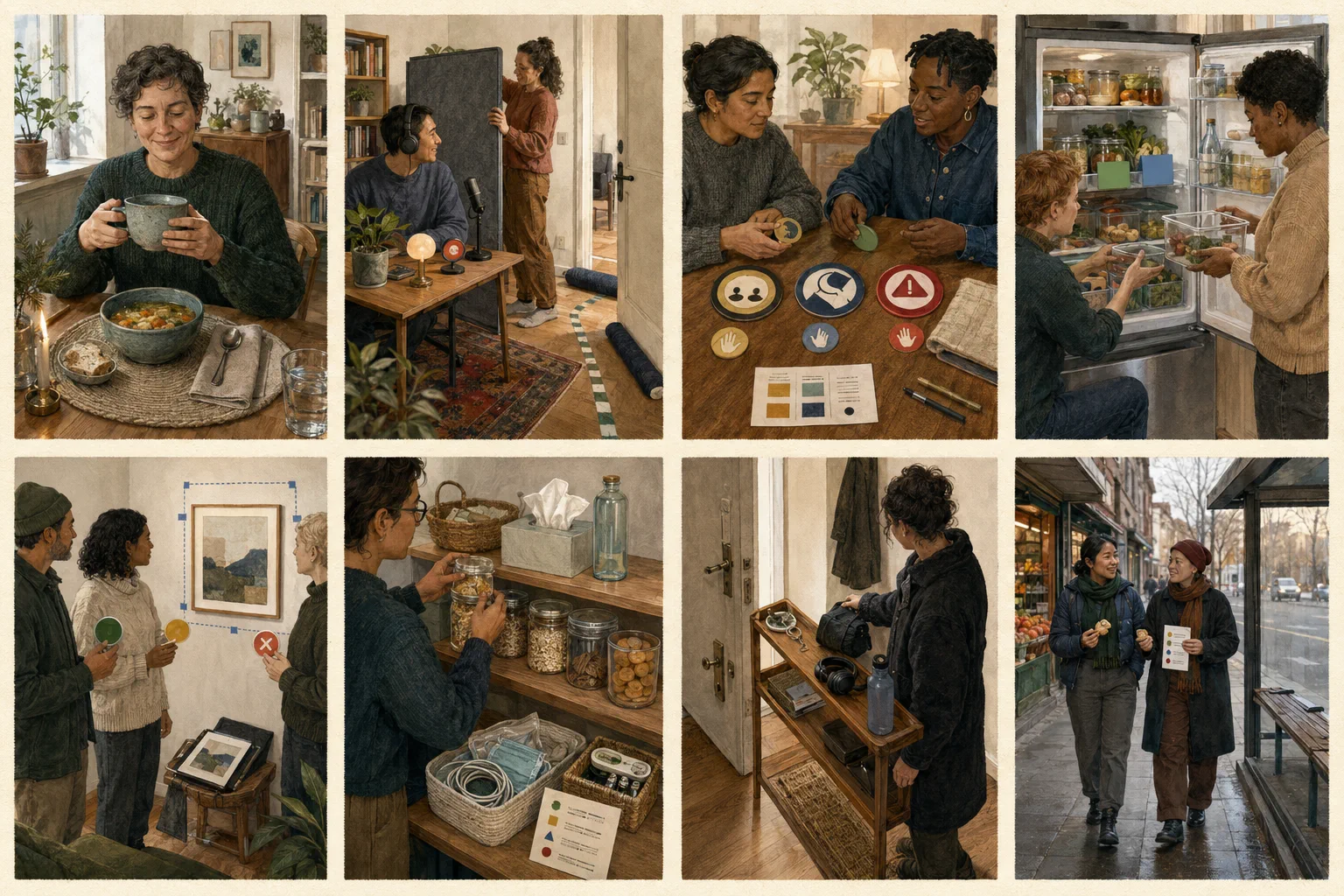
Co-design three simple states such as ordinary sound, lower sound until a stated time, and urgent interruption welcome. Represent them with high-contrast reversible door or tabletop markers plus a plain-text backup message. Agree on maximum duration, what sounds can realistically change, emergency exceptions, and a weekly reset so the signal supports conversation rather than replacing it.
See fit and tradeoffs →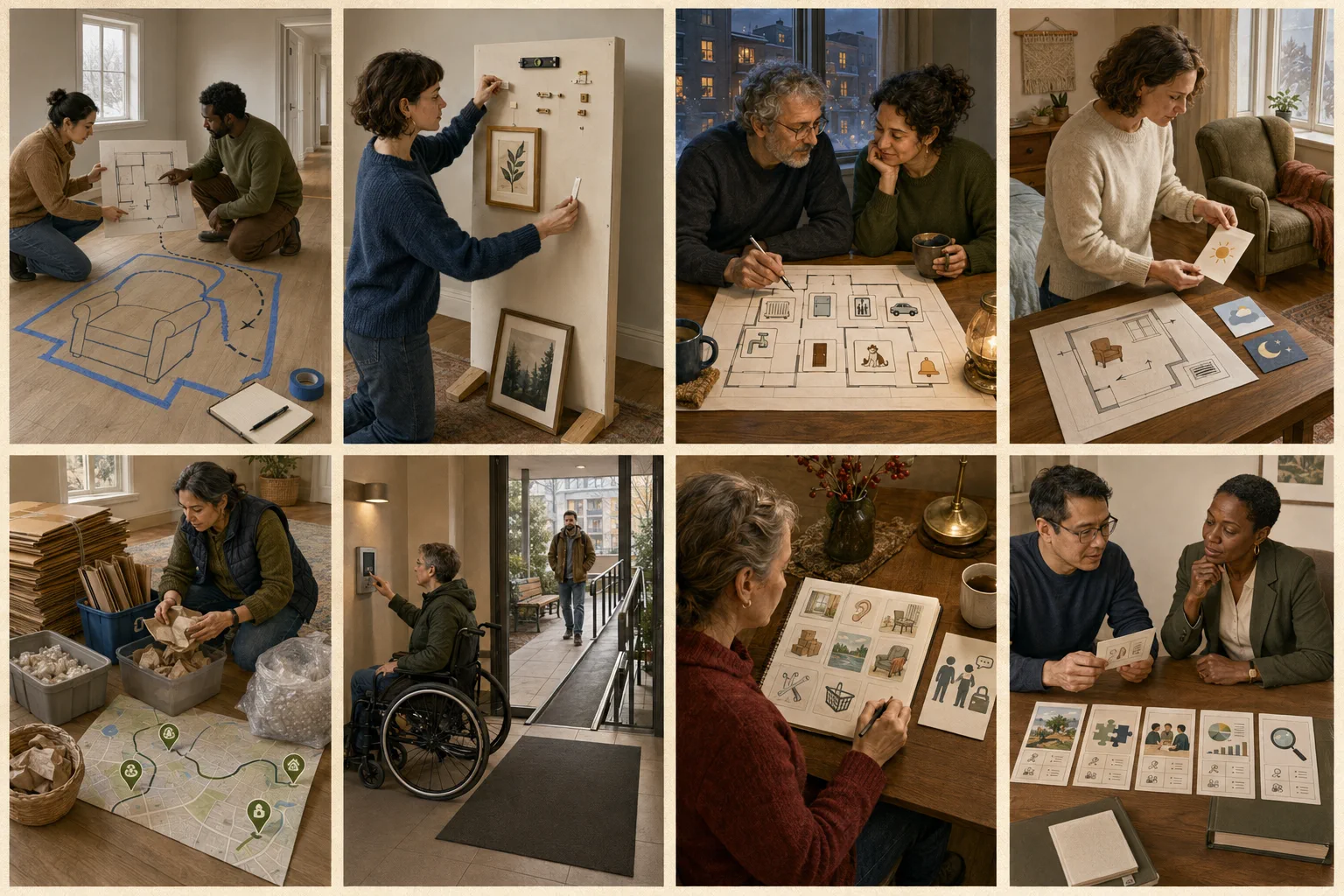
Bind twelve weekly spreads for one season, each with small prompts for daylight, ordinary sounds, room use, storage friction, exterior water observations from safe ground, comfort, maintenance questions, and purchases deferred. Include a separate page for issues that require the landlord, official utility, or qualified professional, and schedule one end-of-season review.
See fit and tradeoffs →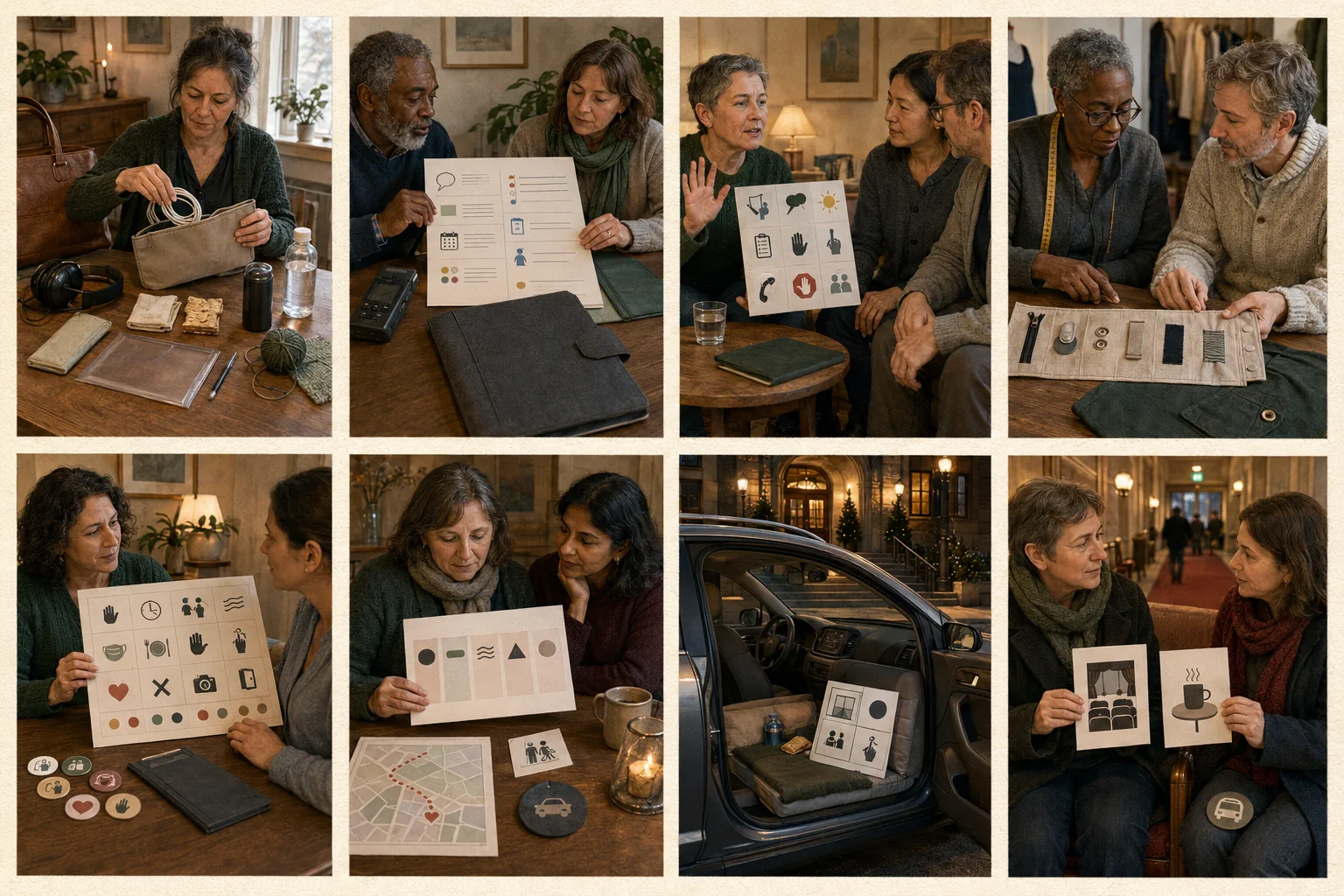
Help the person create an editable card covering how to ask, best time and length, number of visitors, masks or scent if relevant, food and touch preferences, conversation or quiet, help that is welcome, help that is not, communication method, photos, and how a visit may end early. The person chooses who receives it and may change or withdraw it anytime.
See fit and tradeoffs →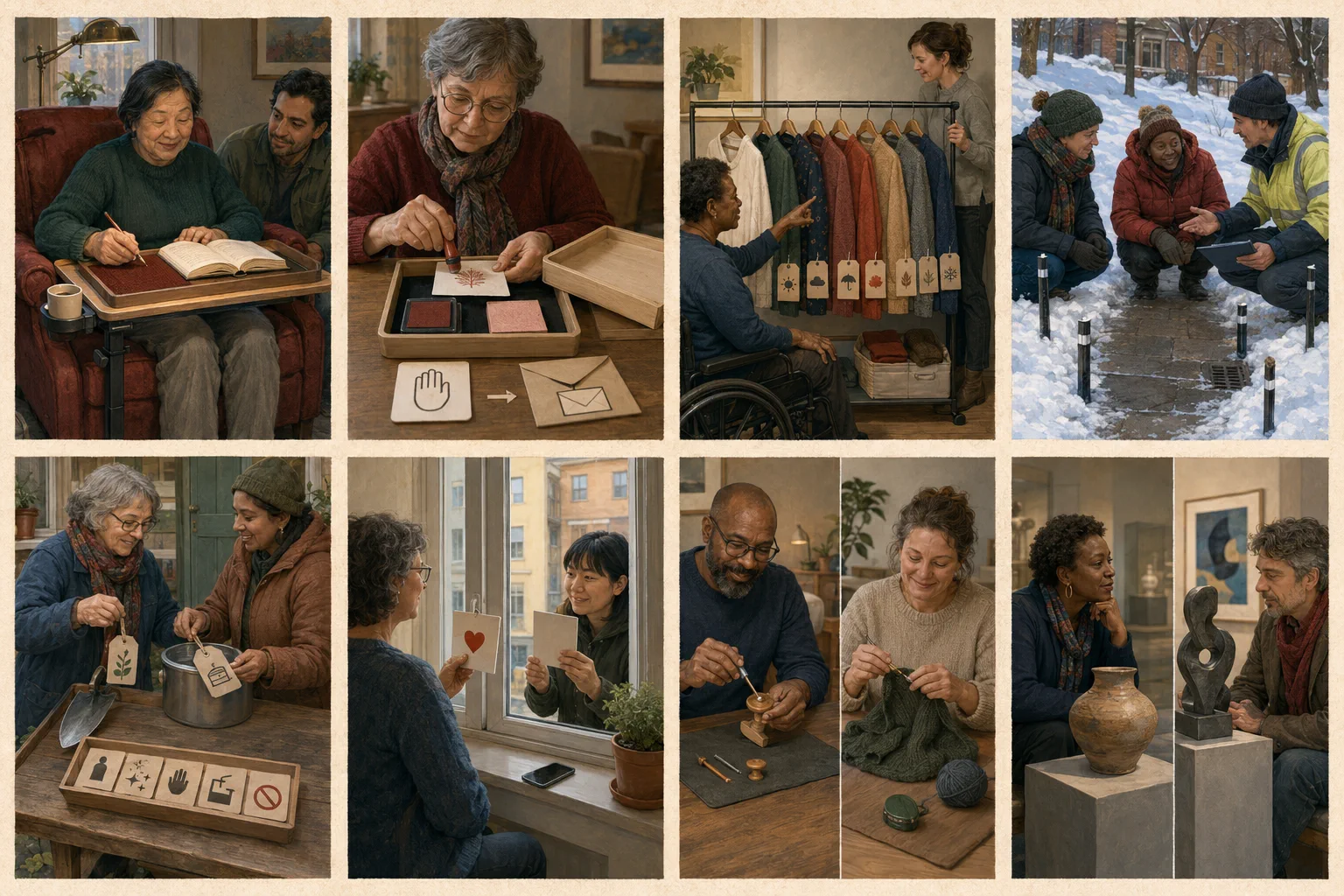
With both households' agreement, create twelve reusable tags with owner, item, condition note, safe-use or cleaning note, borrowed date, planned return, and 'ask before passing on.' Add a small weather-protected return tray or mutually chosen handoff spot for compact items, while explicitly excluding keys, hazardous tools, regulated equipment, high-value objects, and anything either person does not want to share.
See fit and tradeoffs →Agree on one narrow use, such as 'please text when convenient' or 'parcel is ready for pickup,' then make a high-contrast two-sided card visible only from the chosen neighboring window or peephole area. Define normal hours, response expectation, privacy, a nonvisual backup, and a separate emergency plan; trial it for one week and stop if it causes ambiguity.
See fit and tradeoffs →
With permission, read only the marked pages the recipient chooses and build a slim removable index of themes, dates, questions, and recurring references. Use page numbers rather than copying private passages, and leave blank sections so the reader can continue the index themselves.
See fit and tradeoffs →Measure one recipient-approved folded map and make a labeled protective folio that supports it without adhesive. Add a separate route card for memories, dates, and changed landmarks so personal context travels with the map without being written onto the original.
See fit and tradeoffs →With the card owner's permission, make legible working copies of a small recipe set, preserving uncertain words and annotations rather than silently correcting them. Put copies in a wipeable kitchen box and originals in a separate labeled enclosure away from heat, steam, and spills.
See fit and tradeoffs →Interview the recipient about three recurring parts of their reading life, sketch several simple ex-libris concepts, and let them choose or reject the direction before a small stamp or bookplate block is made. Test only on scrap and contemporary books they explicitly approve.
See fit and tradeoffs →
Ask the recipient to choose a small active rotation, then fit a shallow tray with removable supports that separate chains, studs, rings, and pieces awaiting repair. Add an opaque cover and a private inventory card stored separately, without photographing or valuing anything they do not want recorded.
See fit and tradeoffs →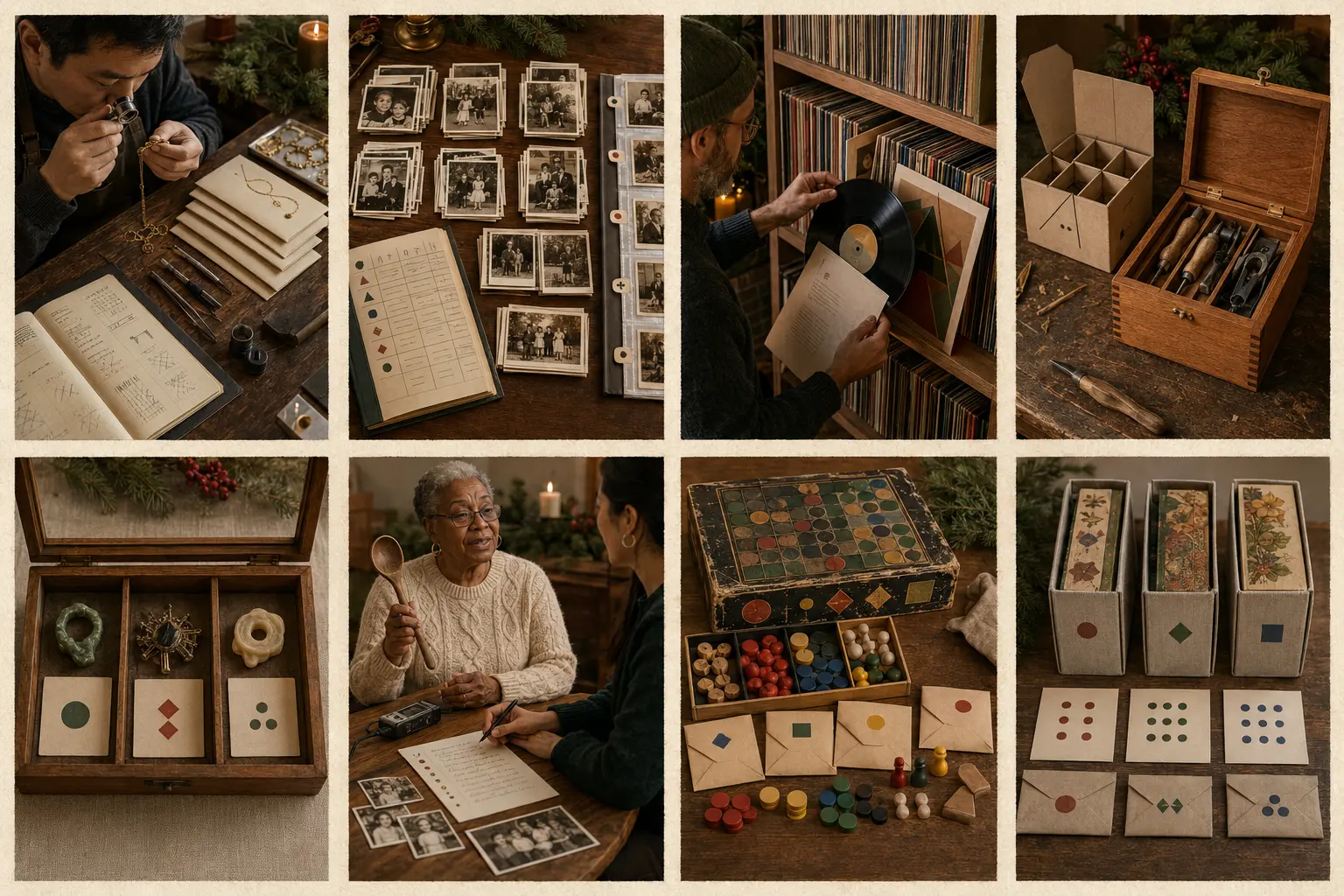
Invite the recipient to choose three failed or unfinished artifacts they are comfortable examining. Mount or photograph each one with a short label for the question, what happened, what it taught, and whether any next attempt is wanted, then keep the box private unless they choose to share it.
See fit and tradeoffs →Inventory one legally owned game against its own rulebook, repair the box with reversible supports where practical, replace only truly missing generic components, and create clearly marked household-made substitutes for unique pieces without copying commercial artwork or pretending they are originals.
See fit and tradeoffs →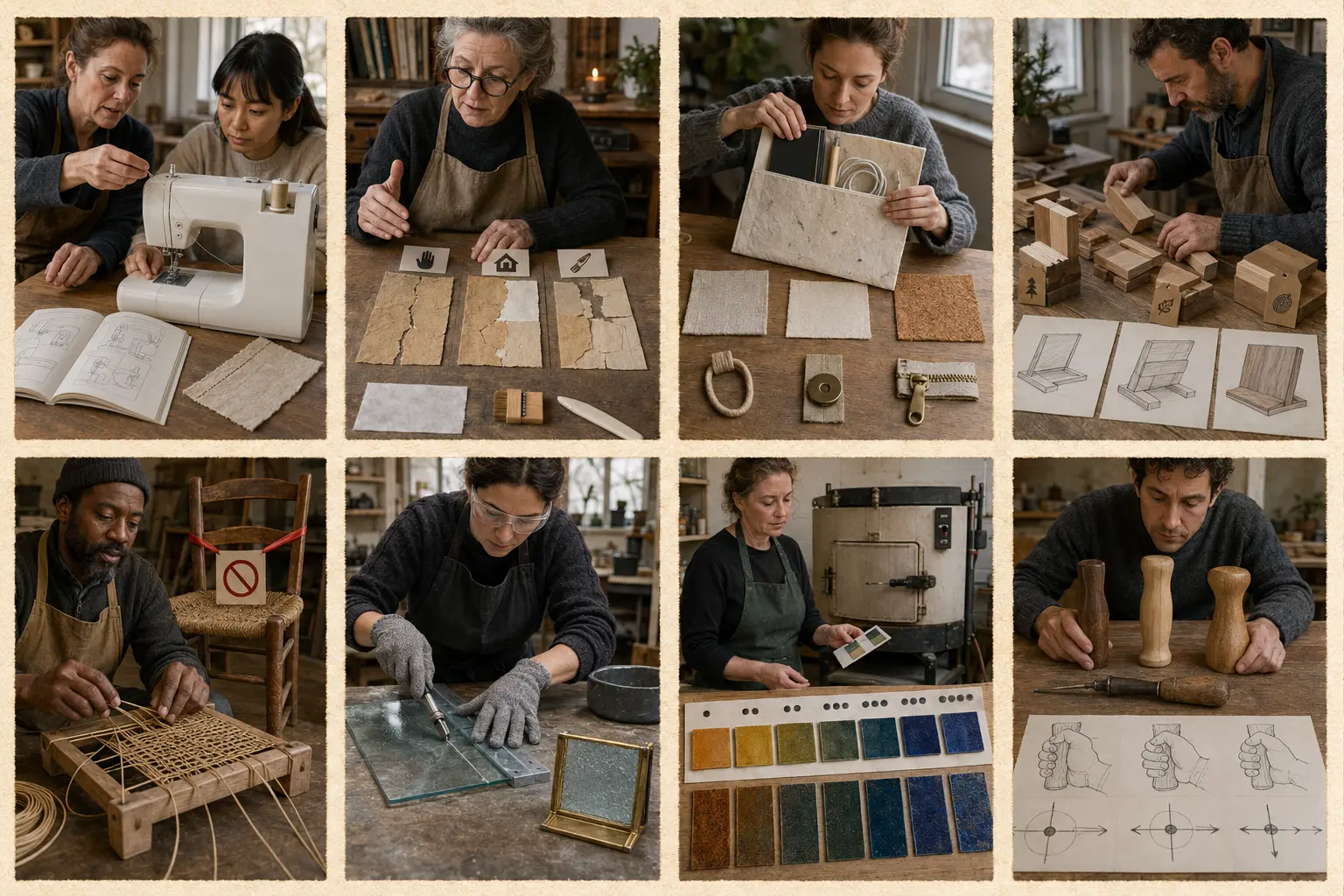
Measure the exact items the recipient wants to carry, let them choose from a small set of suitable non-animal fabrics and closures, and make a lined pouch with a mock-up first. Test opening, visibility, pocket fit, cleaning, and loaded weight before finishing seams.
See fit and tradeoffs →Gather a safe, known set of workshop offcuts and define one recipient-chosen household job such as holding mail, lifting a plant pot, or supporting a book. Sketch three solutions, build one within a fixed session, and record material identity and finish limits rather than disguising scraps as premium stock.
See fit and tradeoffs →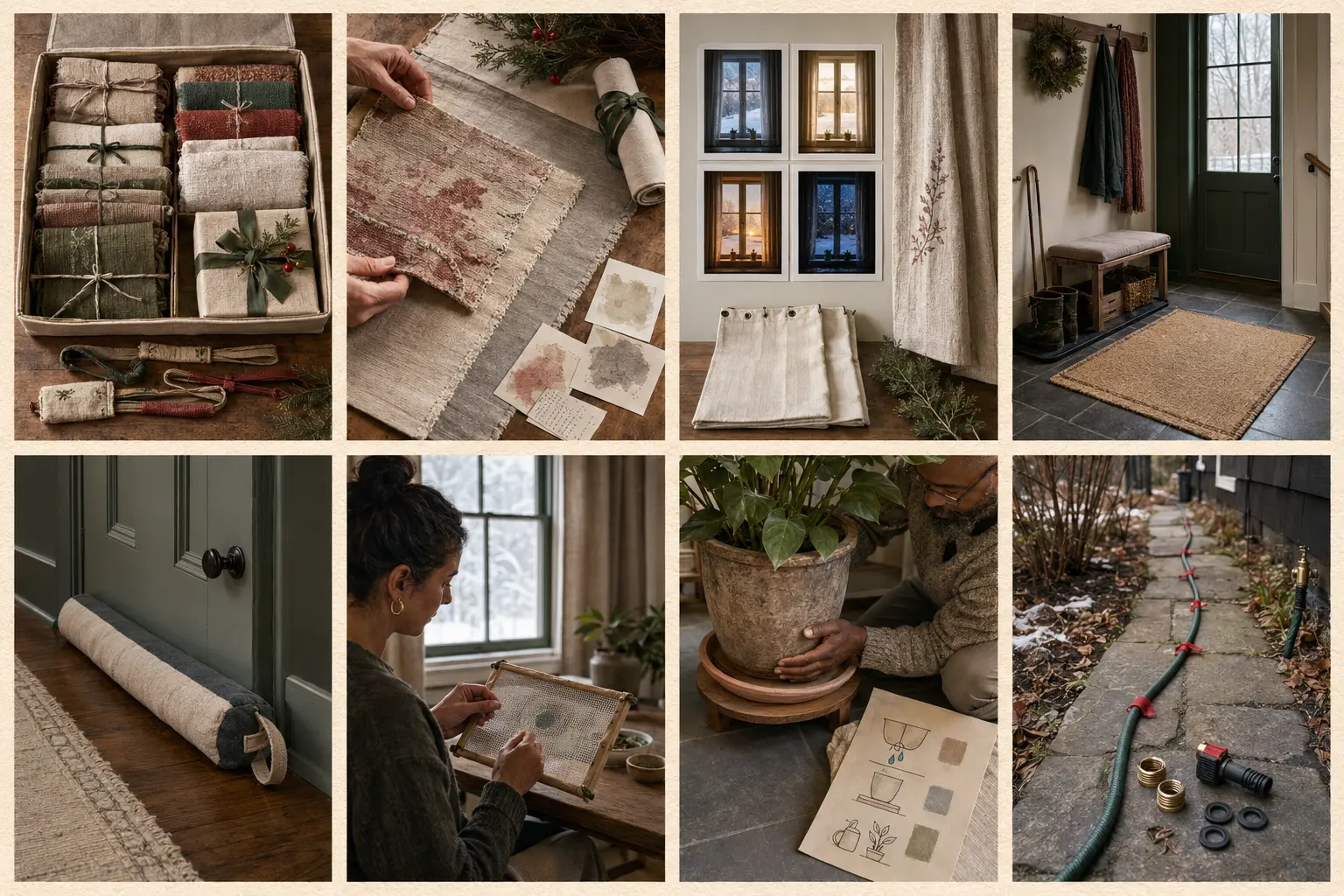
Gather only the household's existing wrapping cloth, ties, tags, and bags; wash where material guidance permits, mend edges, remove unsafe fasteners, sort by actual parcel size, and create a flat measurement folio with one example fold for each shape the household uses.
See fit and tradeoffs →Have a textile professional assess one owner-approved fragment, then mock up a reversible runner that supports rather than cuts the original material. Use a removable or minimally invasive mounting approach where practical, include a washable protective reverse side, and document exactly what changed.
See fit and tradeoffs →Measure the exact door width, swing, threshold, floor clearance, and storage spot, then make a right-sized draft cushion with a dense inner roll and removable washable outer cover. Test that it stays clear of hinges, exits, wheels, paws, and walking paths during normal use.
See fit and tradeoffs →
Interview the recipient for fifteen minutes about one concert, focusing on arrival, one sound, one physical detail, who was there, and what changed afterward. Edit their approved words into a two-minute private audio postcard with a transcript and one rights-cleared ambient transition rather than copied concert music.
See fit and tradeoffs →
Choose one tested household recipe and record a private spoken version divided into preparation, active cooking, waiting, doneness checks, and finish. Rehearse it once in the real kitchen, adding explicit pause points and correcting any instruction that becomes unclear while hands are occupied.
See fit and tradeoffs →Let the filmmaker choose one miniature room and one brief action, then make a binder with overhead layout, object numbers, character marks, lighting note, camera height, frame references, and reset photographs. Shoot two takes on different days to test whether the binder actually restores the scene.
See fit and tradeoffs →
Build a stable tabletop screen with the child, create six large simple silhouettes from their story, and test three cool-running light positions with an adult following product instructions. Mark the safest working distance, then perform one two-minute story that can be changed by rearranging the figures.
See fit and tradeoffs →Build a shoebox-scale stage from reusable card, choose one thirty-second movement phrase, and represent five lighting cues with colored paper beams, shutters, cue numbers, and timing rather than powered fixtures. Photograph each state and discuss what the model cannot predict about real equipment, bodies, color, and venue safety.
See fit and tradeoffs →Invite the worker to choose one role and three productions they are comfortable discussing, then record a private interview about preparation, judgment, tools, mistakes, collaboration, and what audiences never saw. Create an edited transcript they can correct, restrict, embargo, or delete before any wider use is considered.
See fit and tradeoffs →
Select up to ten repaired or serviced household objects with the owner's permission, then pair each existing receipt or service note with object name, date, work performed, parts, provider, care limit, and next observation. Store financial details privately and place only a simple service tag near the object if useful.
See fit and tradeoffs →
Hold a short family conversation to name what the informal helper can handle, what needs an appointment, what requires professional support, how urgent requests are signaled, what information stays private, and when the helper is unavailable. Write a one-page agreement with review and exit points for everyone.
See fit and tradeoffs →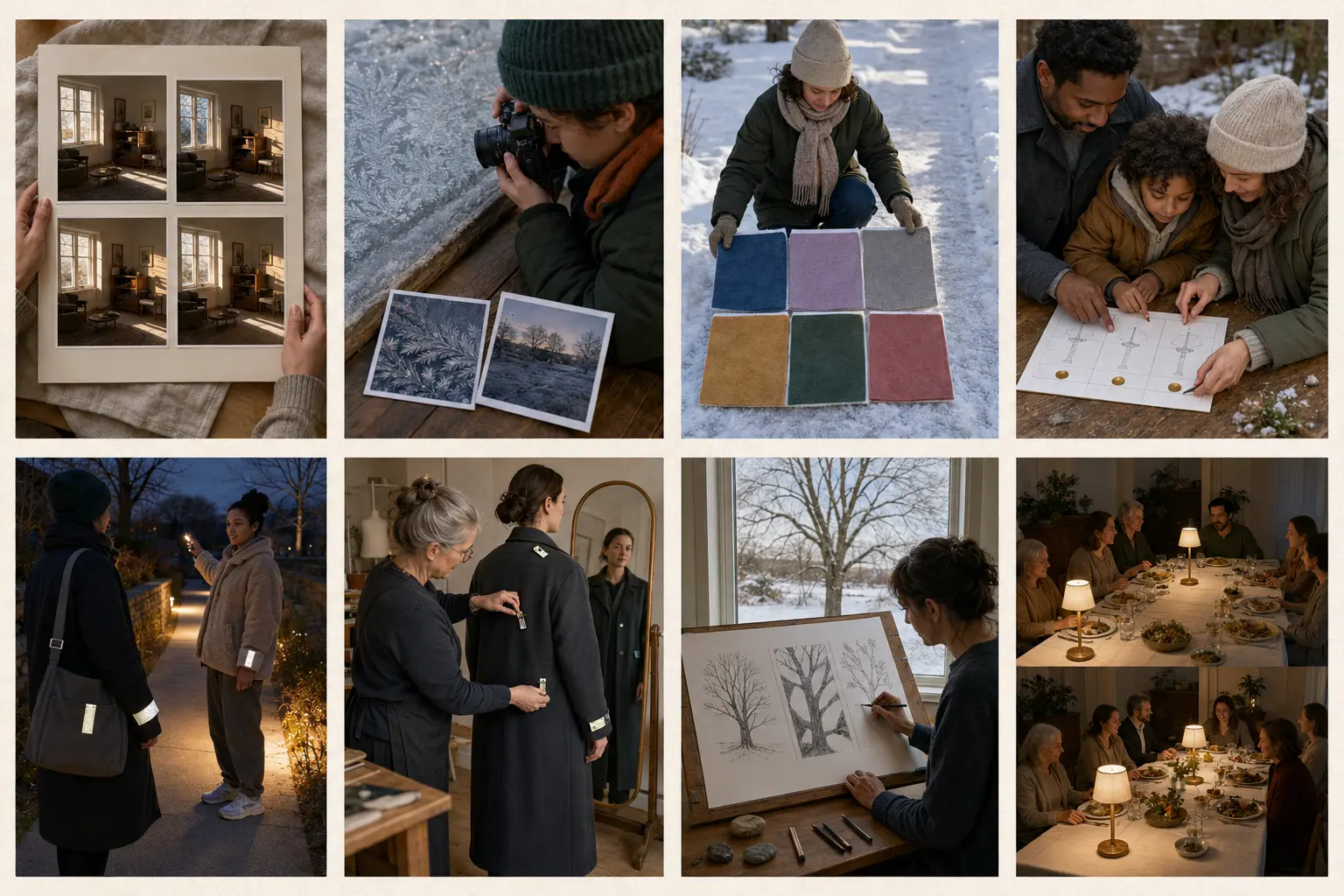
Choose one fixed household object and mark its shadow tip at the same clock time on three safe clear dates several weeks apart. Photograph the setup, record weather and clock changes, draw the three lengths on a paper calendar, and discuss what the simple observation cannot establish.
See fit and tradeoffs →Choose one safely visible deciduous tree and make three drawings from the same viewpoint: trunk and primary branches, negative spaces, then the finest visible twigs. Work from a window or permitted path, note what is obscured, and stop without attempting a species diagnosis if features are insufficient.
See fit and tradeoffs →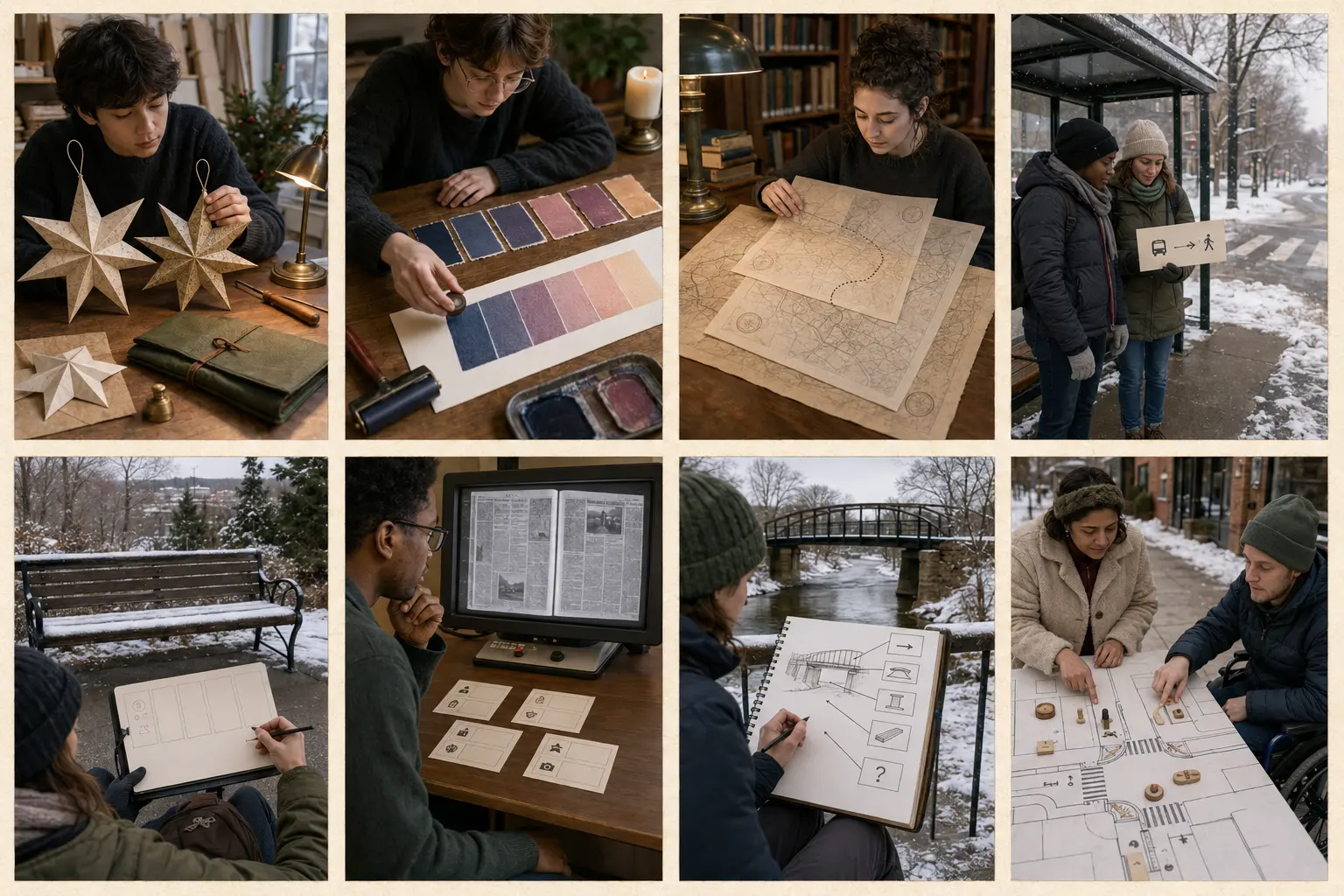
Choose one original or lawfully shared star pattern and build three scale tests from reclaimed clean paper, comparing crease accuracy, joint strength, hanging point, shadow, and flat storage. Finish one full-size star only after testing the intended removable support away from heat and electrical fixtures.
See fit and tradeoffs →At one safe fixed viewpoint, record six sky color samples from late afternoon through twilight using written mixes or calibrated paper swatches rather than copied screen colors alone. Create one small hand-printed gradient labeled with date, place category, cloud condition, and the limits of the translation.
See fit and tradeoffs →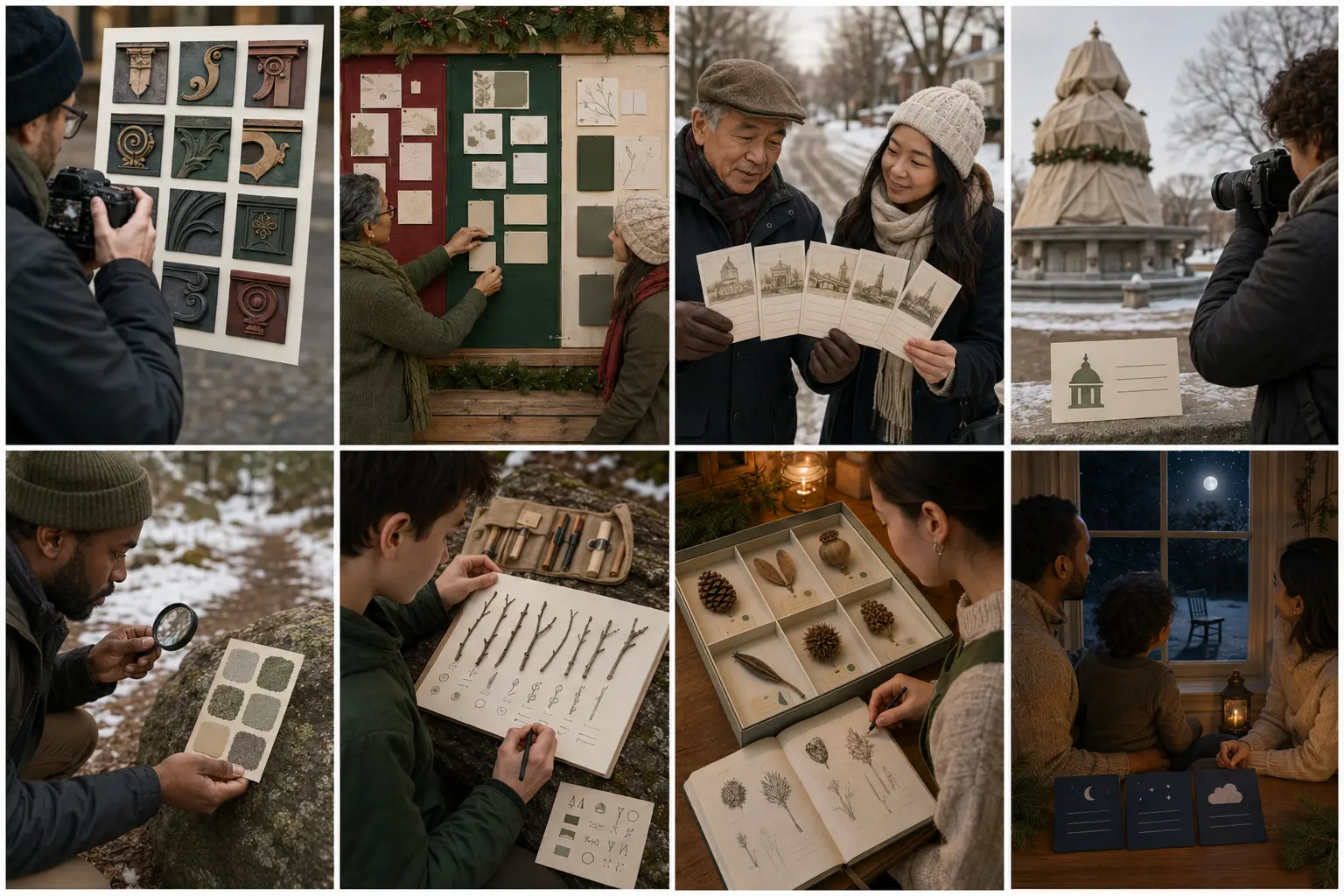
Let the recipient choose five public landmarks and record a short memory at each by writing, audio, or conversation. Pair each memory with a current observation and one sourced fact where available, keeping disagreement, uncertainty, and places the recipient chooses not to visit visibly separate.
See fit and tradeoffs →From a permitted path, choose one common lichen-covered surface and make six color and texture notes at a respectful distance using magnification or photography. Record substrate only as observed, avoid species claims, and create a card that distinguishes color, pattern, scale, moisture, and uncertainty.
See fit and tradeoffs →With site permission, collect only eight already fallen fresh twigs from common unprotected trees along one path, keeping location context and never breaking branches. Draw bud arrangement, scale, scar, color, and uncertainty, then use a reputable local key to produce a practice comparison rather than a guaranteed identification set.
See fit and tradeoffs →Use six legally obtained fallen pods from the recipient's own garden, an educational source, or a permitted collection, labeling exactly where each came from and whether identification is certain. Draw closed form, opening, attachment point, interior, and scale without dispersing unknown seed outdoors.
See fit and tradeoffs →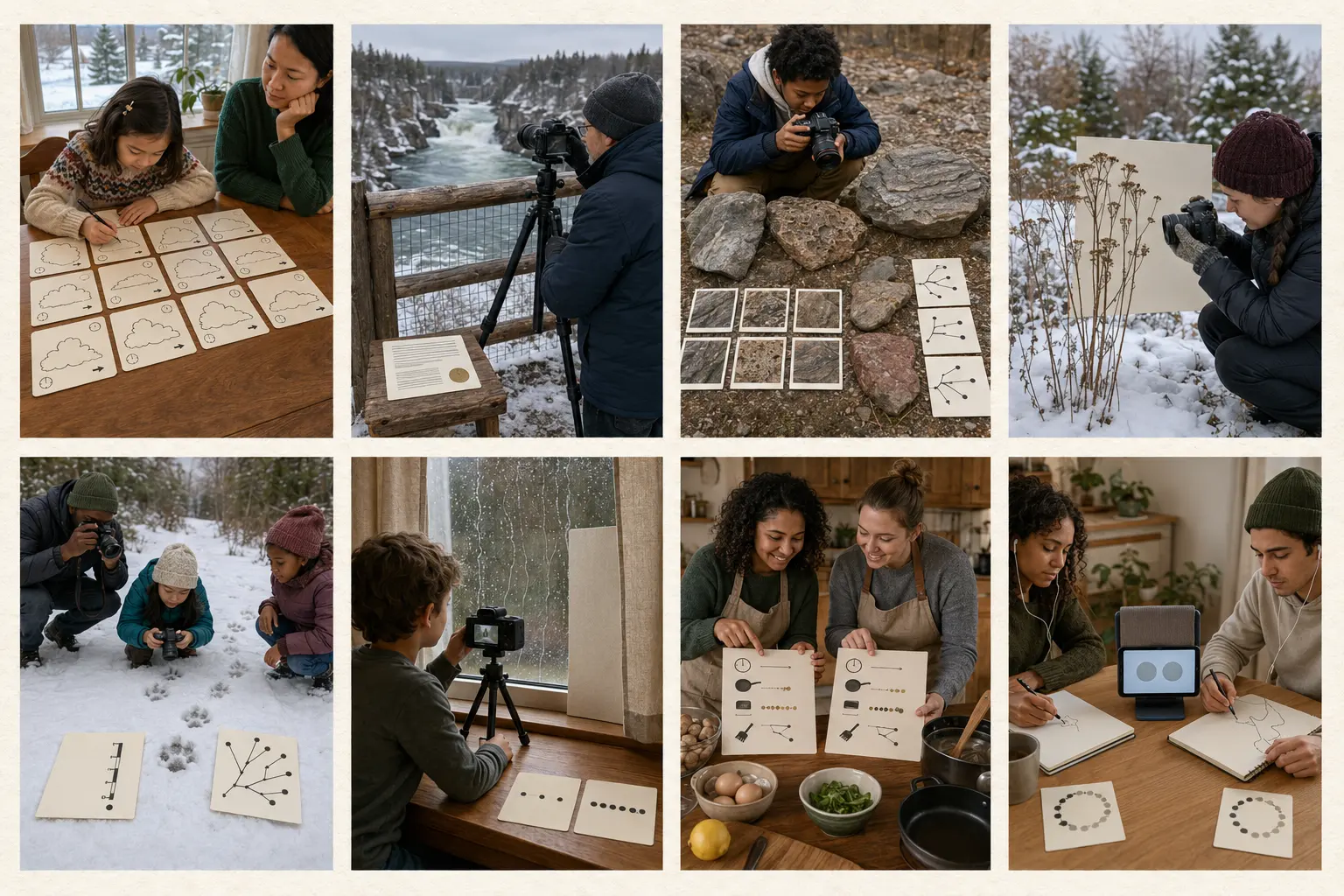
From a safe sheltered view, make twelve quick cards focused only on cloud edges: sharp, feathered, layered, dissolving, dark-backed, sunlit, repeated, and unknown. Add time and direction, compare the cards afterward, and use a child-appropriate weather source to discuss why appearance alone is not a forecast.
See fit and tradeoffs →From a permitted path, photograph or draw twelve standing dried plant silhouettes against the same neutral card held behind without touching the plant. Record height range, branching, seed-head form, location category, and identification uncertainty, then arrange the atlas by shape rather than species.
See fit and tradeoffs →Choose one lawfully shareable tested recipe both people already cook and exchange copies marked only with timing cues, pan behavior, sensory landmarks, cleanup shortcuts, serving context, and honest trouble spots. Cook separately, then compare the margins without changing ingredients or declaring one method correct.
See fit and tradeoffs →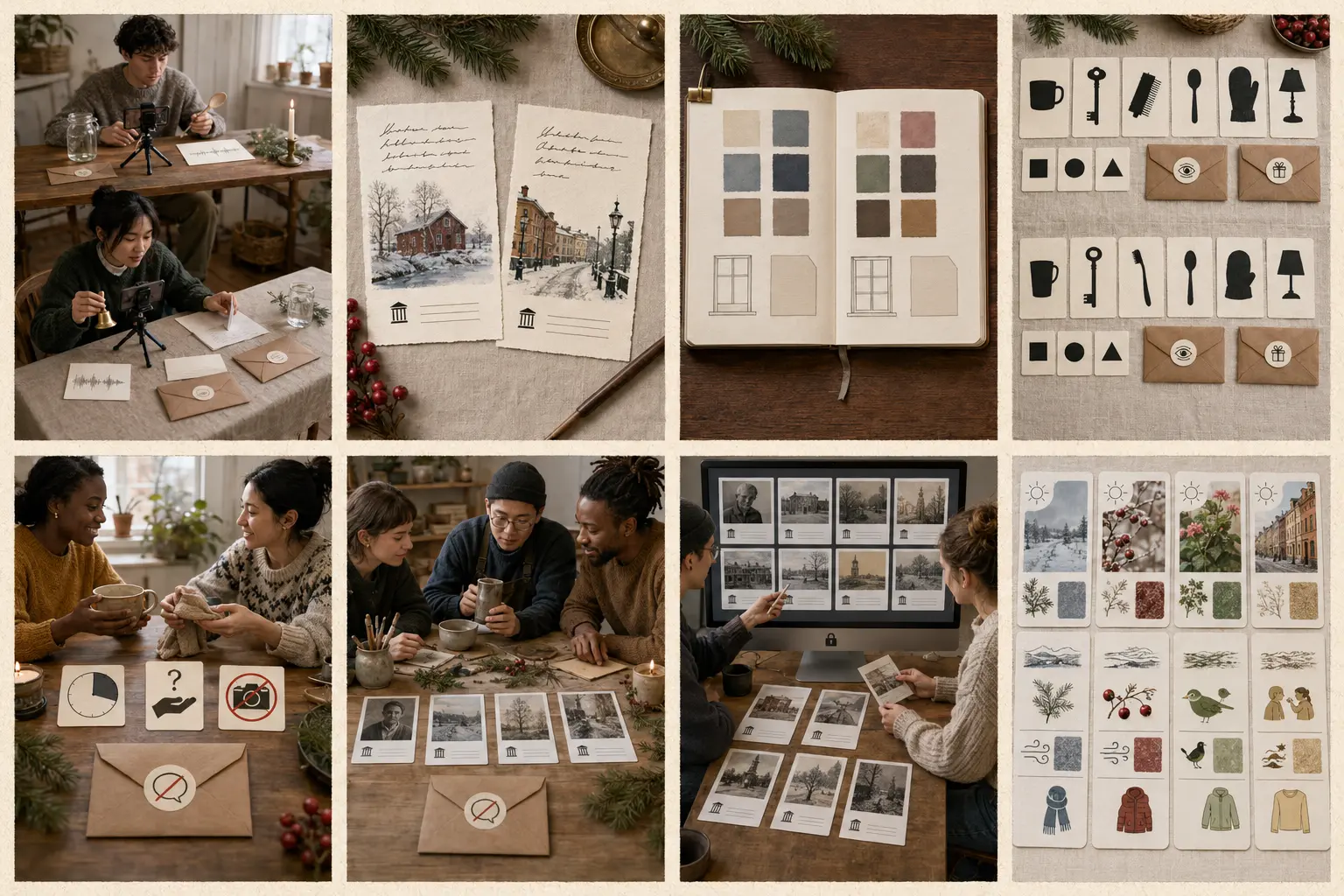
Each person chooses a short public-domain poem or a legally purchased postcard reproduction they may share, then pairs one line or brief permitted excerpt with a photograph or drawing of a local place that changes how they read it. Exchange one card each with source credit and no expectation of interpretation.
See fit and tradeoffs →Agree on one local clock hour rather than simultaneous time and, from each person's chosen window, make five color swatches for sky, nearest surface, farthest visible form, indoor reflection, and one unexpected color. Exchange photographs of the swatches without showing private views or addresses, then compare conditions rather than accuracy.
See fit and tradeoffs →Each household chooses six nonprivate ordinary objects, traces or photographs only their silhouettes with a separate familiar scale shape, and sends the set without object names. The other household guesses use, not ownership or value, then receives a reveal card and chooses whether any image is kept.
See fit and tradeoffs →Each person sends four short notes over one season using the same fields: local date, daylight impression, one plant or street observation, one sound, and one ordinary adaptation people are making. Use official weather only when cited, avoid declaring climate trends from anecdotes, and keep locations general.
See fit and tradeoffs →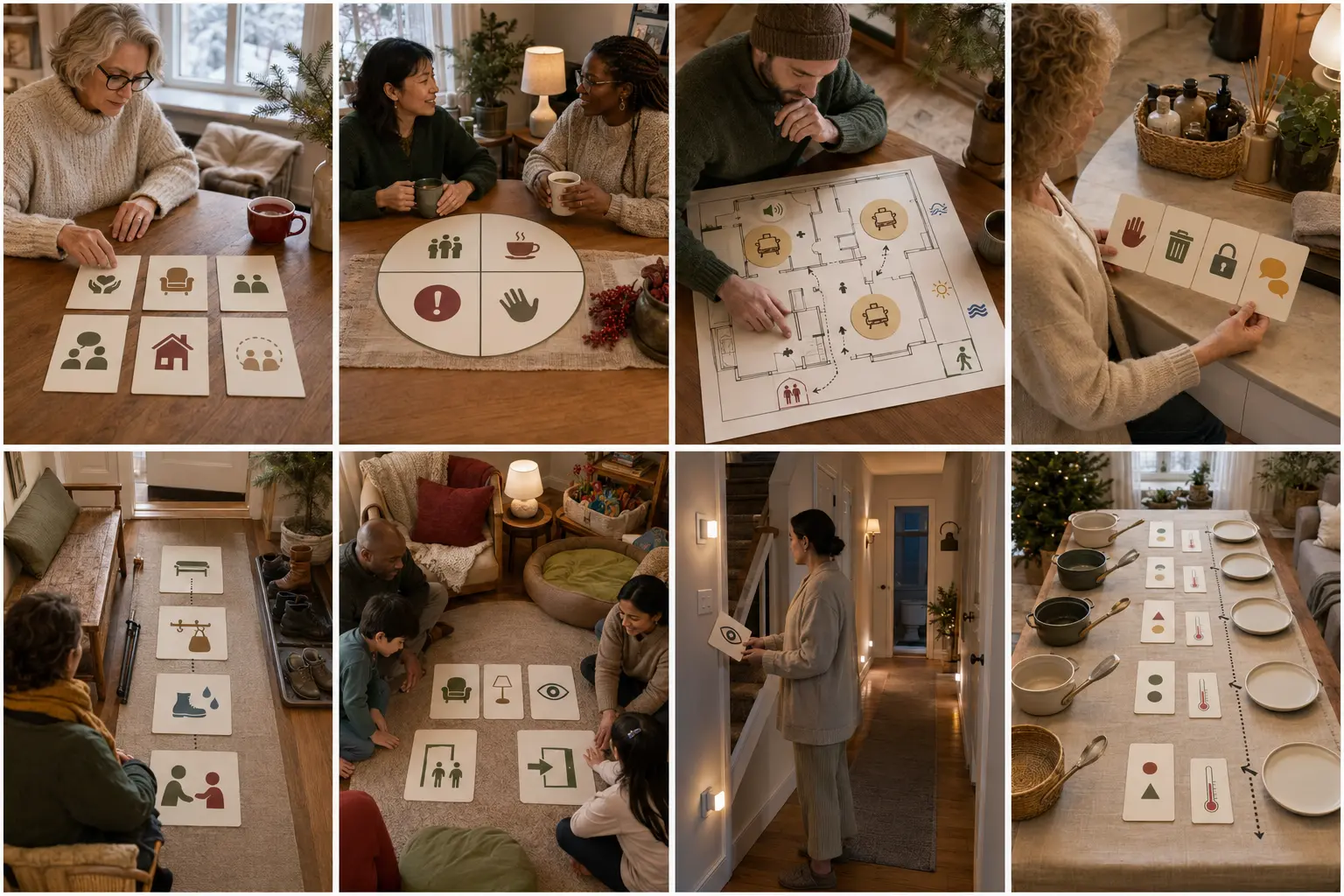
Create a small set of voluntary arrival cards offering modes such as greet me now, let me settle first, sit together quietly, introduce me to one person, show me the practical details, or I will join later. Rehearse how the host notices and honors a choice without announcing it to the room.
See fit and tradeoffs →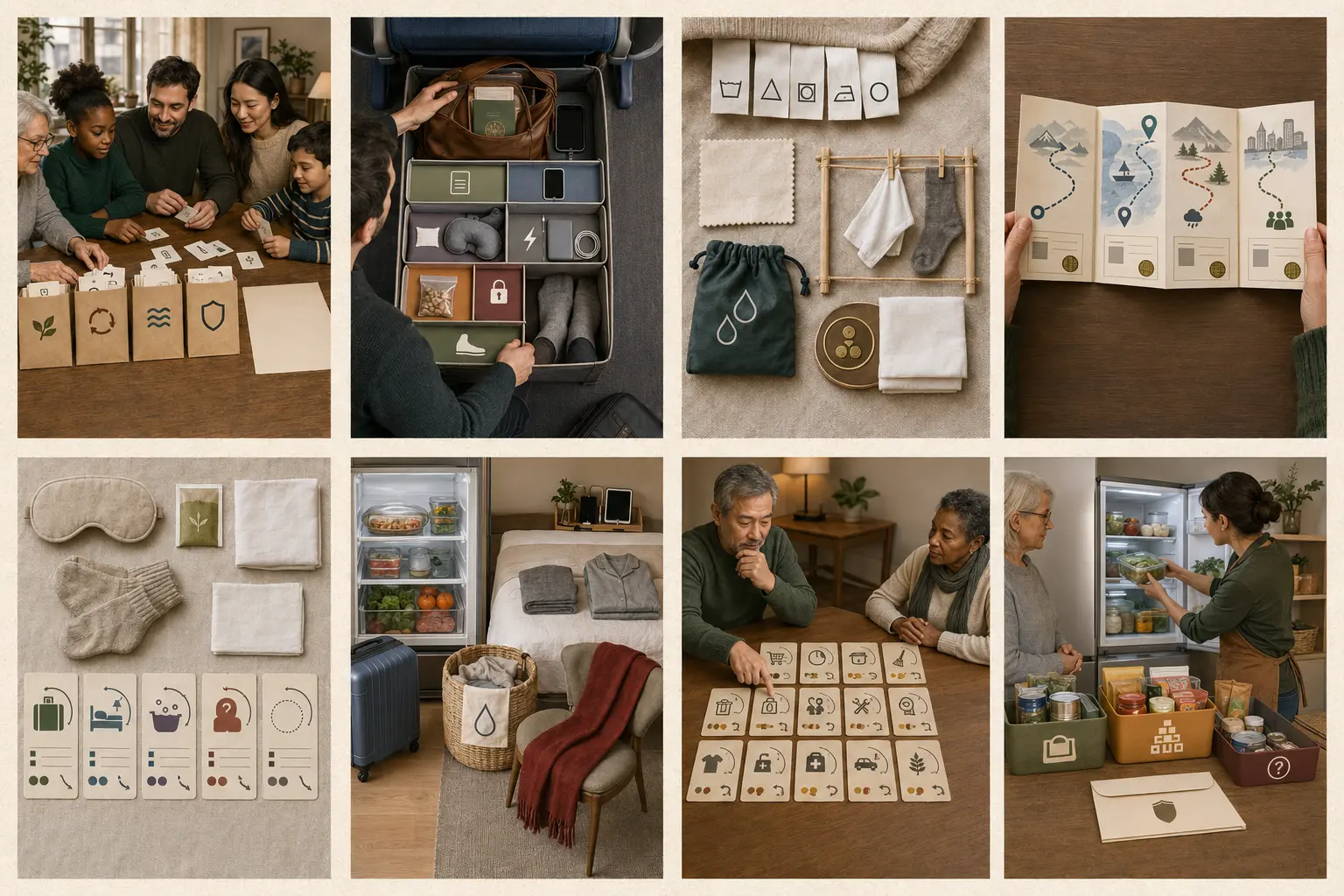
Create a compact folio for one confirmed journey containing only the essential route overview, addresses or landmarks the traveler approves, reservation references without sensitive payment data, transit or walking fallback, assistance contacts, time-zone note, and a meeting point. Verify every item from current official sources and date the printout.
See fit and tradeoffs →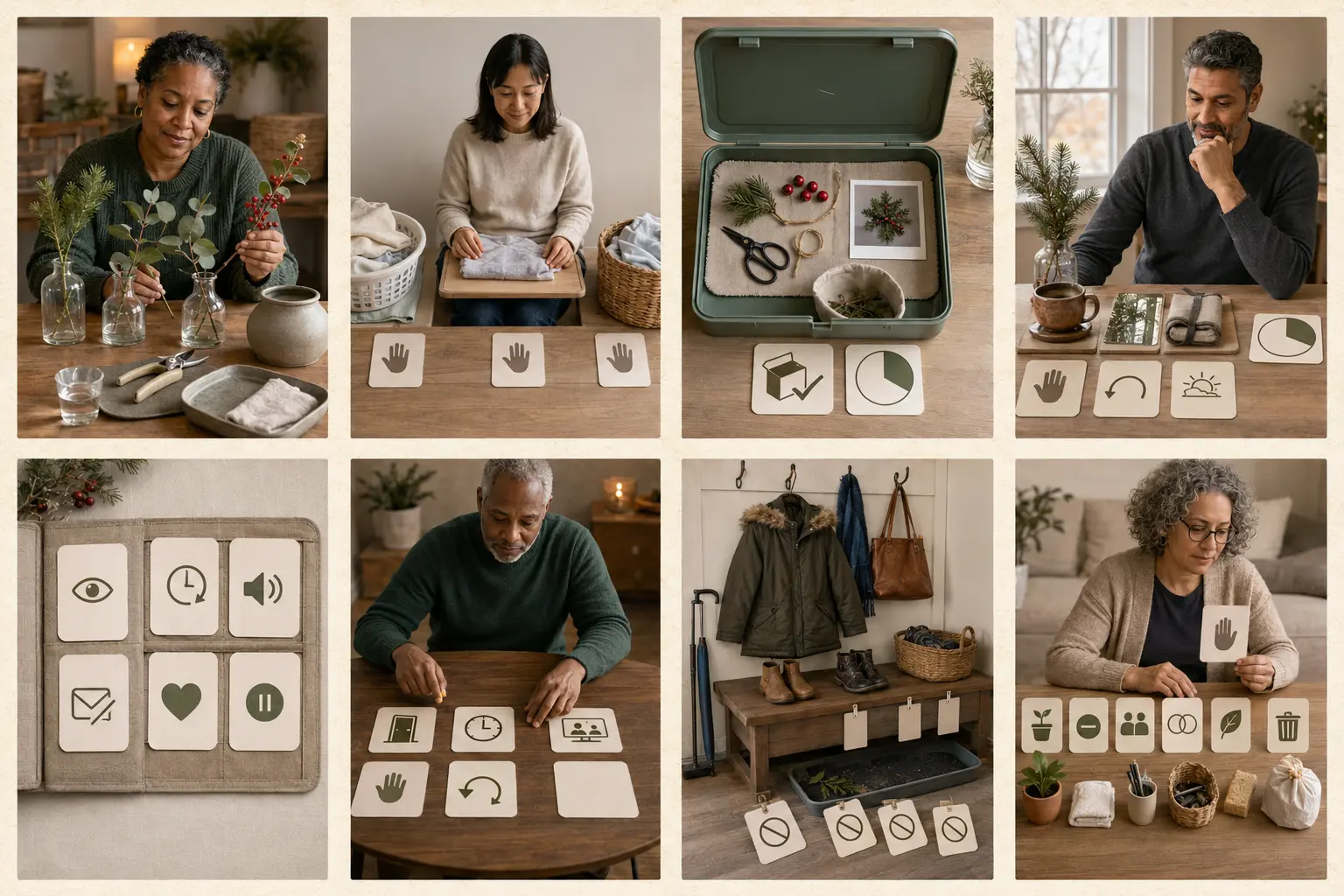
Let the recipient choose one existing small project and prepare a stable covered tray containing only the next ten-minute step, correct tools, material count, magnification or light already owned, scrap catcher, current-state photograph, and a close-the-lid stopping point. Store all other project materials out of the active tray by consent.
See fit and tradeoffs →Prepare six short notes or cards with different receiving modes: read now, save for later, audio version available, no response, send one symbol if useful, or please tell me to pause. Keep content ordinary and specific, provide large print or audio as chosen, and give the recipient control over frequency and storage.
See fit and tradeoffs →With the recipient, create private message templates for five states: visit welcome, short visit only, doorstep or remote, not today, and ask again later. Add preferred hours, notice, maximum length, support person, infection or scent needs, and an end phrase, while letting the recipient change any state without explanation.
See fit and tradeoffs →No placement or order is currently paid. Future commercial links will be clearly labeled beside the link and will not silently determine this collection.