Make it personal without making it generic
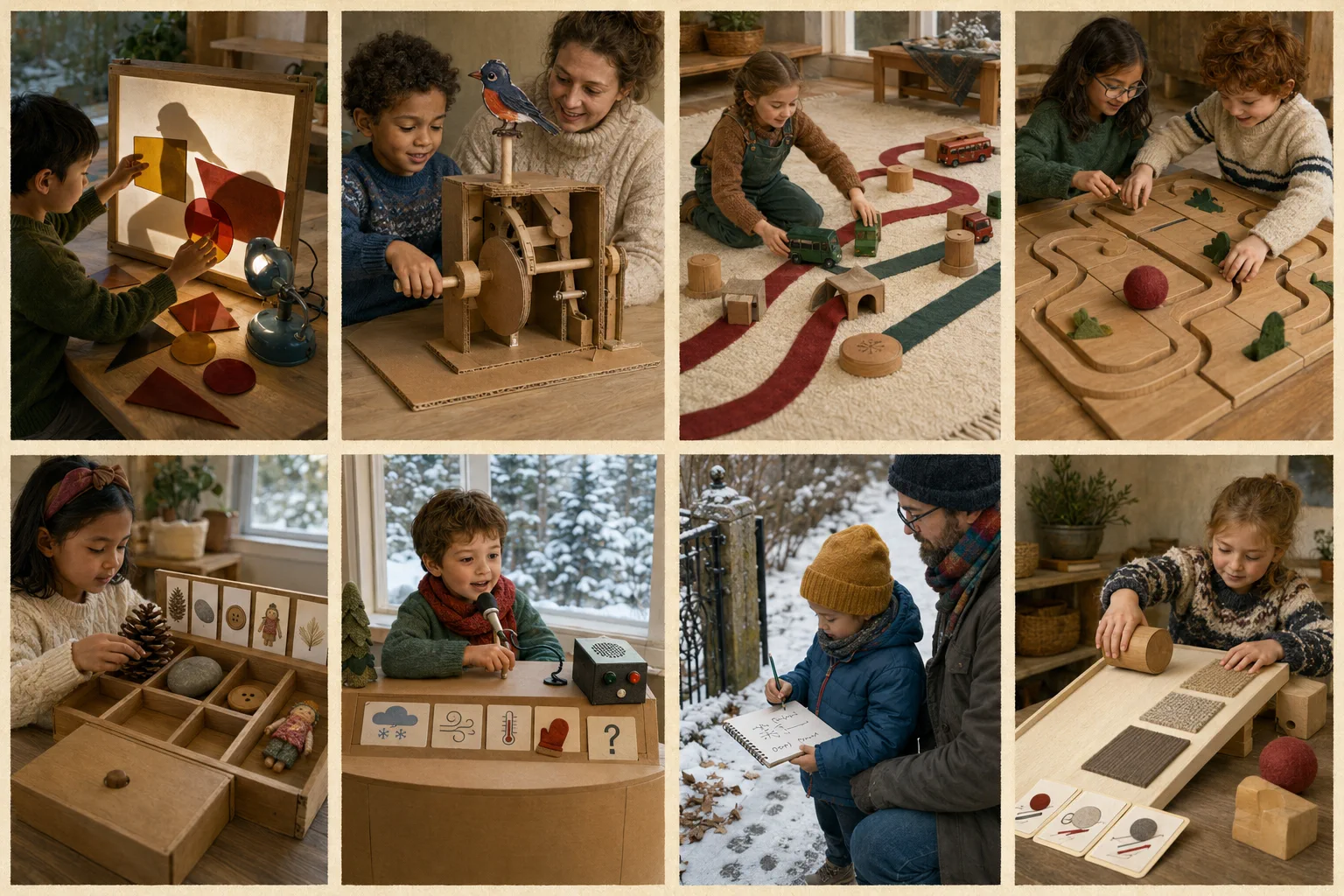
Let the child select the motion and draw the moving figure, then name the mechanism on a small maker's label in their words.
Presentation
Stack the flat materials inside a shallow box with the practice mechanism turning visibly through a paper window.
Check the practical fit
- Space
- Requires a protected table, a small parts tray, and one shelf-width of display or storage space after the build.
- Skill
- An adult should practice one cam beforehand and handle any cutting beyond the child's demonstrated tool skills.
- Maintenance
- Keep one spare fastener and a simple diagram inside the base so the child can repair a loosened joint.
- Accessibility
- Use an oversized crank, prepunched holes, high-contrast marks, or a partner-operated axle while preserving the child's design choices.
- Sustainability
- Build primarily from clean reused cardboard and mechanical fasteners so parts can be repaired, separated, or recycled.
- Timing
- Prepare templates and test the crank before the workshop, but schedule the build when there is enough unhurried drying and retry time.
What to investigate
These are generic categories to research after the editorial direction fits. Christmas.how has not tested or linked a specific product.
- corrugated cardboard
- paper fasteners
- wooden dowels
- washable markers
Current commercial status: editorial only
No affiliate links, sponsored placement, live price, retailer relationship, availability claim, or paid ranking is attached to this idea. The budget band is a planning estimate.
Read the commercial disclosure →