Make it personal without making it generic
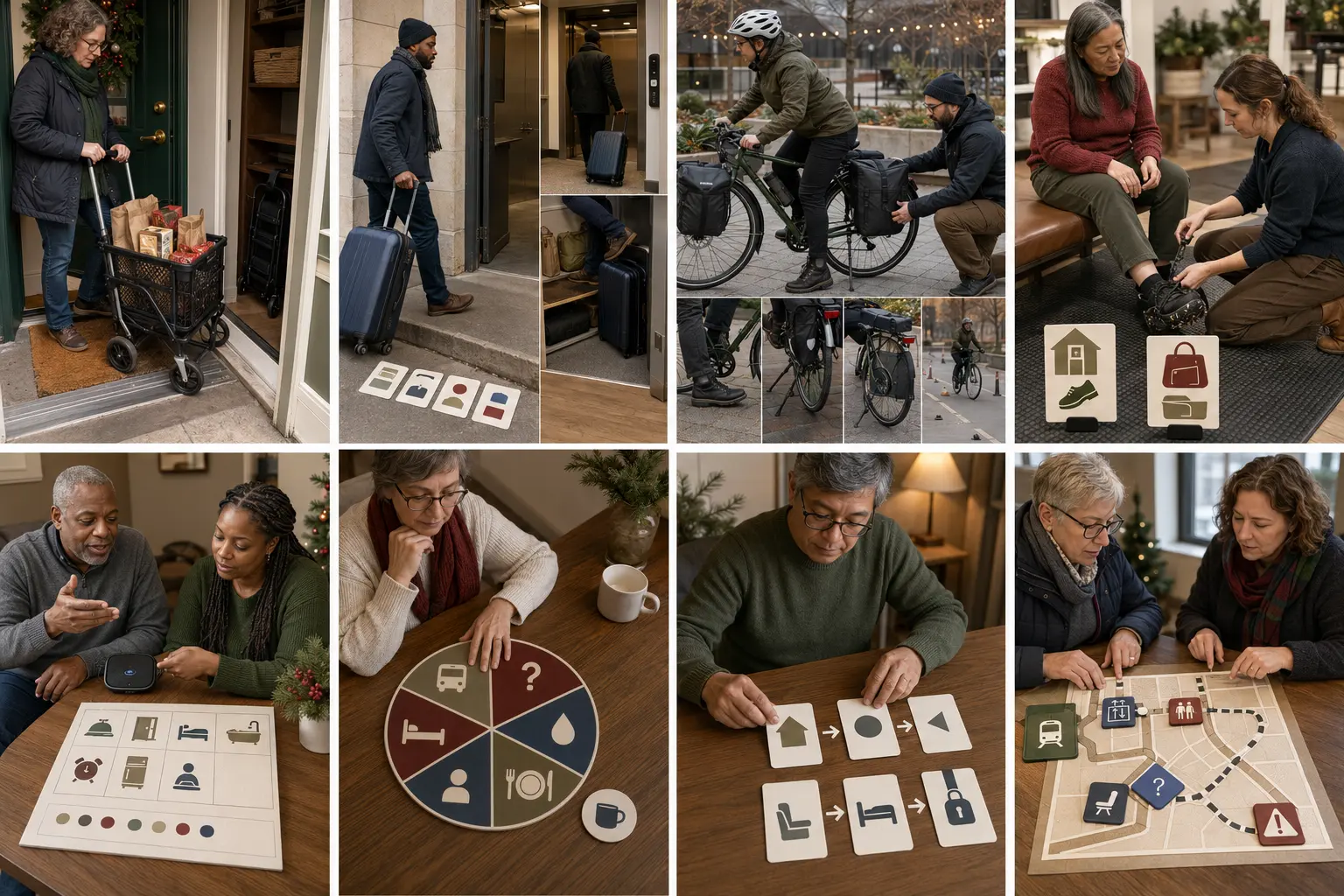
Let the recipient choose the exact block, stop, bench, paper date, structure, sign, board, landmark, or civic object and decide what location details remain private.
Presentation
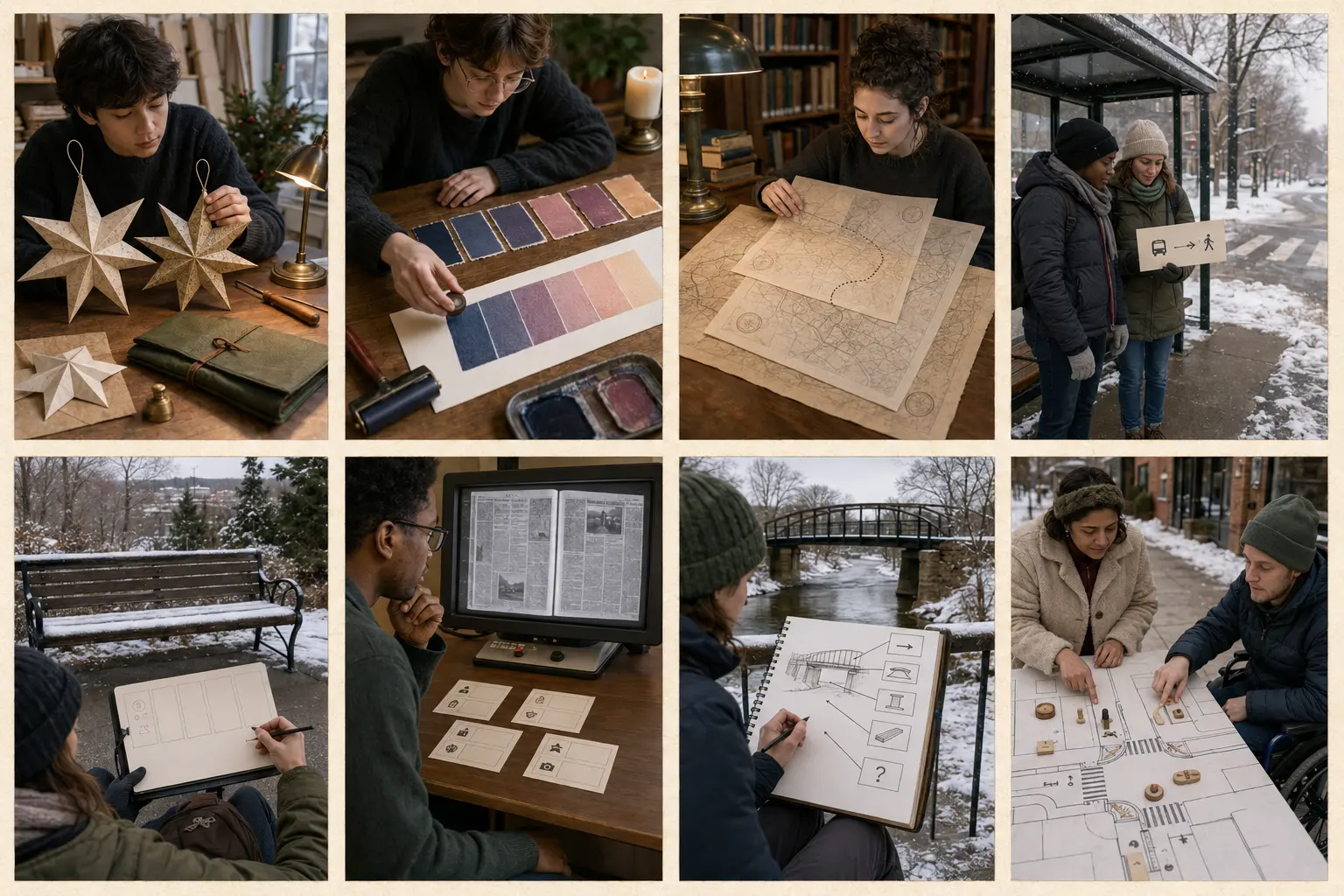
Fold the two-time observation and fallback into a pocket card shaped around the stop's actual shelter or pole layout.
Check the practical fit
- Space
- Stay on permitted public routes with safe stopping places and no obstruction; use official indoor archives or remote records when the site is inaccessible.
- Skill
- The helper should distinguish observation, public record, memory, and inference, cite sources plainly, and avoid acting as an engineer, historian, or access certifier.
- Maintenance
- Keep source citations, dates, uncertainty labels, and an editable route or object note so changed conditions can be corrected later.
- Accessibility
- Confirm step-free routes, crossings, seating, toilets, sensory conditions, readable maps, remote participation, and permission to skip any stop.
- Sustainability
- Walk, roll, or use public transport where practical, work from public records, attach nothing to shared property, and take no material from a site.
- Timing
- Verify opening hours, weather, daylight, transport, current construction, event conflicts, and a definite turnaround point before leaving.
What to investigate
These are generic categories to research after the editorial direction fits. Christmas.how has not tested or linked a specific product.
- public transit
- waiting
- accessibility
- weather
Current commercial status: editorial only
No affiliate links, sponsored placement, live price, retailer relationship, availability claim, or paid ranking is attached to this idea. The budget band is a planning estimate.
Read the commercial disclosure →